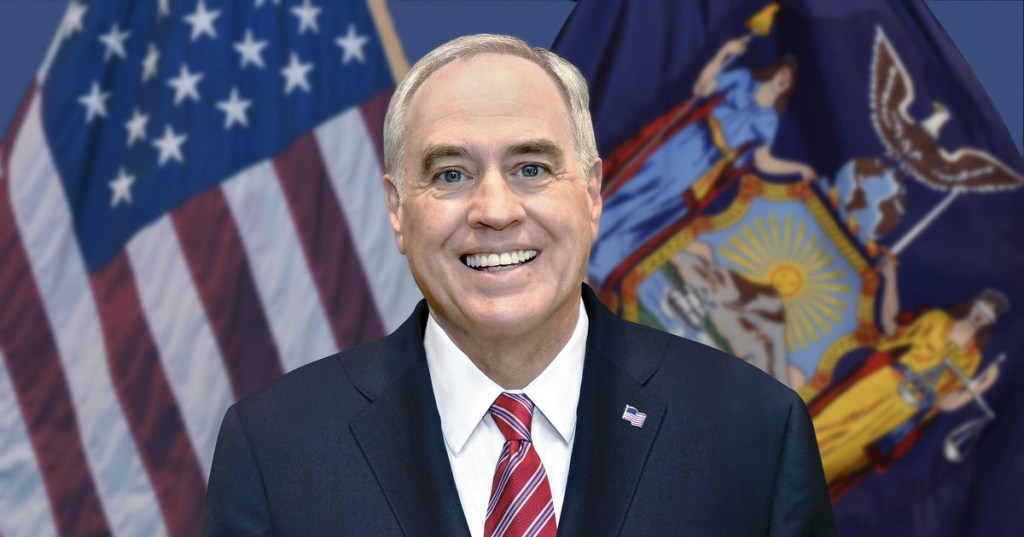
By the state’s official count, Wall Street has rarely had it better. On October 6, New York State Comptroller Thomas P. DiNapoli reported that the broker-dealer operations of New York Stock Exchange member firms earned $45.9 billion in pretax profits in the first half of 2026. That is up 51.3 percent from a year earlier and the highest two-quarter result on record. The first half alone has already beaten the city’s $45.3 billion forecast for the whole year. If the pace holds, the comptroller’s office says, 2026 profits could exceed $90 billion.
On Wednesday, Oct. 28, before the market opened, Evercore reported its third quarter, and it was not the quarter analysts had forecast. The consensus compiled by TradingView had put revenue at about $878.3 million, against roughly $1.05 billion a year earlier, and earnings per share at $2.52, against $3.48. Instead, Evercore reported record third-quarter net revenue of $1.169 billion under generally accepted accounting principles, up 12 percent, and adjusted net revenue of $1.178 billion, up 13 percent. Adjusted earnings were $4.28 a share. Advisory fees rose 14 percent to $1.011 billion, and underwriting revenue rose 27 percent to $55.6 million. Net revenue for the first nine months was $3.55 billion, up 38 percent. Advisory revenue is notoriously lumpy from quarter to quarter, which is why the forecast and the result are both worth understanding.
What the comptroller counted
DiNapoli’s annual report on the securities industry measures the pretax profits of the broker-dealer arms of NYSE member firms. There are 168 of them today, down from more than 200 in 2007. That universe is dominated by the big diversified banks, and the profit surge was broad. Underwriting revenue rose 68 percent in the first half. Account supervision fees rose 16.4 percent, commissions 24.4 percent and other securities income 13.2 percent. Trading revenue, the industry’s largest line, rose a more modest 1.8 percent to $40.3 billion.
“Wall Street is having an exceptionally strong year, fueled by a boom in artificial intelligence spending, increased merger and acquisition activity, and elevated trading volumes amid market volatility,” DiNapoli said in announcing the report. “Despite geopolitical tensions and economic uncertainty, the industry has remained resilient.”
The deal market supports him. The report puts worldwide M&A at $2.8 trillion in the first half, up 44.2 percent and the highest of any half-year on record. The number of announced deals rose only 2.2 percent, to 24,600. In other words, the increase came from bigger deals rather than more of them. American deals were 23.3 percent of the global count but 51.4 percent of the value. Global IPO proceeds reached $170.1 billion, the most since 2021, and the U.S. saw 186 offerings, up from 165.

Why the forecast looked reasonable
That pattern is why analysts thought a record year for the industry could coexist with a softer quarter at an adviser. When the money is concentrated in a handful of very large transactions, the fees go to whichever firms are on those few mandates. The big banks also collect underwriting and financing fees on the same deals. An independent adviser lives on the advice itself, and it can have a slow quarter simply because its big mandates have not closed yet. Evercore’s results suggest its big mandates closed on schedule this summer.
There is a further distinction. The comptroller’s figures are a first-half measure. Evercore’s quarter runs from July to September, and the analysts’ forecast was a judgment about that later stretch. Had it proved right, it would have been the first hard sign that the spring rush had slowed for the advisory firms. Evercore’s beat gives the bulls their argument: the pipeline kept turning into fees after June.

The New York ledger
Whatever Evercore’s quarter says about advisers, the city and state budgets have already banked the good news. The industry employed a record 207,400 people in New York City in 2025, up 7,000. Preliminary data show another 5,300 jobs on the way this year. The average salary including bonuses rose 11.1 percent to $561,770, more than five times the average in the rest of the city’s private sector. The 2025 bonus pool was $49.2 billion, or $246,900 per employee.
The securities industry generated an estimated $26.3 billion in state tax revenue in fiscal 2025-26, or 20.8 percent of all state tax collections. It produced a record $7.8 billion for the city in fiscal 2026, and its personal-income-tax payments made up nearly a quarter of the city’s collections. The comptroller estimates that one in 13 jobs in the city depends directly or indirectly on the industry.
That dependence cuts both ways, and DiNapoli says so plainly. The city forecasts a 20 percent fall in the 2026 bonus pool. The comptroller expects it to rise instead, “barring significant economic disruption,” and NYSE member firms have already raised compensation spending by 18.8 percent this year. But his report also lists the risks: global conflict, high inflation and rising interest rates, the outsized role of the AI sector, and the administration’s deregulatory push. Critics of the city’s reliance on Wall Street have long warned about exactly this exposure. Defenders reply that no other industry pays so much of the bill. Both have a point, and the comptroller’s figures support both.
What to watch
For the advisory firms, the earnings season is settling a narrower question than the comptroller’s report. That question is whether record deal value is turning into fees at the firms whose only business is advice. At Evercore, for one quarter at least, it did. The firm’s commentary on its pipeline, more than the quarter’s revenue, will show whether its bankers think the second half of the boom belongs to them.
DiNapoli’s office will publish its estimate of the 2026 bonus pool in March 2027, based on tax withholding data. By then, both the bankers and the budget writers will know whether this was the year of $90 billion or merely a very good first half.
Featured image: New York State Comptroller Thomas P. DiNapoli in his official portrait. Photo by Office of the New York State Comptroller via Wikimedia Commons, CC BY-SA 4.0.




Leave a Reply