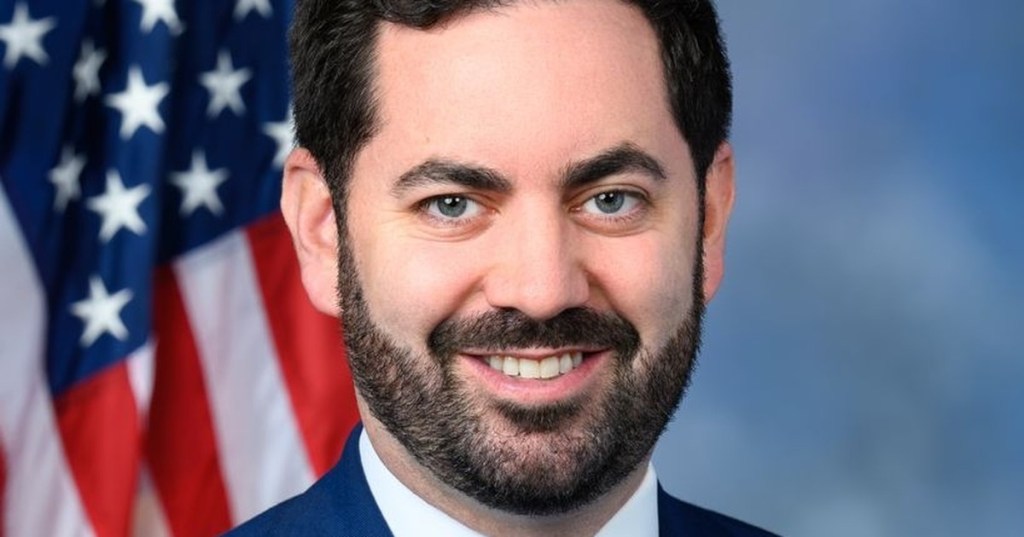
A bill introduced three weeks before an election usually tells you two things: what its sponsor thinks the law should be, and what he thinks voters should be paying attention to. Rep. Mike Lawler‘s latest bill does both.
On October 14, Lawler, a Republican who represents the Hudson Valley’s 17th District, announced the Stop Illegal Super PAC Coordination Act. The bill was introduced the next day as H.R. 10825 and referred to the Committee on House Administration. It has no cosponsors so far. It would prohibit joint fundraising committees that include a candidate and a political committee that can accept unlimited contributions from buying broadcast, cable, satellite or paid digital advertising. Those committees could keep raising money in the traditional way.
“Coordination of this kind between political campaigns and super PACs allows candidates to skirt campaign finance laws and funnel unlimited money into their campaigns,” Lawler said. “Americans deserve transparency and accountability in our elections. We need clear rules that prevent candidates from using these arrangements to get around campaign finance limits and protect the integrity of our elections.”
The loophole, and who opened it
The arrangement Lawler wants to stop is new, and both parties have helped create it.
In 2024, the Federal Election Commission issued an advisory opinion in response to a request from Team Graham, a joint fundraising committee connected to Sen. Lindsey Graham, the South Carolina Republican. The opinion allowed candidates and super PACs to form joint fundraising committees and to coordinate on solicitations, invitations and fundraising events. According to Lawler’s office, the FEC’s guidance “has not specifically addressed political advertising expenditures by these committees.” Lawler argues that this silence has let candidates spend “almost unlimited amounts on media buys” through the arrangement.
At the time, the objections came largely from the other side of the aisle. As the New Jersey Globe reported, a lawyer for the Democratic Congressional Campaign Committee warned the FEC that the arrangement “would allow for a candidate to fully coordinate with a Super PAC on one paid advertisement on a Monday, and then permit the same Super PAC to claim that a different ad made on Tuesday was fully independent. That is, of course, preposterous.” The nonpartisan Campaign Legal Center also opposed the opinion. It argued that candidates and super PACs planning communications together through a joint committee “is the precise opposite of the independence that federal courts require.”
Two years later, the complaints are coming from Republicans, and the targets are Democrats.
The complaint in his own race
In Lawler’s district, state Republican Chairman Ed Cox has filed an FEC complaint against his Democratic opponent, Cait Conley, an Army veteran. The complaint alleges that the Conley House Victory Fund, a joint committee of Conley’s campaign and House Majority PAC, spent about $1.2 million on broadcast advertising, beyond what the Team Graham opinion allowed. Politico first reported the complaint on October 13, and its New York Playbook returned to it on October 15. The National Republican Congressional Committee has been promoting it. “Cait Conley clearly lied to voters about not accepting corporate PAC money and even appears to have violated federal law,” NRCC spokesperson Maureen O’Toole said.
The same theory is being tested next door. The New Jersey Republican State Committee has filed a complaint against Rebecca Bennett, the Democrat challenging Rep. Tom Kean Jr. in New Jersey’s 7th District. That complaint alleges that the Bennett House Victory Fund, her joint committee with House Majority PAC, spent $1,055,300 on television ads. The New Jersey Globe reported that the arrangement could also let the super PAC buy airtime at the lower rates broadcasters must offer candidates before an election, though whether the committee qualifies for those rates is unclear. “I’ve taken $0 in corporate PAC money,” Bennett said when asked about the complaint.
These are allegations, and the FEC has not ruled on either complaint. It is also not the first complaint in this race. In August, the New York Post reported on a separate complaint from Putnam County Republican chairman Andres Gil, which involved payments to a consultant. The Conley campaign called that one a “BS complaint.”
Policy and politics
Both readings of the bill are fair, and they don’t cancel each other out.
On policy, Lawler has a real argument. A rule that lets a super PAC funded by unlimited money pay for ads through a committee the candidate helps run is hard to reconcile with the legal idea that super PACs are independent. That was the DCCC’s own argument in 2024, and the Campaign Legal Center’s too. If the bill had been introduced in January, with a Democratic cosponsor, it would read as a straightforward good-government measure.
On politics, it is also campaign messaging. Lawler announced it the day after Politico reported the complaint against his opponent, three weeks before the election. The bill will almost certainly not get a vote before Election Day, and probably not before the end of this Congress. Its immediate effect is to put “illegal super PAC coordination” next to Conley’s name in the news. The Cook Political Report and Sabato’s Crystal Ball both rate the race a toss-up, and each side is using every available argument.
Lawler’s record on legislation helps him here. He has made bipartisan bills a large part of his reputation. This month alone he introduced H.R. 10884, the Lauren Shields Organ Donation Act, with New Jersey Democrat Josh Gottheimer, and H.R. 10762, an auto safety bill named for Anthony Amoros. The super PAC bill doesn’t have a Democratic partner yet. Finding one would show whether it is meant as law or mainly as a campaign issue.
The question for voters in Rockland, Putnam and northern Westchester is not whether Lawler is campaigning. Every incumbent does. It is whether the rule he is proposing is a good one, and whether it would be good if it applied to Republicans too. The bill’s text would cover both parties’ joint committees the same way, and on that measure it holds up.
This story is based on Rep. Lawler’s announcement, the bill record, the FEC complaint as published by Politico, and reporting by the New Jersey Globe and the New York Post.
Featured image: Rep. Mike Lawler, official portrait. Photo by the U.S. House of Representatives via Wikimedia Commons, public domain.



Leave a Reply