The five City Charter questions on the back of Tuesday’s ballot were written by a mayoral commission. Their supporters include business groups, nonprofits, unions, safe-streets advocates and pro-housing organizations. Most voters will read them for the first time in the booth. In Riverdale, the volunteers on Bronx Community Board 8 have been reading them since September, and they have found things to worry about.
The board serves Riverdale, Fieldston, Kingsbridge, Kingsbridge Heights, Marble Hill, Spuyten Duyvil and Van Cortlandt Village. It is chaired by Margaret Della, with Farrah Kule Rubin as district manager. Like every community board in the city, it is now in an awkward position. The proposals would change how the city handles several things community boards have long weighed in on, including sidewalk cafes, street redesigns and the sale of small city lots. But city ethics guidance bars boards from using public resources to tell residents how to vote.
What the committee did
The work went through the board’s Law, Rules and Ethics Committee, chaired by Martin Wolpoff. Its members include Charles G. Moerdler, the veteran lawyer who also chairs the board’s Land Use Committee. The committee’s September 29 agenda listed “discussion of a draft resolution concerning the five proposed questions on the November 2026 ballot.” It quoted each question’s ballot language in full, including what a “yes” and a “no” vote would mean.
According to Citizen Portal, a service that publishes summaries of public meetings, committee members brought the resolution to the full board in October. They asked the board to approve language that would share an analysis with the community “without directing people how to vote.” After debate, the board passed a resolution that “highlights concerns with several” of the proposals and encourages voters to review the materials. Several members abstained. The committee’s October 22 agenda again listed “Discussion of City Charter revisions – resolution.” It also listed an item on guidance from the city’s Conflicts of Interest Board.
The full text of the resolution had not been posted on the board’s website as of Oct. 27, and The City Politic has not seen it, so this article does not characterize its specific objections.
The five questions
The questions come from the Commission on Government Efficiency, the charter revision commission Mayor Zohran Mamdani created this year. It was chaired by former diplomat Patrick Gaspard, with Ann Cheng as executive director. The commission adopted its final report on July 23. According to the commission and Ballotpedia’s summary, the questions are:
- Question 1, public space: Combines the sidewalk cafe and roadway dining approvals into one application and removes the mandatory public hearing and Council disapproval of sidewalk cafes. The commission says this would cut the eight-month process by about 75 percent.
- Question 2, contracting: Simplifies the questionnaire contractors fill out before they get city work, requires the Procurement Policy Board to meet quarterly, and lets the mayor delegate certain contract approvals to agencies.
- Question 3, city property and streets: Speeds up review of street safety projects, including bike lanes, by at least a third, and lets the transportation commissioner fast-track projects with an immediate safety need. It also shortens the sale of small city lots from seven months to 90 days and speeds the leasing of office space. The commission estimates more than $200 million in revenue from small surplus lots.
- Question 4, permits: Creates a central permitting hub for about 40 approvals now spread across 18 offices and agencies, and moves waterfront permitting into the Department of Buildings.
- Question 5, reserves: Sets a target of 12 percent of tax revenues for the city’s rainy-day fund, with a deposit formula set by the budget office in consultation with the comptroller.
Why a community board would care
It is easy to see why a board like CB 8 would want to look closely. The commission and its allies, from the Bronx Chamber of Commerce’s Lisa Sorin to Pedro Suarez of the Third Avenue BID in the South Bronx, describe the changes as overdue efficiency. Seen from a community board, though, several of them reduce the steps at which residents formally get a say. These include the mandatory cafe hearing, longer review of street projects and longer review of land sales.
That is not an argument against the proposals. Every procedural step that protects a neighbor’s voice also adds time. A restaurant owner waiting eight months for a sidewalk permit pays for that, and so does a family on a dangerous corridor while a redesign sits on a shelf. Voters are being asked where to strike that balance. A board that spends its evenings on exactly those trade-offs is a reasonable place to look for a second opinion.
What CB 8 did not do is just as notable. It did not urge a “yes” or “no” vote on any question, which is what the rules require. Several members abstained even from the version it passed. In a city where community boards are sometimes described as either rubber stamps or obstacles, it was a fairly sober piece of civic work.
Before November 3
Early voting ran from Oct. 24 through Nov. 1; on Election Day, Nov. 3, polls are open from 6 a.m. to 9 p.m. The district is represented in the City Council by Eric Dinowitz, and parts of the board’s area fall in the districts of Council Members Carmen De La Rosa and Pierina Sanchez.
Residents who want the board’s analysis can ask for it directly. The board’s office is at 5676 Riverdale Avenue and can be reached at (718) 884-3959 or bx08@cb.nyc.gov.
This story is based on Bronx Community Board 8’s published committee agendas, Citizen Portal’s meeting summary, the Commission on Government Efficiency’s final proposals and Ballotpedia’s summary. The City Politic has not reviewed the board’s final resolution.
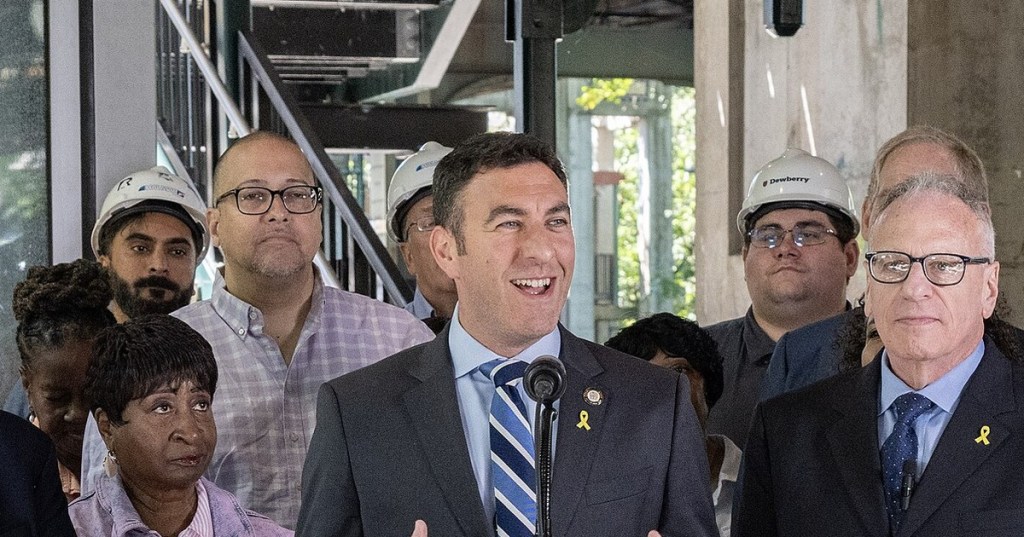
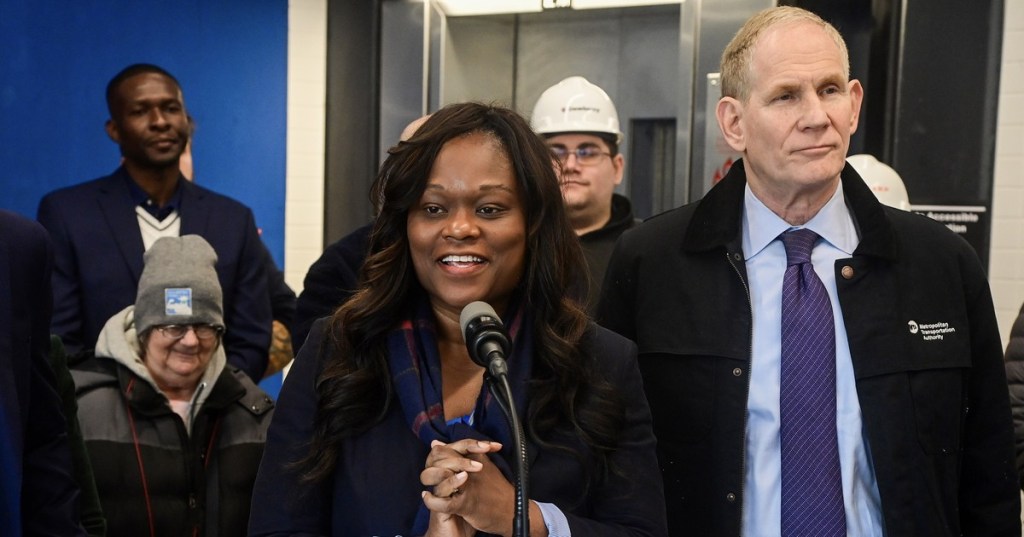
Featured image: Council Member Eric Dinowitz at the opening of elevators at the Mosholu Parkway 4 station. Photo by Metropolitan Transportation Authority via Wikimedia Commons, CC BY 4.0.



Leave a Reply