For as long as anyone in Bayside can remember, the neighborhood’s real protection against unwanted development was not the community board. It was the City Council. A local council member who opposed a rezoning could usually count on colleagues to defer, and the project would die. That arrangement is ending in Queens Community District 11, and residents are starting to understand what that means.
On October 13, residents of the district gathered at the East Flushing Library for a town hall with Queens Borough President Donovan Richards. As QNS reported, a good part of the Q&A dealt with one subject: the city’s new Affordable Housing Fast Track, and the fact that CB 11 is on it. The district covers Bayside, Douglaston, Little Neck, Auburndale and parts of Oakland Gardens.
What the fast track does
New York City voters approved the fast track as a City Charter amendment in November 2025. It takes effect on January 1, 2027, and applies to the 12 community districts that have produced the least affordable housing. Mayor Zohran Mamdani’s office announced the list earlier this month. Queens has five of the 12, more than any other borough: Community Districts 4, 5, 10, 11 and 13. The others are Brooklyn 10, 12 and 18; Manhattan 7 and 8; and Staten Island 2 and 3.
The numbers behind the list are stark. According to the city, the 12 districts make up about a fifth of the city’s 59 community districts. Over the past five years they produced 883 of the city’s 63,870 new affordable homes, or 1.1 percent.
The procedure is described on the Department of Housing Preservation and Development’s site. Eligible affordable housing rezonings in those districts get a combined 60-day advisory review by the community board and borough president, followed by City Planning Commission review. That review takes 30 days, or 45 for projects that need more extensive environmental review. The usual land-use process, ULURP, takes about seven months; the fast track takes about 90 days. The fast track keeps community board and borough president review, though the two now run at the same time. Environmental review requirements and landmark protections stay the same. What it removes is the City Council.
That is the part that worried residents in East Flushing. According to QNS, speakers said the change takes away the power of the council members who represent affected neighborhoods to veto unpopular projects. They also pointed out that most planning commissioners are appointed by the mayor.

Richards’ answer
Richards did not tell the room what it wanted to hear, but he did not dismiss its concerns either. He noted that he still has an appointee on the planning commission, Costa Constantinides, the former Astoria council member who now runs the Variety Boys and Girls Club of Queens. Richards said his office would stay in “close contact” with Constantinides on any fast-track application in Queens. He added that his office can still hold its own public hearings and raise objections before a project reaches the commission.
“I can tell you right now, if we see a proposal, we’ll be very transparent with the community board,” Richards said, according to QNS.
He was also direct about why CB 11 is on the list. “There are districts in Queens that have done little to none on affordable housing, and obviously CB11 falls into that category,” he said. “I want us all to be cognizant that we are in a housing crisis.”
The mayor has made the same argument in broader terms. “New York’s housing crisis is not going to be solved by asking the same neighborhoods to do all the building,” Mamdani said in a statement when the list was released.
The Bay Terrace preview
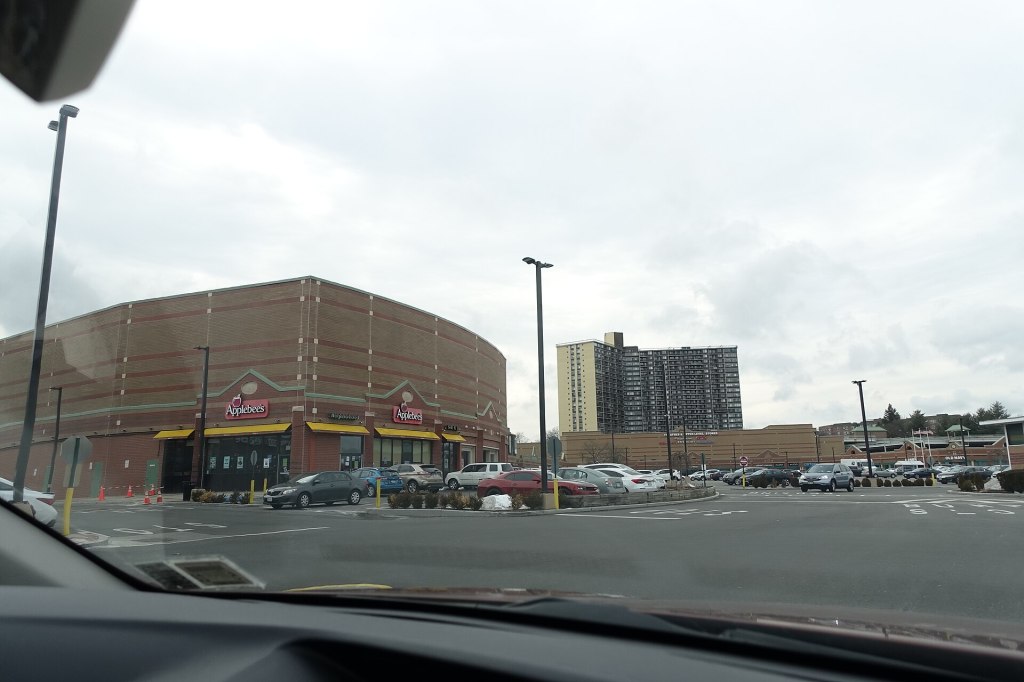
CB 11 has already had a preview of the new rules. In February, the Council approved a rezoning of the Bay Terrace Country Club site at 217-14 24th Avenue in Bayside. It allows an eight-story building with 128 market-rate apartments, 55 affordable units and 65 senior assisted-living units, proposed by Barone Management and Apex Development. Community Board 11 opposed it. Under the old zoning, the Queens Chronicle reported, the site could have held only eight to 10 single-family houses or a community facility.
The local council member, Vickie Paladino (R-Whitestone), voted yes. She was candid about why. Last fall’s charter changes had largely ended “member deference” on many land-use matters, she said in a video, which left her a choice between two bad options. “If we vote no, this gets handed to the mayor and the borough president,” Paladino said. “They support this … If we vote yes, I maintain leverage to negotiate.”
Both sides took that vote as a sign of things to come. Annemarie Gray, executive director of the pro-housing group Open New York, told the Chronicle that “something unthinkable happened today,” and called the vote “proof that the charter reforms are working.” Matthew Silverstein, president of the Bay Terrace Community Alliance, wrote that residents were “not opposed to thoughtful development,” but he cited concerns about traffic, flooding, infrastructure and neighborhood character. He said he was disappointed that two Queens members of the zoning subcommittee voted yes; the subcommittee approved the rezoning 9-0.
Paladino’s vote was a practical one, whatever one thinks of the project. She judged that a no would cost her the ability to negotiate, and she chose to keep it. From January, for fast-track projects in CB 11, that choice will not exist at all.
What to watch
There are two questions now, and neither has an answer yet. The first is whether developers will bring fast-track projects to low-density, largely single-family districts like CB 11. In those districts land is expensive and the zoning gives them little to build on. The second is how the board will use the 60 days it still has. Many community boards have influenced projects through the conditions they attach to approvals rather than through the right to say no, and CB 11 may need to work the same way.
The district list will be recalculated every five years. A district that builds more affordable housing can work its way off it. For now, the Council member’s veto is gone in CB 11, and the community board’s say comes through its 60-day review.
This story is based on reporting by QNS and the Queens Chronicle, and on public materials from the Mayor’s Office and HPD.
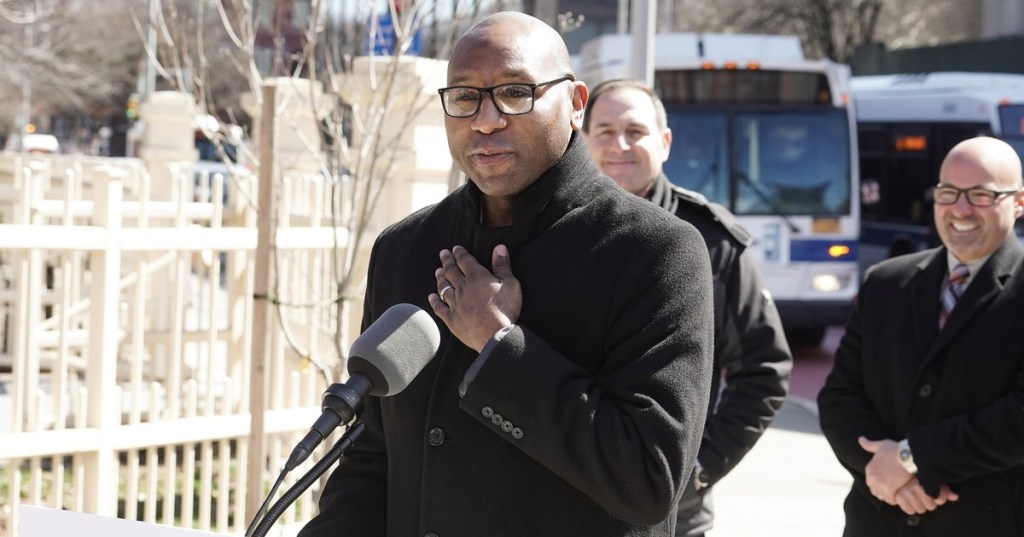
Featured image: Queens Borough President Donovan Richards at the MTA Queens Bus Network Redesign event, 2022. Photo by Metropolitan Transportation Authority via Wikimedia Commons, CC BY 2.0.




Leave a Reply