
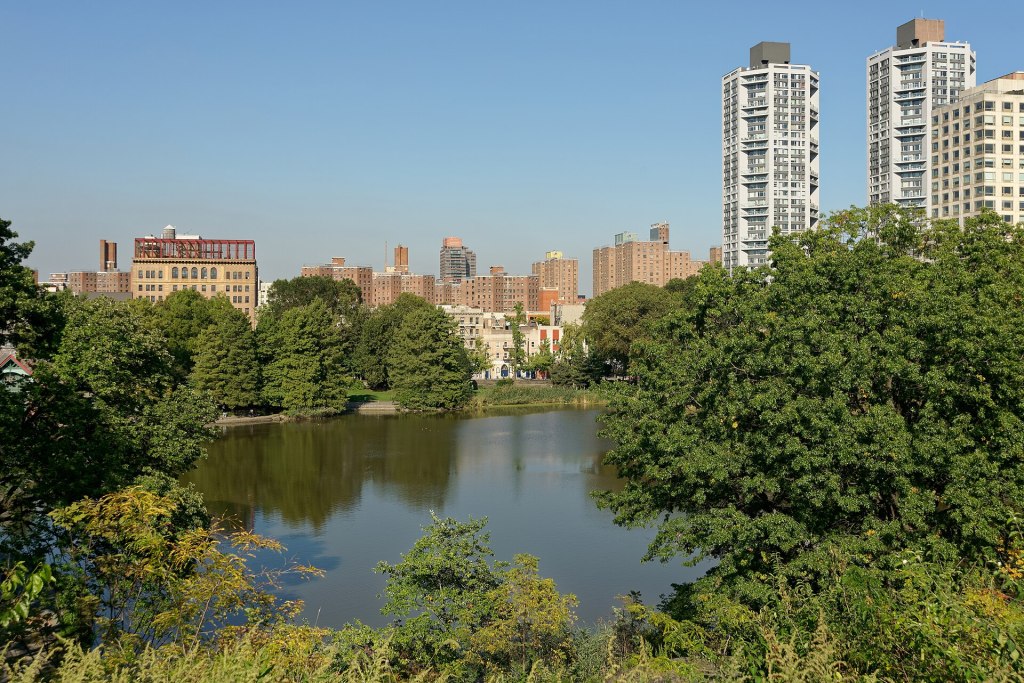
The least glamorous public works project of the fall is also one of the more sensible. On Monday, Oct. 26, Mayor Zohran Mamdani, Gov. Kathy Hochul and Central Park Conservancy President and CEO Betsy Smith broke ground on the North End Recirculation Project. It is a $35.7 million system of pumps, pipes and filters that will link the Harlem Meer, the Loch and the Pool. The aim is to keep stormwater out of the sewers of Harlem and East Harlem and to stop topping up the park’s ponds with the city’s drinking water.
The work falls largely to the Department of Environmental Protection, which is putting up most of the city’s share. Completion is expected in fall 2028.
How it works
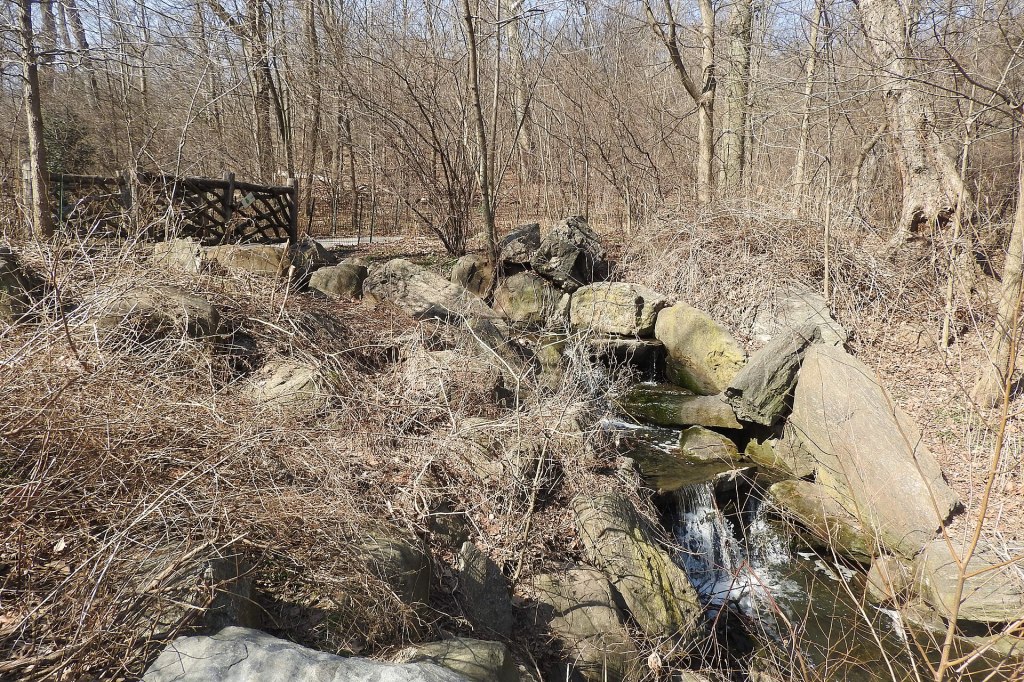
Frederick Law Olmsted and Calvert Vaux built the Pool, the Loch and the Meer as one connected water system between 1862 and 1865. For most of the years since, the city has kept them full with potable water. Under the new design, water drawn from the Meer in dry weather will be pumped south of the Pool and then run back downhill through the chain by gravity, filtered along the way.
The clever part is what happens before a storm. When heavy rain is forecast, the system will draw the Meer down ahead of time, leaving room to catch the incoming water. Rain then refills the Meer and the other ponds instead of rushing into the combined sewer system that serves the park and the blocks around it. When the weather clears, normal recirculation resumes.
The city projects that the system will keep about 132 million gallons a year out of local sewers and cut stormwater flows to city sewers by 90 percent across a 204-acre watershed in the park. It also expects to save about 175 million gallons of drinking water a year and to reduce the algal blooms that spread across the ponds in warm months.
Who is paying
The financing is a fairly standard New York mix of city, state and private money:
- More than $19.6 million in city capital funds, $14.2 million of it from DEP.
- A $10 million Green Resiliency Grant from the New York State Environmental Facilities Corporation, paid for by the 2022 Clean Water, Clean Air, and Green Jobs Environmental Bond Act.
- $2 million from City Council Speaker Julie Menin.
- $500,000 from Manhattan Borough President Brad Hoylman-Sigal.
- $100,000 from Council Member Gale Brewer.
- $3.5 million from Conservancy donors.
The project also cleared the reviews that sink many park plans. All five community boards around Central Park support it. The Landmarks Preservation Commission issued a supportive advisory report, as it does for work on the park’s designated scenic landmark. The Public Design Commission gave final design approval in December 2024.
The politics, such as they are
Mamdani built his case on the weather. “Climate change is bringing more frequent and severe rainfall to our city. So far this year, we’ve spent one in three days under a flash flood activation,” he said in the announcement, calling the project infrastructure “that can conserve our drinking water on dry days and protect our neighborhoods from flooding when storms hit.”
Hochul took a swipe at Washington. “While Washington Republicans continue to deny climate change and cut essential federal disaster funding, we in New York recognize the devastating impacts severe weather is having on our communities,” she said, crediting the Environmental Bond Act she championed. Groundbreakings are where politicians frame things their own way. The more durable point is that the project rests on a bond act New York voters approved in 2022, and its final design approval dates from December 2024, under the previous mayor. In practice, more than one administration has carried this project forward, and its success will depend on whether the pumps work in 2028, not on the speeches.
DEP Commissioner Lisa F. Garcia called it “another example of the smart stormwater management efforts that DEP and our partners are undertaking across the city.” Parks Commissioner Tricia Shimamura described Central Park as “an important part of our city’s environmental infrastructure.” Smith said it was the Conservancy’s “most ambitious infrastructure project to date,” and “the kind of work that most people will never see.”
The neighborhood angle came from the city’s chief climate officer, Louise Yeung. She said that through the Climate Strong Communities program, her office worked with East Harlem residents, WE ACT for Environmental Justice and Community Board 11 to decide how the neighborhood should handle heavy rain, and that this process helped secure the $10 million state grant. State Sens. Cordell Cleare and José M. Serrano and Council Member Yusef Salaam also endorsed the project.
What to watch
Three questions will decide whether the project earns its price.
The first is performance. The 90 percent reduction in stormwater flow and the 132 million gallons are projections, and they assume the forecast-triggered drawdown works in practice. Flash floods in this city often arrive with less warning than the models would like.
The second is cost and schedule. The project must finish by fall 2028 while the Conservancy is also rebuilding the Meer’s shoreline. The new section connecting the Davis Center, which opened in 2025 on the site of the former Lasker Rink and Pool, to the Conservatory Garden recently started construction.
The third is replication. Officials framed the project as part of a citywide stormwater push. Large parks such as Prospect, Van Cortlandt and Flushing Meadows have their own water bodies and their own flooded neighbors. If Central Park’s system meets its targets, the obvious question for City Hall is which park comes next, and who pays.
Featured image: Mayor Zohran Mamdani at his inauguration, January 2026. Photo by NYC Mayor's Office via Wikimedia Commons, CC BY 4.0.



Leave a Reply