Rhode Island voters are famously agreeable about borrowing money. On Tuesday, Nov. 3, they are being asked to prove it again, at a scale they have never seen. Five statewide bond questions totaling $600 million are on the ballot, the largest package ever put to the state’s voters, according to the Department of State’s 2026 voter handbook and reporting by Ocean State Media and the Rhode Island Current.
The track record favors passage. Voters have approved 36 consecutive bond questions over 18 years. The last one to fail was a 2006 proposal for Fort Adams, which drew 49.4 percent. But the history inside that record is more interesting than the streak. It runs straight through the most debated item on this year’s ballot.
What is on the ballot
Question 1, higher education, $275 million. This is the biggest question, with an estimated total cost of about $441.3 million once interest is included. It would pay for:
- $165 million for an Integrated Health Building at the University of Rhode Island, targeted for 2031.
- $50 million for the Adams Library at Rhode Island College.
- $60 million for a Workforce Innovation Center at the Community College of Rhode Island in Warwick.
Question 2, housing, $120 million. At least $25 million is reserved for homeownership and up to $10 million for public housing. This question comes with an argument attached. The Rhode Island Public Expenditure Council (RIPEC) found that $52.2 million from the 2024 housing bond financed about 200 rental units, more than $512,000 per unit. State officials dispute that framing and point to roughly 3,800 housing permits.
Question 3, economic development, $100 million. About $160.5 million with interest. It splits into $55 million for site development, including at Quonset and the I-195 District, and $45 million for growth industries. Gov. Dan McKee proposed $115 million; lawmakers cut it by $15 million.
Question 4, history and preservation, $50 million. About $80.2 million with interest. It includes $45 million for a new State History Center and $5 million for historic preservation grants.
Question 5, green economy, $55 million. About $88.3 million with interest. The money is spread across many smaller programs:
- $25 million for Resilient Rhody climate-adaptation projects.
- $12 million for state parks.
- $7 million for Narragansett Bay.
- $3 million each for brownfields, farmland and open space.
- $1 million each for local recreation and marine infrastructure.
The museum question
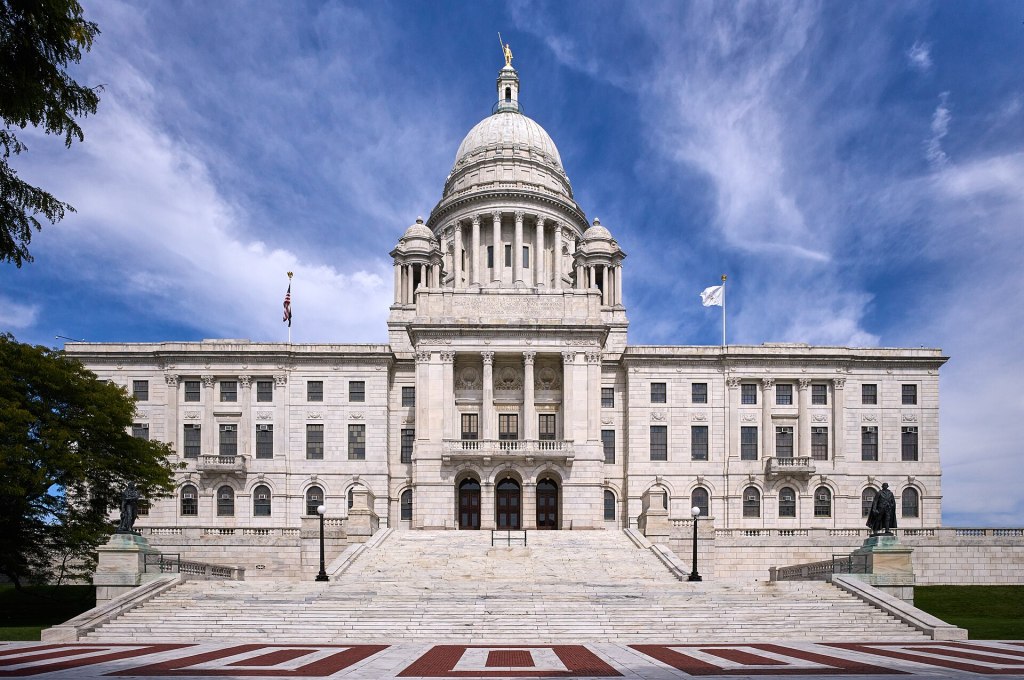
Question 4 is the one to watch. The history center would be a 24,600-square-foot building across from the State House, projected to open in fall 2030. It would display the state’s 1663 Royal Charter and its copy of the Declaration of Independence alongside the state archives. The Department of State puts the building’s estimated cost at $43.2 million, according to spokesperson Faith Chybowski.
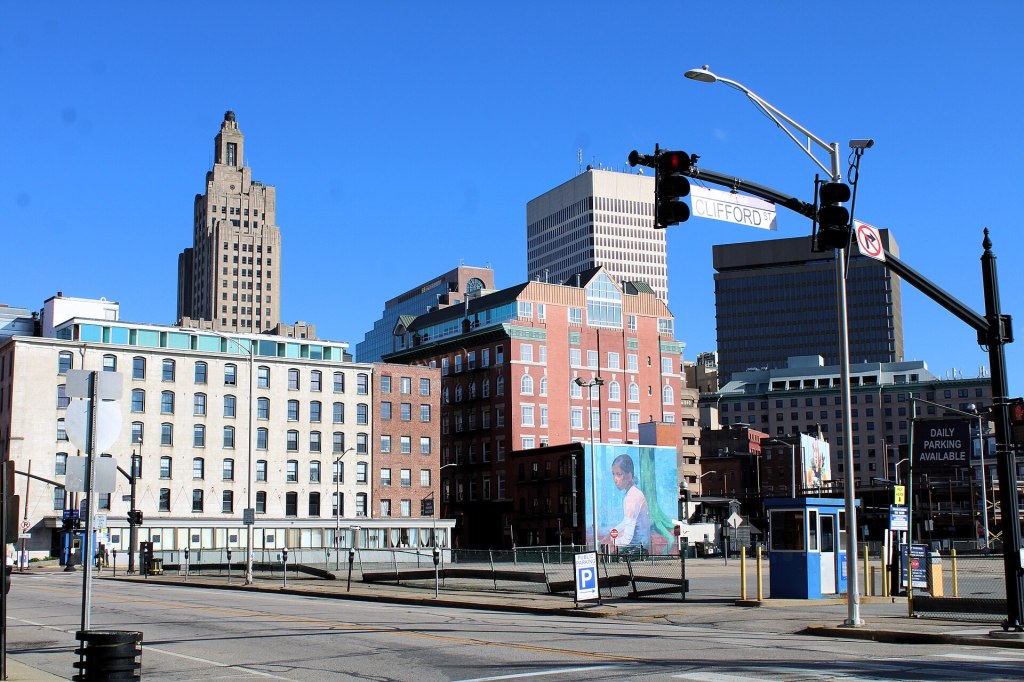
The case for it rests partly on rent. The archives now sit in leased space at 33 Broad St. in Providence, owned by Joseph Paolino Jr. The state pays about $280,300 a year for that space. Secretary of State Gregg Amore has made the project a signature cause, arguing that the state’s founding documents deserve a permanent, public home.
The case against it is just as direct. House Minority Leader Michael Chippendale, a Foster Republican, has said the state is “running out of other people’s money” and warned of a “death spiral of spending and debt.”
History favors neither side cleanly. Since 1980, Rhode Island voters have approved cultural bonds nine times and rejected them eight times, by the Current’s count. In 2000 the proposed Heritage Harbor museum failed with 49.3 percent. Fort Adams, the last bond of any kind to lose, was also a history-and-heritage project. Rhode Islanders will fund dormitories, sewers and parks without much hesitation. A museum makes them pause.
The debt in the background
The package arrives in a state that already carries more debt than most. RIPEC ranks Rhode Island sixth in the nation for debt service relative to revenue and ninth for debt relative to personal income. Supporters respond that the projects are long-lived, that borrowing rates matter less than the cost of putting off maintenance, and that higher education and site readiness pay for themselves through jobs. Skeptics respond that voters see only the principal on the ballot, while interest roughly doubles the cost of the largest items over time.
Both arguments hold up. The useful thing about the handbook’s interest estimates is that they let voters judge for themselves. Question 1’s $275 million becomes about $441 million, and the economic development, history and green questions each grow by roughly 60 percent.
The read
The two people who matter most after election night are in the legislature: House Speaker Christopher Blazejewski and Senate President Valarie Lawson. Lawmakers shaped this package. They trimmed the economic development question and decided how much to send voters at all. They will also be the ones answering for the housing bond’s cost per unit if RIPEC’s numbers keep gaining attention.
For McKee and Amore, the stakes are more personal. A clean sweep would extend a streak that has become part of the state’s political identity. If Question 4 alone fails, the lesson will be the one Rhode Island has taught before: voters are generous with what they can see and use, and careful with buildings that tell them their own history.
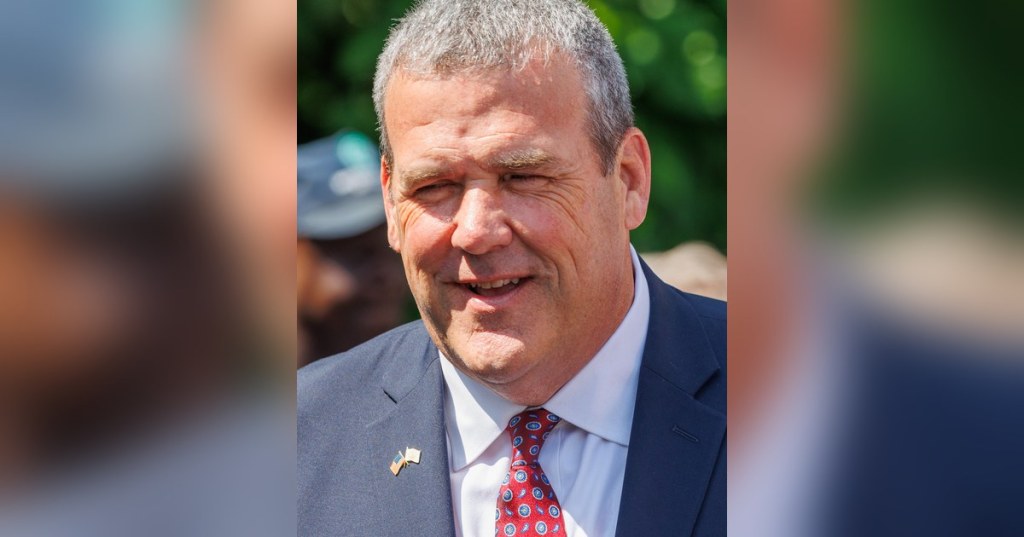
Featured image: Rhode Island Secretary of State Gregg Amore at the Gaspee Days Parade in Pawtuxet Village, June 2023. Photo by Kenneth C. Zirkel via Wikimedia Commons, CC BY-SA 4.0.



Leave a Reply