Academic scandals tend to come in a few familiar kinds: plagiarism, padded résumés, and an occasional fabricated lab notebook. Dartmouth College has now added a new one to the collection. Its chief academic officer resigned after the college concluded that he had let a chatbot do more of his writing than he admitted, at an institution whose honor code requires students to say when they have done the same.
Santiago Schnell, provost since July 2025, resigned on Wednesday, Oct. 28, and is leaving the college. The resignation came a day after an independent advisory committee delivered its eight-page report to President Sian Leah Beilock. The committee found that Schnell “used AI to meaningfully alter his writing in violation of at least one publication’s AI use and/or disclosure requirement, failed to disclose his use of AI in clear violation of a national newspaper’s stated policy, was not forthcoming about his AI use,” and fell short of the college’s Code of Ethical Conduct, the Academic Honor Principle and the Geisel School of Medicine’s professionalism policy.
“I expect our senior leaders to hold themselves to the highest standards,” Beilock wrote to the campus, as quoted by Inside Higher Ed’s Kathryn Palmer. “Out of respect for his colleagues and the institution, Santiago has resigned as provost and is leaving the university.” Inside Higher Ed reported that the resignation came less than two weeks before a planned no-confidence vote by faculty leaders. Matthew Delmont, a history professor, will serve as interim provost through June 2028, according to The Dartmouth.
How it started
The trouble began in August. Semafor reported that the detection tool Pangram had flagged Schnell’s Aug. 9 Washington Post op-ed, “Universities are fighting AI cheating. But there’s a deeper problem,” as at least 80 percent AI-generated. The irony needed no editorial help. The Dartmouth then ran its own Pangram analysis of his recent work. Schnell acknowledged using AI but told the student paper that it did not “substitute” for his “research, intellectual judgment or authorship.”

On Sept. 25, Beilock convened the committee and asked it for “a rigorous, objective review of how Santiago has used AI, measured against the criteria of the publications to which he submitted his work.” The panel was chaired by computer scientist and former provost David Kotz ’86. Its other members were the digital-forensics scholar Hany Farid, Trustee Odette Harris ’91 of Stanford’s medical school, the writer Peter Orner and the linguist Lindsay Whaley. To its credit, the committee did not rely on Pangram or any other AI detector, which experts consider unreliable. It worked from documents, including the logs of Schnell’s account on Claude, the college’s enterprise AI tool.
What the committee found
The report examines several writings in turn.
- “Reaction Acceleration,” in ChemSystemsChem. The logs show Schnell used Claude to “substantially edit his research manuscript, troubleshoot errors in computer code, and generate figures” after peer reviewers asked for major revisions. One prompt reads, “Imagine that you are a reviewer for this paper… What would be your referee report?” Schnell told Beilock he had relied on outdated author instructions. The committee found that the publisher, Wiley, had required AI disclosure “since at least 2023.” When Schnell later wrote to the journal, he disclosed ChatGPT but not Claude.
- The Washington Post op-ed. Schnell told Semafor that he had “used ChatGPT to refine a few arguments, check for grammatical errors, and submit it.” The Post’s terms required writers to agree their submissions were “not created or manipulated with artificial intelligence or editing software.” The committee called the conduct a “clear violation.”
- A Bulletin of Mathematical Biology paper. Schnell ran the paper’s code through two AI tools. The committee “could not conclude there was a violation,” because the publisher’s policies at the relevant times did not clearly bar or require disclosure of that use.
- A forthcoming article on academic freedom and Catholic mission. According to the logs, Schnell asked Claude, “Are there many signatures of AI writing in this article?” and then submitted a revision with the kinds of changes Claude suggested. When the editor asked, he described the AI use as help to “refine sentences.” The committee said that account “understates the nature of the Provost’s actual AI use.”
The committee also described what it could not see. Schnell handed over his Dartmouth-issued laptop but “did not, upon request, provide logs of his use of personal LLM accounts.” He also did not make himself available to meet at the time the committee requested. The panel said its findings “may have been further informed” by material he kept to himself. It also said it was not following the college’s formal complaint procedures and was not “recommending any related disciplinary action.” He was not fired. He resigned.
The case for some perspective
A fair reading leaves room for nuance, and Schnell’s defenders have some. Publisher rules on AI have changed often, and the committee itself cleared one paper because the policy was unclear. Nobody accused him of fabricating data, results or sources. Large numbers of academics now use these tools to polish prose and debug code, and the boundary between a grammar checker and a ghostwriter is something universities everywhere are still debating. The committee’s charge was narrow. It asked whether he followed the rules of the journals he chose, not whether using AI is sinful in itself.
The difficulty for Schnell was the job. A provost is the officer who enforces academic integrity on everyone else. Dartmouth’s Academic Honor Principle requires students to acknowledge their use of generative AI, and the committee concluded that the man at the top did not apply the same standard to himself.
What comes next
Dartmouth now has an interim provost with a term long enough to matter. It also has a public record that other institutions will study when they write their own rules. The most useful lesson in the report may be about method. A committee of computer scientists chose documents and logs over a detection score, and its findings held up.
Beilock, who has encouraged more use of AI on campus, will have to reconcile that position with what happened in her own administration.
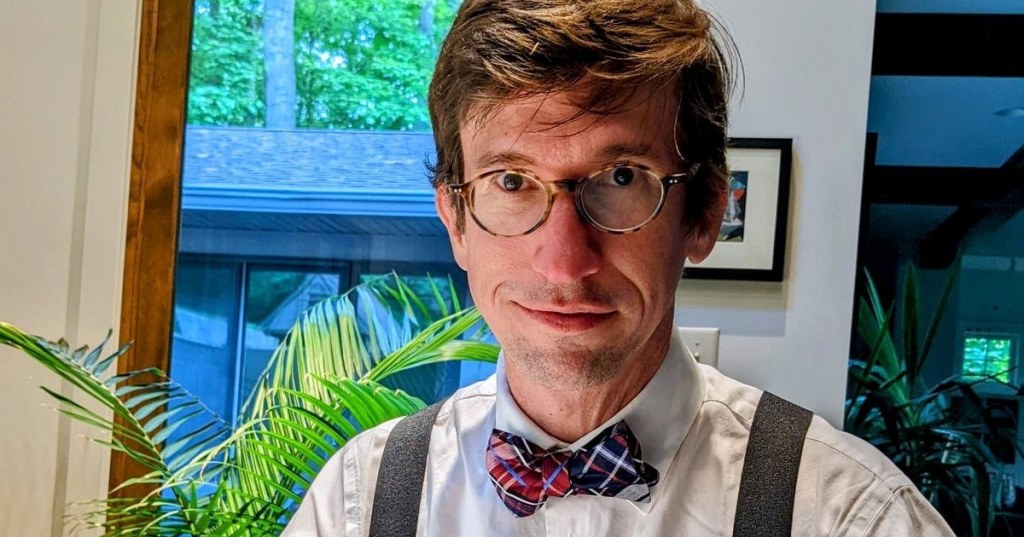
Featured image: Santiago Schnell, who resigned as Dartmouth’s provost in October, pictured in 2022. Photo by Eudoro Lopez via Wikimedia Commons, CC BY-SA 4.0.





Leave a Reply