Private equity has a word for selling a company and then buying it back: a round trip. What Apollo Global Management is doing with ADT is something more modern and, in its way, more elegant. It sold its last ADT shares in May. On Thursday, Oct. 29, it agreed to lend the money for someone else to take ADT private.
That someone is Thrive Holdings, the permanent-capital holding company spun out of Josh Kushner’s venture firm Thrive Capital. Under a definitive agreement announced Oct. 29, Thrive will pay $10 a share in cash for ADT, valuing the Boca Raton, Fla., security company at about $7.6 billion in equity and $15.3 billion including debt. The price is a 45.6 percent premium to ADT’s unaffected close of $6.87 on Oct. 27 and a 52.1 percent premium to its 30-day volume-weighted average. ADT’s board approved the deal unanimously.
The line in the release that made the buyout desks sit up was short. “Financing commitments for the transaction have been solely provided by funds managed by affiliates of Apollo Global Management,” it said.

A decade of Apollo
The history explains why that sentence matters. As SecurityInfoWatch recounted last week, Apollo bought Protection 1 in 2015, then in 2016 combined it with The ADT Corporation in an all-cash deal valued at about $6.9 billion, folding in ASG Security along the way. ADT returned to the public market in January 2018 at $14 a share, with Apollo keeping a large majority stake. Over the following years the firm sold down through a string of secondary offerings, the last of them in May, when it unloaded its remaining shares in a transaction valued at up to $770 million.
So the buyout shop that assembled modern ADT, floated it, and spent years exiting it now sits on the other side of the table as sole lender. In the age of private credit, that is less paradoxical than it sounds. Apollo’s credit platform has become one of the largest sources of buyout financing on Wall Street, and few lenders on earth have a better understanding of ADT’s recurring monitoring revenue, its debt stack and its customer churn. Lending against a business you ran for most of a decade is the kind of underwriting edge credit investors dream about.
For ADT shareholders, the arithmetic is less romantic. A $10 cash price is a healthy premium to where the stock had been trading, but it is still well below the $14 at which the company went public eight years ago. Shares rose about 34 percent on the news, according to The Information, as reported by TNW, short of the full premium, a gap that reflects the months of approvals still ahead.
Not quite private equity
Thrive Holdings is the more novel character. It describes itself as “a permanent capital holding company,” a structure that lets it own businesses indefinitely rather than selling them within a typical fund’s five- to seven-year horizon. It already owns more than 75 businesses across accounting, IT services and what it calls the built environment, including Current in accounting and Shield in IT services, according to the deal announcement. OpenAI is a partner and investor in Thrive Holdings, according to reporting by Reuters and TechCrunch, and supplies AI models and engineers to the businesses it owns.
The pitch, then, is not leverage and a quick flip but engineering and patience. “We intend to build on that foundation by strengthening ADT’s technology and product capabilities, with the capital and patience to invest over decades,” said Kareem Zaki, a partner at Thrive Holdings. After closing, ADT will become the foundation of Thrive’s smart-home security business.
“ADT is pleased to enter into this transaction, which recognizes the value built by our more than 12,000 employees and delivers an attractive cash premium to our stockholders,” said Jim DeVries, ADT’s chairman, president and chief executive.
Thrive is also trying to get ahead of the question every alarm customer will ask when a technology investor backed by an AI lab buys the company that watches their front door. The companies said ADT’s data and privacy policies will remain unchanged and no new data sharing will occur without customer permission. “Protecting customers’ homes also means protecting their data,” said Anuj Mehndiratta, another Thrive Holdings partner.

The fine print
The merger agreement includes a 30-day go-shop. ADT and its bankers may solicit competing proposals until 11:59 p.m. New York time on Nov. 28, with a possible 10-day extension for bidders who come forward during that window. ADT has said it does not intend to disclose go-shop developments unless it decides to or must. The deal requires shareholder approval and U.S. antitrust clearance, carries no financing condition and is expected to close in the first quarter of 2027.
Shareholder approval will run through a register that has changed since Apollo’s exit. State Farm, which invested in 2022, became ADT’s largest shareholder after Apollo sold out in May, according to SecurityInfoWatch. Google, which took a stake of roughly 6 percent in 2020, has been a commercial partner on ADT’s do-it-yourself products and cloud migration.
The adviser table is a familiar one. Citi and Goldman Sachs advised ADT, with Cravath, Swaine & Moore as counsel and Edelman Smithfield on communications. Evercore was Thrive’s exclusive financial adviser, and Kirkland & Ellis was its counsel.
ADT scheduled its third-quarter results for Nov. 3 and said it would not take questions on the call. Anyone hoping for color on the go-shop will have to wait for the proxy.
For the private-equity trade in New York, the lesson of the week is plain enough. The old model was to buy a company, lever it up and sell it. Apollo has now shown that the same asset can earn you equity returns on the way in, a public-market exit on the way out, and interest income when the next owner arrives. The house, as they say, always gets paid.
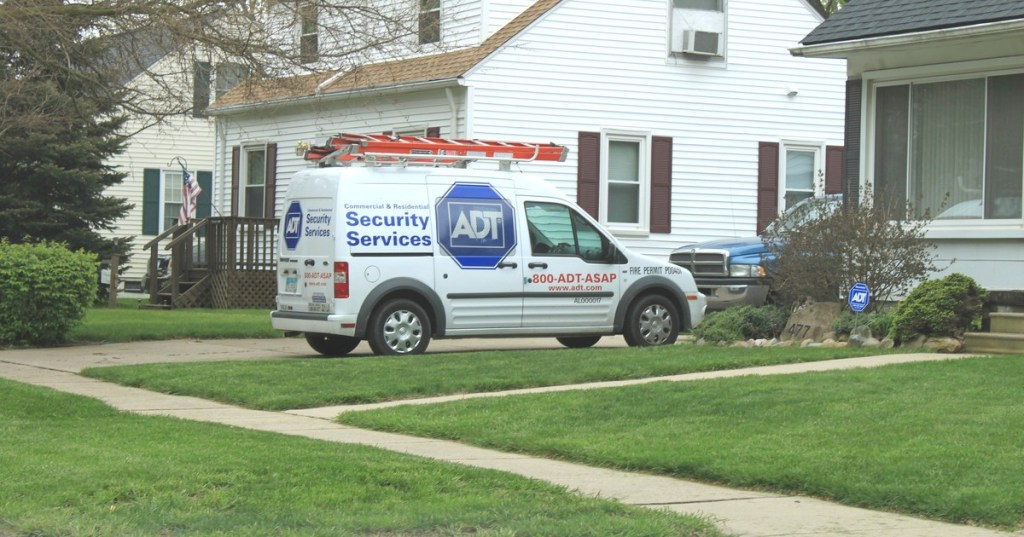
Featured image: An ADT Security Services van parked outside a home in Milan, Mich. Photo: Dwight Burdette via Wikimedia Commons, CC BY 3.0.






Leave a Reply