
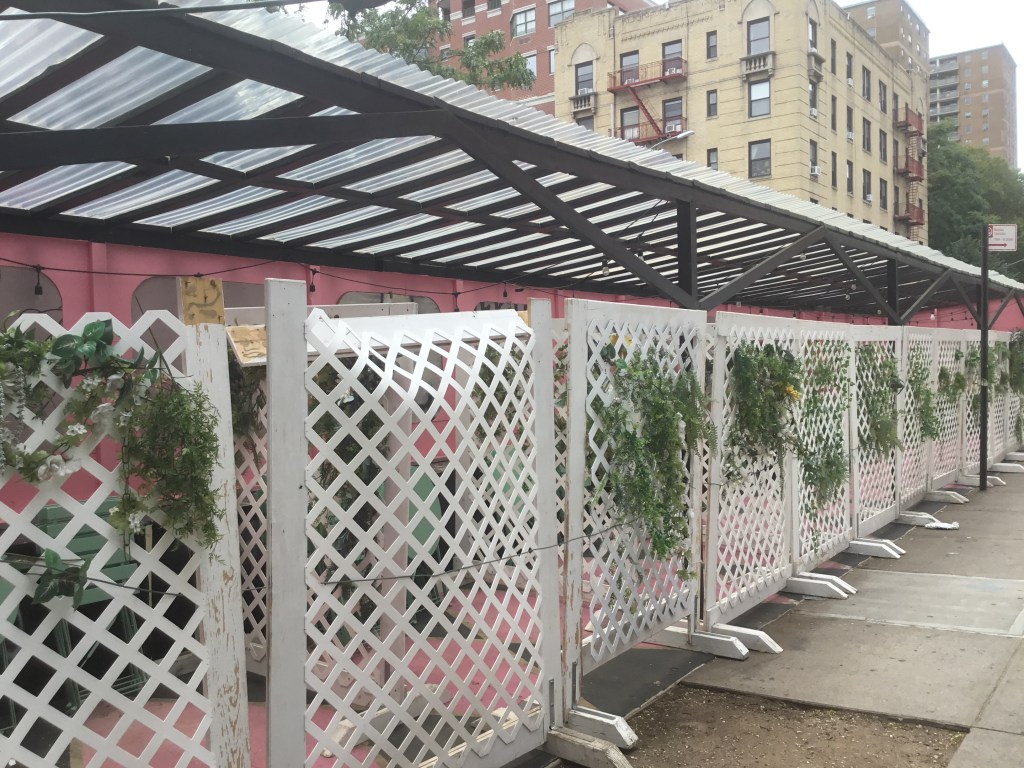
Outdoor dining was the pandemic’s best gift to New York, and the permanent program meant to keep it has turned into a long wait. On Tuesday, Oct. 27, City Comptroller Mark Levine released an investigation into the Dining Out NYC program. It found that more than half of the restaurants that have received outdoor dining licenses since March 2024 waited more than 19 months for approval. The Department of Transportation has told applicants the process takes about eight months.
“Outdoor dining has become a staple of New York City’s streetscape and a lifeline for small businesses,” Levine said in the accompanying release. “Unfortunately, the permitting process is a maze of approvals that takes far too long, depriving restaurants, bars, and cafes of expanded capacity and sorely needed revenue.”
The numbers
The report is based on data DOT provided through June 15, 2026. By that date, DOT had received 4,911 applications and issued 1,405 licenses, approving 28.6 percent. Another 1,153 had been denied and 2,115 were still pending. Of the 388 applications filed in 2026, exactly one had become a license.
The applications filed in the program’s first year have fared slowly. Of the 3,702 submitted in 2024, 1,300 had been licensed by mid-June. Those took an average of 18 months, and the median was 19.7 months. Fifty-eight of the program’s earliest applications had been pending for more than two years.
The comptroller’s office also checked the city’s own estimates. The Commission on Government Efficiency has said roadway café applications take three to five months. The report found that no roadway café had been licensed within five months. For sidewalk cafés, which the commission estimated at six to eight months, only 12 had been licensed within eight months.
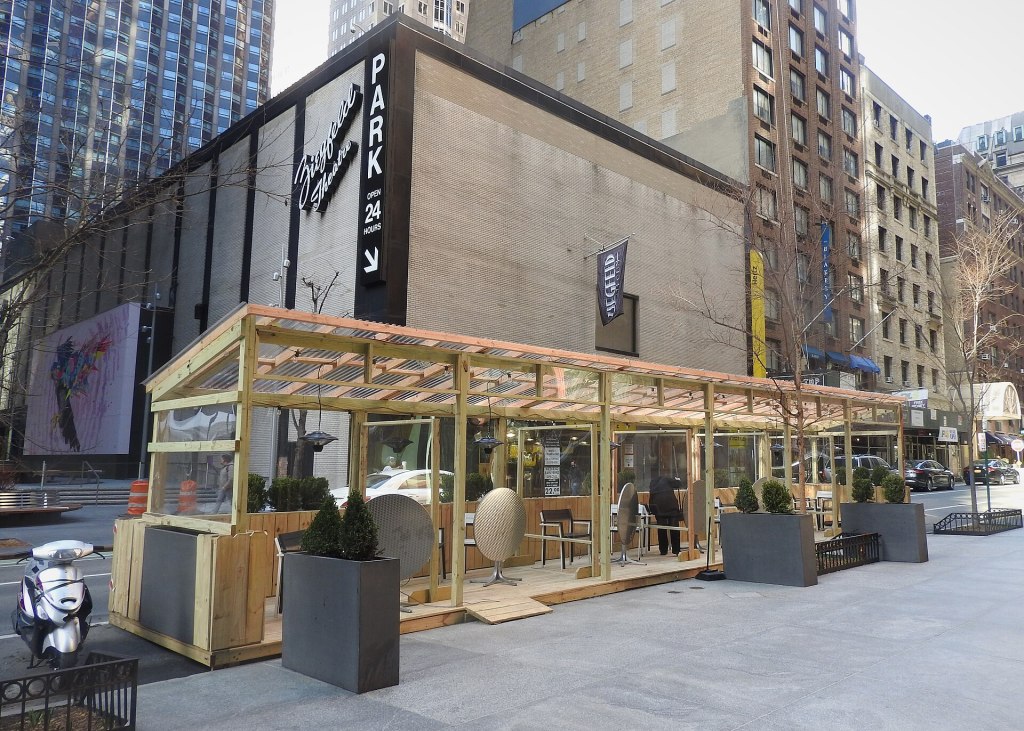
The delays have had a cost. The report says the city’s approximately 27,000 restaurants once had nearly 13,000 participating in outdoor dining at the pandemic peak. Fewer than 2,500 participate now. Until this year, roadway cafés could operate only from April through November, so a permit that took more than a year meant missing an entire season.
Where the delays happen, and why nobody knows
The report’s most pointed finding is not about speed. It is about record-keeping. DOT, the report says, “does not track how long applications spend in individual stages of review or identify where delays occur.” It cannot say how long applications sit with its own staff, how long applicants take to fix paperwork, or how long community boards and the City Council take to weigh in.
That matters because the process involves many offices. Before a license is issued, an application goes through public hearings, community boards, Council members, DOT, the Financial Information Services Agency, the Mayor’s Office of Contract Services and the comptroller’s own Bureau of Contracts. Restaurant owners, the report adds, are expected to produce technical renderings of their setups, which “necessitate skills far beyond the reasonable capacity of a small business owner.”
The comptroller’s office also defended its own role. It says it registers approved permits in an average of 7.9 days, less than 1.5 percent of total processing time, and that since September 2024 DOT has been allowed to let restaurants start operating as soon as it files an approved permit for registration.
Signs of a faster pace
The report gives DOT credit where it is due. From the program’s start through January 2026, the department sent the comptroller an average of 29 permits a month. Starting in February, it averaged more than 228, peaking at 475 in July. Between June 15 and Oct. 21, another 1,092 applications reached the comptroller for registration.
The comptroller says the faster pace is a good sign but does not prove the system works. Without data on each stage of review, he argues, the city cannot tell whether the process has gotten better or whether staff simply worked through a pile of old applications.
Two fixes on the table
The policy context is changing quickly. The City Council passed Local Law 135 in August, allowing roadway cafés to operate year-round. The Nov. 3 ballot also included a charter amendment, proposed by the city’s Commission on Government Efficiency, that would shorten the process by cutting external review steps, including some public hearings, newspaper notices and community board review. Its stated goal is to cut the timeline to about two months. Voters approved it as Question 1, with about 63 percent of the vote, according to amNewYork, and most of the changes take effect March 1, 2027.
Levine’s report took no position on the ballot question. It said his office would track whether the goal is met if the measure passed, and now it has. It also makes six recommendations for DOT: publish regular management reports, set targets for each stage of review, release a plan for reaching the two-month target, set deadlines for clearing the backlog, build an easier application tool, and allow more flexible design standards. The report includes a prototype address-screening tool that found about 52 percent of 27,060 restaurant locations likely eligible for a roadway café.
The chorus
The report drew support from the Council and the restaurant industry. “No small business in our city should be held back waiting for a permit for a year and a half,” said Majority Leader Shaun Abreu. Council Member Lincoln Restler, who chairs the Contracts Committee, said “nine out of ten restaurants stopped participating in outdoor dining since the seasonal program launched in 2024” and called the delays “unacceptable and avoidable.”
Andrew Rigie, executive director of the NYC Hospitality Alliance, said “restaurants can lose an entire outdoor dining season waiting for approval,” and urged the city to “allow restaurants to operate under temporary permits.”
The release did not include a response from DOT.
None of this is partisan. A permit process that takes 19 months, at an agency that cannot say where the time goes, is a management problem. The report gives the city a clear set of measures, and next spring’s outdoor dining season will show whether they have been met.
Featured image: City Comptroller Mark Levine speaking at his inauguration, January 1, 2026. Photo by NYC Mayor's Office via Wikimedia Commons, CC BY 4.0.




Leave a Reply