On Sunday night, the Upper East Side lost the restaurant it had already mourned once. Mezzaluna, the narrow Italian trattoria at 1295 Third Avenue between 74th and 75th Streets, served its last plates on Nov. 1, forty-two years after Aldo Bozzi opened it in 1984. The closing had been announced in the spring, postponed by public demand, and finally confirmed in late October, when Bozzi told The New York Post that this time it was real.
“I’m not a young chicken any longer,” Bozzi, 86, told The Post’s Kyra Breslin. “I’m 86. I wish I was 76. I would have more energy.”
It is a sentence that a good many Lenox Hill landlords, and a good many Lenox Hill diners, will recognize. The arithmetic was not mysterious. Staying at 1295 Third, The Post reported, would have meant a fresh ten-year lease and an extensive, expensive renovation, including an overhaul of the famously tiny kitchen, a project that could have shut the room for months while the bills kept coming. Bozzi, who now lives full-time in Southampton, chose not to sign.
The reprieve that wasn’t permanent
The first death notice came in March. Patch traced the rumor to TikTok; within days, a Change.org petition to keep the restaurant open had collected more than 2,100 signatures. Bozzi asked his landlord for more time and got it. “The response of people was like a tsunami,” he told The Post, describing lines that wrapped around 75th Street and diners who waited three hours for a table and a chance to say goodbye.
His daughter, Gea Bozzi, wrote about the room for Air Mail in May, noting that the extension was a matter of months, not years. The summer and autumn became a long farewell tour. By late October the staff were selling plates off the walls, figuratively and otherwise; one regular told The Post she had bought one.
A room that taught Manhattan to eat like Italy
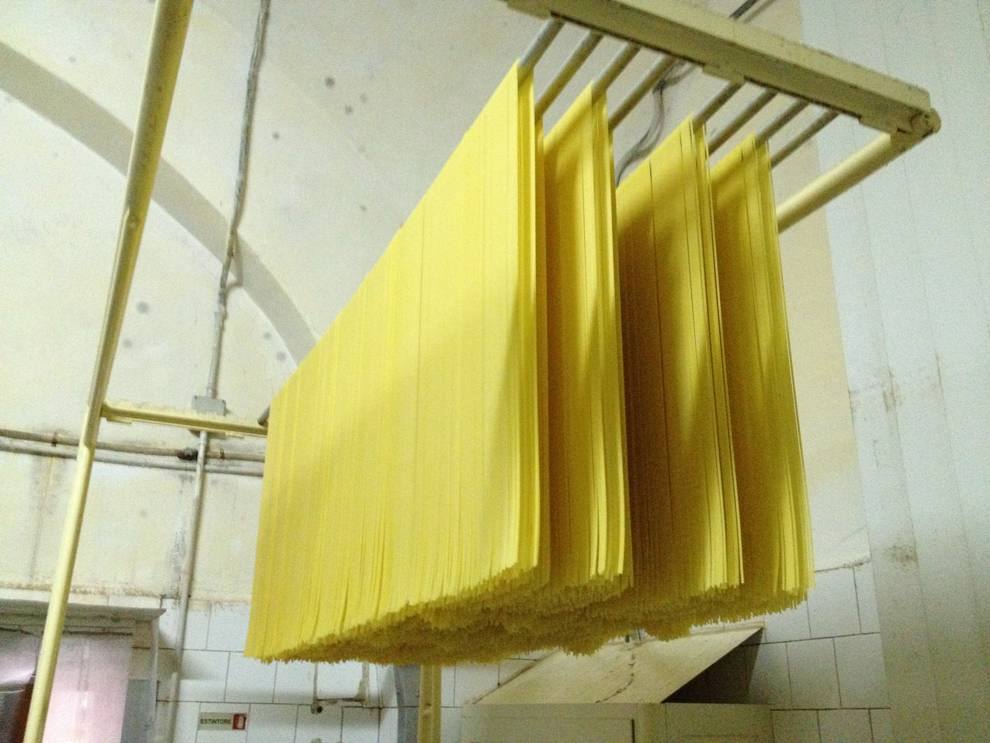
It is easy, from the vantage of 2026, to forget that Mezzaluna was once an argument. When Bozzi opened it, he imported artisanal pasta from Gragnano, near Naples, and olive oil from his family’s Tuscan estate, home to some 800 olive trees, over the objections of people who doubted Americans would notice the difference. “I said absolutely not,” he told The Post. “They recognize quality. They understand when it’s good.” The restaurant’s own site still quotes The New York Times’s verdict that Mezzaluna “burst upon the Manhattan restaurant scene in 1984” with “the kind of place which they had only known while traveling in Italy.”
The room itself never really changed: terracotta floors, a wood-fired oven, a few tables jammed closer together than any fire marshal would design today, and the dozens of framed Italian paintings that turned the walls into a small gallery. It served wine but no hard liquor. It was, by the testimony of three generations, the place one went after school, with one’s grandmother, and on any Tuesday one could not decide where else to go.
“Some Mezzaluna staff have been there for over 40 years,” Roberto Manfe, the general manager, told The Post. ABC7, which stopped by during the final week, found Bozzi in the dining room and a customer, Jonathan Steinman, already in mourning. “I’m going to miss the fact that they always know what we’re going to order,” Steinman said. Bozzi took the longer view. “My daughter is inside with her friends. They used to come here when they were in high school,” he said. “We have three generations of customers.”
Where the furniture is going
The most unexpected coda came from La Voce di New York, which interviewed Bozzi on closing day. The interiors, designed by the architect Roberto Magris, including the oven, the paintings, the tables and the sign, are headed upriver to Magazzino Italian Art, the museum of postwar and contemporary Italian art in Cold Spring founded by Nancy Olnick and Giorgio Spanu. A restaurant that spent four decades exhibiting Italian art to people eating rigatoni will, in other words, become an exhibit itself.
La Voce also reported that a neighbor, the jeweler Jennifer Miller, organized a GoFundMe for the staff that raised nearly $30,000. In a neighborhood more accustomed to benefit galas, it was a modest number and a meaningful one.
La Voce recalled that the guest book ran from Andy Warhol to Roberto Benigni to the singer Lucio Dalla. The Upper East Side did not, as a rule, care. Mezzaluna’s genius was that the famous were treated like regulars and the regulars like family, which is the only kind of exclusivity a neighborhood restaurant can afford.
The block that’s left
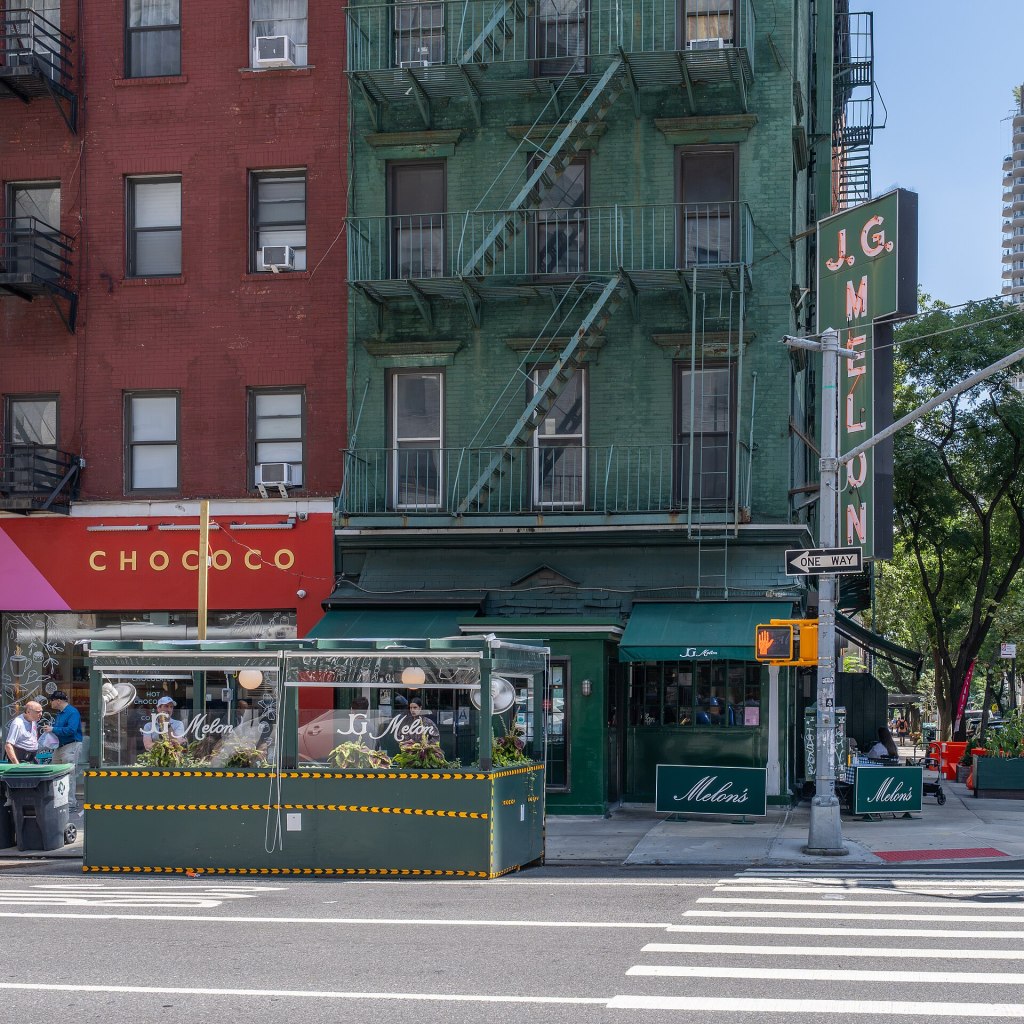
Mezzaluna’s departure joins a sad local ledger. The Post listed Donohue’s and Neary’s among the family-owned institutions the neighborhood has lost in recent years, and noted that the surrounding blocks now support three Blank Street coffee shops. A rumor that Chipotle would take the Third Avenue space circulated for months; nothing on the public record confirms a successor tenant. Next door, at the corner of 74th, J.G. Melon carries on, its hamburger as reliable as ever.
It would be easy to write this as a story about greed, and wrong. No one has accused the landlord of anything; the building needed work, the kitchen needed rebuilding, and the man who would have had to supervise it is 86. The more interesting question is the one the neighborhood keeps asking itself: whether the Upper East Side can still produce a Mezzaluna, a room where the overhead is low enough, the lease long enough and the owner stubborn enough to spend forty years importing pasta that nobody thought Americans would notice.
Bozzi, for his part, refuses to treat the closing as an ending. He and his daughter have talked about another space, ideally on a corner with outdoor seating, though he told The Post there are no imminent plans.
“Let’s not say goodbye,” he said. “Let’s say arrivederci. That’s a big difference. We can see each other maybe soon. Who knows?”
Featured image: J.G. Melon at Third Avenue and East 74th Street, next door to 1295 Third Avenue, where Mezzaluna served for 42 years. Photo: ajay_suresh via Wikimedia Commons, CC BY 4.0.



Leave a Reply