Early voting opened across New York City on Oct. 24, and on Rikers Island a few hundred people who are legally entitled to vote have been trying to do it the only way the law allows them to: by absentee ballot, filled out in a jail, signed, sealed and handed to the Department of Correction.
On Oct. 22 the City Council voted to change how that process is measured and policed. Neither change will touch the ballots being cast this fall.
What passed
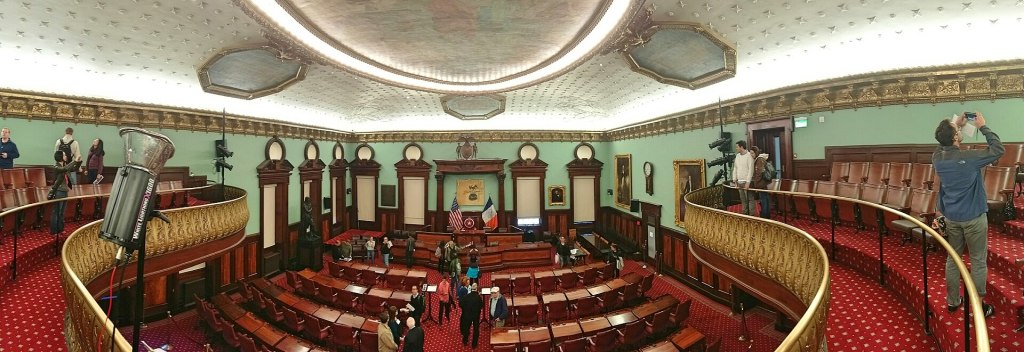
On Oct. 22 the Council approved two bills by wide margins, according to the Council’s summary of the stated meeting. Both now go to Mayor Zohran Mamdani, who has 30 days to sign or veto them.
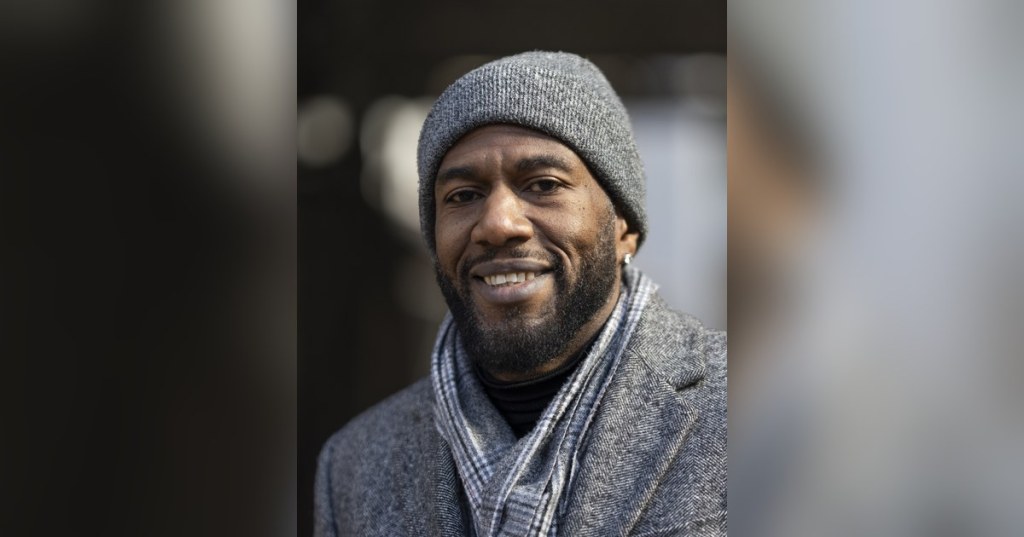
The first, Int. 797-A, is sponsored by Public Advocate Jumaane Williams. It amends Section 1057-a of the City Charter, which already requires the Department of Correction (DOC) to describe its voter-registration work. The bill adds detail to the department’s annual Jan. 15 report: the number of registration and voting events it holds; the number of absentee ballots it distributes, broken out by facility; and the number of completed registration forms returned, by facility and by race, age, gender, disability and veteran status. It passed 48–1, with Council Member Vickie Paladino of Queens the lone no. It takes effect Feb. 1, 2027.
The second, Int. 786-A, from Deputy Speaker Selvena Brooks-Powers of Queens, goes further. It would require DOC staff to check each completed absentee ballot envelope before it leaves the jail for a voter’s signature and date, for an assistant’s signature where one is needed, and to confirm that the ballot is actually inside. Voters would then have a chance to fix any problems. That bill passed 42–7. The no votes, according to the roll call in the meeting transcript, came from Council Members Ariola, Carr, Felder, Morano, Paladino, Vernikov and Wong. NYC Politics noted that both bills had waited 191 days since their April hearing.
Early voting ended Nov. 1, and Election Day is today, Nov. 3. As of Tuesday, both bills were still awaiting the mayor’s signature, according to the Council’s legislative records. Even if the mayor signed both now, the reporting bill would not take effect until 2027, and the department would need time to train staff for the envelope checks.

The numbers behind the bills
The case for the bills rests on figures the Board of Elections gave at an April 14 joint hearing of the Council’s Committees on Governmental Operations and Criminal Justice, chaired by Gale Brewer and Ms. Brooks-Powers.
In the 2025 general election, Michael Ryan of the Board of Elections testified that 621 absentee ballots were issued to people in city jails and 335 were counted. That is about 54 percent, against roughly 73 percent for absentee voters citywide. Another 247 ballots were never returned, 23 were undeliverable, and 14 came back with problems that could have been cured. In the June 2024 primary, he said, there were 364 requests, 155 ballots were delivered, and 72 were counted.
Mr. Ryan said a missing signature was the most common defect. Under Section 8-400 of the state Election Law, he noted, absentee voting is the only legal way for a jailed voter to cast a ballot. He did not take a side on the city bill. “If the law provides us with a directive,” he said, “we will operationally work on that directive.”
The city’s jails hold about 6,700 people. More than 80 percent of them have not been convicted and are awaiting trial. Most people held only on pretrial charges, and people serving misdemeanor sentences, keep their right to vote under state law.
The sponsors’ case
Mr. Williams framed the bill in historical terms on the floor. “It is hard not to hear the echoes of Jim Crow in this effective disenfranchisement of thousands of potential voters,” he said. “Incarcerated people’s civil rights, including voter rights, are not optional.”
He also made a public-safety argument, the one most likely to appeal to members who care less about civil rights: “Voting is one of a number of pro-social behaviors associated with reduced recidivism.”
Ms. Brooks-Powers made a narrower, more practical case. “It is far too easy for a vote to be lost to a missing signature on the ballot envelope, an envelope being incorrectly sealed, or a ballot being sent off without the correct envelope,” she said, adding that “being in custody does not end anyone’s right to vote. A ballot should not be thrown out for an error that could have been caught.”
The department’s doubts
The administration’s concerns about Int. 786-A were on the record well before the vote. At the April hearing, a DOC representative told the committee that the department “has concerns about the feasibility” of the bill, which “would appear to involve the Department of Correction in the administration of elections, something the department is not set up to do.”
The department also noted that it “does not receive notifications of ballot deficiencies.” The Board of Elections sends cure notices to voters, not to their jailers, so DOC has no ready way to learn that a ballot it already mailed has a problem.
That is a serious objection, not a technicality. Council Member Frank Morano of Staten Island, one of the seven who later voted no, pressed the department at the hearing on how it could carry out the bill within those limits. Skeptics can fairly ask whether a jail system with chronic staffing problems should also be checking election paperwork, and whether the job belongs with the Board of Elections.
Supporters respond that the bill doesn’t ask officers to judge a ballot, only to check, before it is mailed, that the envelope is signed, dated and not empty. That is roughly what a careful friend would do for a voter at a kitchen table. Brooklyn Defender Services, which represents many people held on Rikers, submitted written testimony for the April hearing.
What happens next
We did not find a public statement from Mr. Mamdani on either bill. With veto-proof margins of 48 and 42 votes, his choice is largely symbolic: he can sign them, let them become law without his signature after 30 days, or veto them and invite an override.
The harder question is practical. If Int. 786-A becomes law, someone at DOC will have to write procedures for checking envelopes across a jail system already short of staff, and the Board of Elections will have to decide whether to tell the department when a jailed voter’s ballot needs a fix. Nothing in the record shows that either agency has started that work.
The same meeting dealt with election administration in another way. The Council voted 49–0 to confirm Marricka Scott-McFadden as the Bronx Democratic commissioner on the Board of Elections, so she will start just in time for an election with a lot of mail to open.
For the 335 or so people whose ballots were counted from city jails last November, and the 286 whose ballots were not, the changes come one election late. Whether they arrive at all now depends on City Hall.
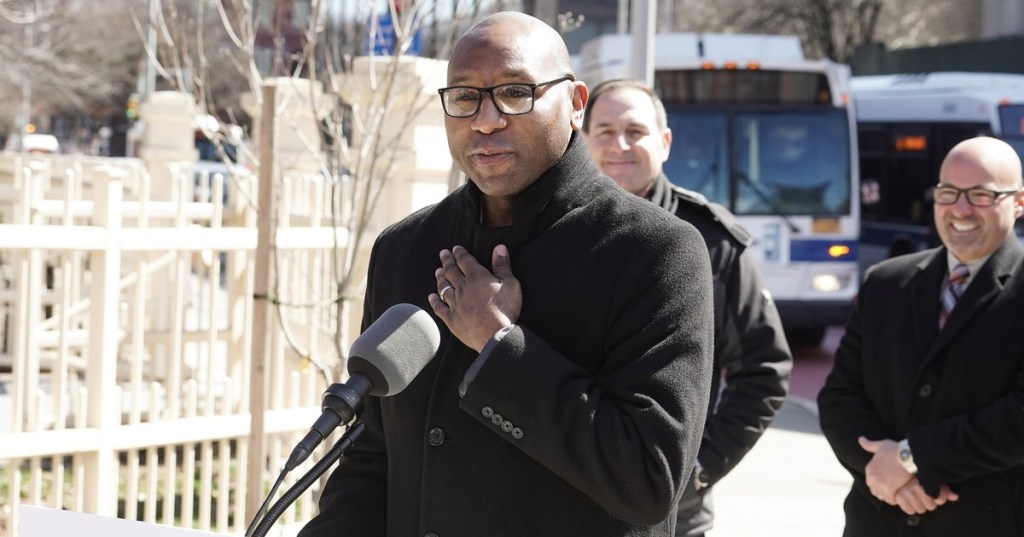
Featured image: Public Advocate Jumaane Williams in Manhattan, March 2026. Photo by Tessa Bury via Wikimedia Commons, CC BY 4.0.



Leave a Reply