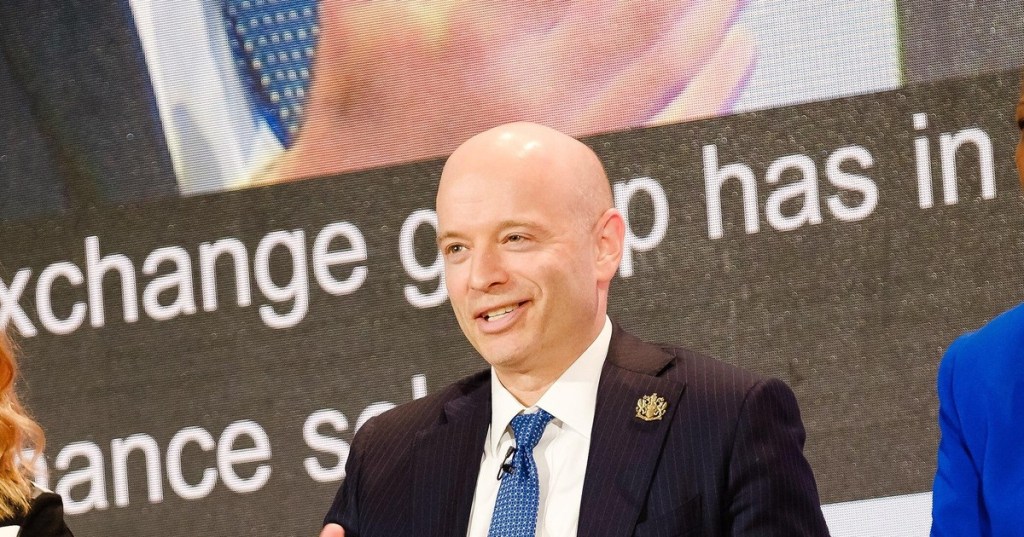
The biggest bank-advised deal to cross a New York desk last week did not involve a factory, a hospital or a sports team. It involved a newsroom, of sorts. On October 22, the London Stock Exchange Group agreed to buy Octus, the Manhattan-based credit-intelligence company, for $3.535 billion in cash.
It is, as Fintech Garden noted, LSEG’s largest acquisition since it bought Refinitiv in 2019. It is also a tidy illustration of where Wall Street’s advisory fees are coming from this autumn: not only from companies merging with each other, but from the companies that sell information about everyone else’s debt.
What Octus is
Octus was founded in 2013 by Kent Collier as Reorg, a name that told you its original trade. Its analysts, lawyers and reporters covered distressed debt and bankruptcies, reading court dockets and credit agreements so that hedge funds, banks and law firms did not have to. The company rebranded as Octus in October 2024 to reflect a broader remit across leveraged finance and private credit.
According to the deal announcement, Octus now has more than 900 employees and more than 750 customers, with over 40,000 users. LSEG said it expects the business to generate more than $300 million of revenue in 2026, with an adjusted EBITDA margin of around 40 percent.
Those two numbers make for some quick arithmetic. At $3.535 billion, LSEG is paying roughly 12 times expected 2026 revenue. If the 40 percent margin holds, The City Politic’s own calculation puts the price at close to 30 times this year’s adjusted EBITDA. That is a full price, and LSEG is not pretending otherwise; it told investors it expects the deal to be broadly earnings-neutral in the first full year after completion.

The seller
The seller is a private-equity firm. Funds advised by Permira bought a majority stake in what was then Reorg from Warburg Pincus in 2022, in a deal whose terms were not disclosed at the time. Permira said that over its roughly four-year hold Octus “more than tripled ARR,” helped along by acquisitions of FinDox, Sky Road and LevPro. Permira called the sale the sixth strategic exit of 2026 for its funds and said it had distributed $13 billion to investors over the past 12 months.
Management, including Collier, is also selling. Collier is expected to stay on and will report jointly to Gianluca Biagini and Ron Lefferts at LSEG, according to the announcement.
The bankers
The advisory line-up reads like a roll call of the firms that have dominated this year’s sponsor exits.
- Morgan Stanley was lead financial adviser to LSEG, with Barclays also advising the buyer.
- Evercore and Goldman Sachs advised the sellers.
There is a neat symmetry in Evercore’s seat. When Warburg Pincus sold Reorg to Permira in 2022, Evercore advised the company, and Morgan Stanley was one of Permira’s advisers, according to Permira’s own announcement at the time. Four years later, the same two banks are on the deal again, on different sides of a much bigger number.
LSEG is paying with borrowed money. The group said the purchase will be financed by external debt and that it expects leverage to be near the upper end of its 1.5 to 2.5 times target range at the end of 2027. It also said it remains committed to a £3 billion share buyback. That combination, a large debt-funded acquisition alongside continued buybacks, will be watched closely by credit analysts; the irony that it is being done to buy a credit-analysis business is not lost on anyone.
Why London wants a New York credit shop
The strategic logic is straightforward, even if the price is not. The private-credit market, which LSEG estimates at about $3.5 trillion, runs on documents rather than screens. Loan terms, covenants and amendments are negotiated privately and are notoriously hard to compare. Octus’s business is turning that paper into searchable data.
LSEG, run by chief executive David Schwimmer, billed the transaction as creating a market leader across public and private credit solutions. For Octus, the pitch is distribution: its content plugged into the terminals and data feeds that LSEG already sells to banks and investors around the world.
LSEG plans to fold Octus into its Data & Analytics division alongside existing fixed-income products including Workspace, LPC and Yield Book, and to connect it to Tradeweb, the electronic bond-trading platform in which LSEG holds a majority stake. Tradeweb is separately in the process of buying Trumid, a credit-trading platform.
There is also a defensive argument. As Bloomberg reported, LSEG has spent much of the year fending off investor worries that artificial intelligence will erode the value of conventional market-data subscriptions. Buying a company whose edge comes from people reading documents and talking to sources, rather than from widely available text, is one answer to that worry. Permira, for its part, describes Octus as an “AI-native” platform. Both descriptions can be true at once, and the price suggests LSEG believes they are.
The New York angle
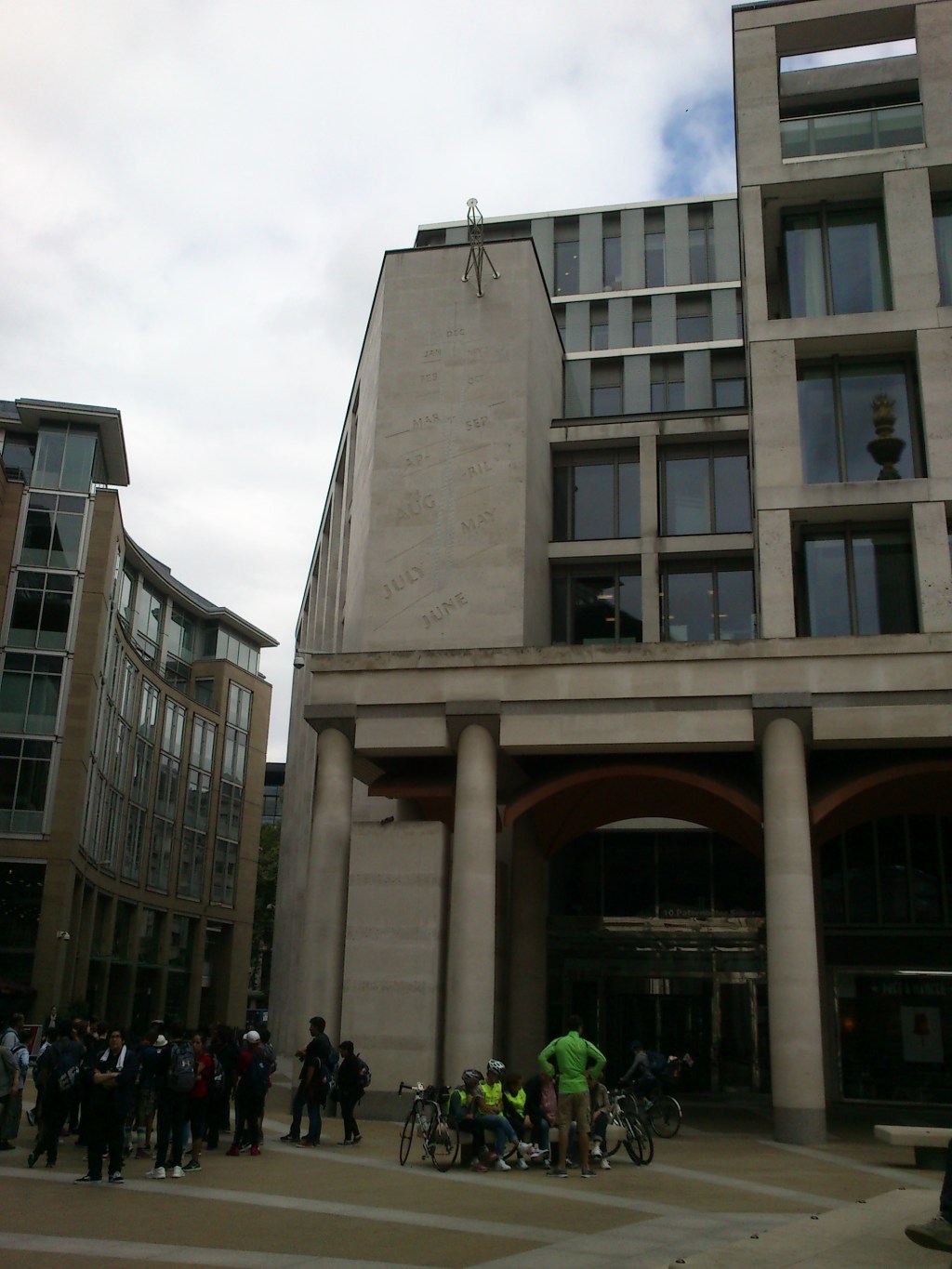
For New York, the deal is another example of a homegrown financial-services business built in Manhattan and sold to a foreign strategic buyer at a premium price. Octus is headquartered in New York, and the transaction is expected to close in the first half of 2027, subject to regulatory approvals.
LSEG announced the deal alongside third-quarter results that showed group organic income up 8.8 percent, and it raised its full-year outlook. The timing was not accidental: it is easier to ask shareholders to accept a $3.5 billion debt-funded purchase on a day when the core business is beating expectations.
What to watch
Three things. First, whether regulators in the United States and Britain take an interest in a market-data group buying one of the leading independent sources of credit intelligence. Second, how Octus’s customers, many of whom are hedge funds and restructuring lawyers who prize its independence, respond to becoming customers of an exchange operator. Third, whether the 30-times-EBITDA price sets a benchmark for other private-equity-owned financial-data businesses now being prepared for sale.
For the bankers at Morgan Stanley, Barclays, Evercore and Goldman, the answer to the most important question is already settled: the deal is signed, and the fees will follow at closing.
Featured image: David Schwimmer, chief executive of the London Stock Exchange Group, speaking in London in January 2020. Photo by DFID/Graham Carlow via Wikimedia Commons, CC BY 2.0.





Leave a Reply