The first big take-private of Monday, Oct. 26, came from an unusual buyer: a Catholic health system rather than a buyout fund. The private-equity firm in the deal is staying in, not getting out.
HealthSpan Partners, a contractual affiliate of the Cincinnati-based nonprofit Bon Secours Mercy Health, said it has signed a definitive agreement to buy Surgery Partners, the Nasdaq-listed operator of ambulatory surgery centers and short-stay surgical hospitals. The all-cash deal values the company at an enterprise value of about $5.7 billion. Public shareholders will get $23.50 a share.
Affiliates of Bain Capital Private Equity own about 39 percent of Surgery Partners and are its largest shareholder. They are not among those public holders. Under the agreement, Bain will roll its shares into equity in the acquiring entity and “remain a significant partner” alongside HealthSpan after closing. Bain has also signed a voting and support agreement, committing its entire block to vote for the deal.
The price, and the price before it
The market had been bracing for a lower number. Shares rose more than 21 percent in premarket trading on Monday after a Financial Times report that Bon Secours was near a deal at around $20 a share. Before the report, the stock had traded at just under $16, down roughly 31 percent over the previous year. That gave the company an equity value of about $2.1 billion. The signed price of $23.50 is well above where the stock sat before the report.
It is still below the price Bain itself floated last year. In June 2025, Surgery Partners and Bain concluded discussions over a non-binding proposal from Bain to buy the shares it did not already own for $25.75 each. Bain withdrew the proposal after talks with the company’s independent committee. The company said at the time that remaining public would create more long-term value. Reuters reported the outcome as a rejection.
Sixteen months later, the stock is roughly a third lower than a year ago and the buyer has changed, but Bain is still at the table. Some holders who wanted more than $25.75 last summer are now being offered $2.25 less. Because Bain is rolling over, it is effectively choosing a new co-owner, not an exit.
Bain’s history with the company goes back to 2017. That year it bought H.I.G. Capital’s controlling stake for about $502.7 million, or $19 a share, and provided $310 million of preferred equity. The same deal paid for Surgery Partners’ purchase of National Surgical Healthcare from Irving Place Capital. Nine years on, the per-share price is up modestly, and Bain’s money stays in.
Who is buying, and why outpatient
Bon Secours Mercy Health is one of the country’s larger Catholic systems. According to Private Equity Wire, citing the Financial Times, it operates 47 hospitals across the United States and Ireland. HealthSpan Partners is its diversified health-services arm. Brentwood, Tennessee-based Surgery Partners has more than 200 locations in 30 states and about 5,000 affiliated physicians. Its specialties include orthopedics, spine, cardiology, gastroenterology and ophthalmology.
The logic is the industry’s logic. Procedures are moving out of hospital operating rooms and into cheaper outpatient settings, and health systems want to own that shift rather than be undercut by it. “As healthcare continues to evolve, it is important to grow in ways that allow us to serve more people, in more communities and through a broader range of care settings,” said John M. Starcher Jr., Bon Secours Mercy Health’s president and chief executive.
Dr. Wael Haidar, the system’s president of clinical operations and HealthSpan’s president, said patients “are looking for high-quality care that fits more seamlessly into their lives.” Surgery Partners chief executive Eric Evans said the deal represents “the best path forward,” and that it delivers “an attractive all-cash premium to our shareholders.”
The structure includes some careful wording. Surgery Partners’ name, brand and headquarters are expected to stay in place. The company “is also expected to remain a secular organization.” It will operate under Bon Secours’ Statement of Common Values, but it “will not be characterized as a Catholic ministry entity.” For physicians and patients who might wonder whether a religious system’s ownership changes which procedures are offered, that language is likely to draw attention. The release does not say how the Statement of Common Values will apply at specific facilities.
The deal also follows Ascension’s acquisition of the surgical-care provider Amsurg earlier this year for about $3.9 billion, as reported by Private Equity Wire. Two of the largest Catholic systems are now buying outpatient surgery at scale.

The money and the advisers
HealthSpan says it will finance the purchase with cash on hand and new debt, and that commitments are in place. Private Equity Wire puts Surgery Partners’ existing debt at about $3.5 billion. Closing is expected in the first quarter of 2027. It requires approval from Surgery Partners shareholders and regulators. The company will then leave the Nasdaq.
A special committee of independent directors negotiated the deal and unanimously recommended it. Because Bain is both the largest holder and a continuing owner, the company and other filers plan to submit a Schedule 13E-3, the disclosure required for going-private transactions involving affiliates. That filing should show how the committee weighed the $23.50 against last year’s $25.75.
The adviser list is long, and mostly based in Manhattan.
- Buyer side: Jefferies is HealthSpan’s exclusive financial adviser and sole initial underwriter of the committed financing. Paul, Weiss is legal counsel, McGuireWoods is healthcare regulatory counsel, and Joele Frank handles communications.
- Company side: Centerview Partners leads for Surgery Partners, with Leerink Partners. Ropes & Gray and McDermott Will & Schulte are its lawyers, and FTI Consulting handles communications.
- Special committee: Moelis & Company is financial adviser and Goodwin Procter is legal counsel.
- Bain: Kirkland & Ellis is counsel, with Barclays and J.P. Morgan as financial advisers.
What to watch
There are three questions. First, whether any holders argue that $23.50 undervalues a company that its largest investor once valued at more. Second, how antitrust and state regulators view a nonprofit system’s purchase of a national for-profit chain. Third, what Bain’s continuing stake looks like once the proxy discloses its terms.
For now, a buyout firm that could not take the company private alone has found a partner that can. It gets to stay in a business it has owned for nine years without writing a bigger check.
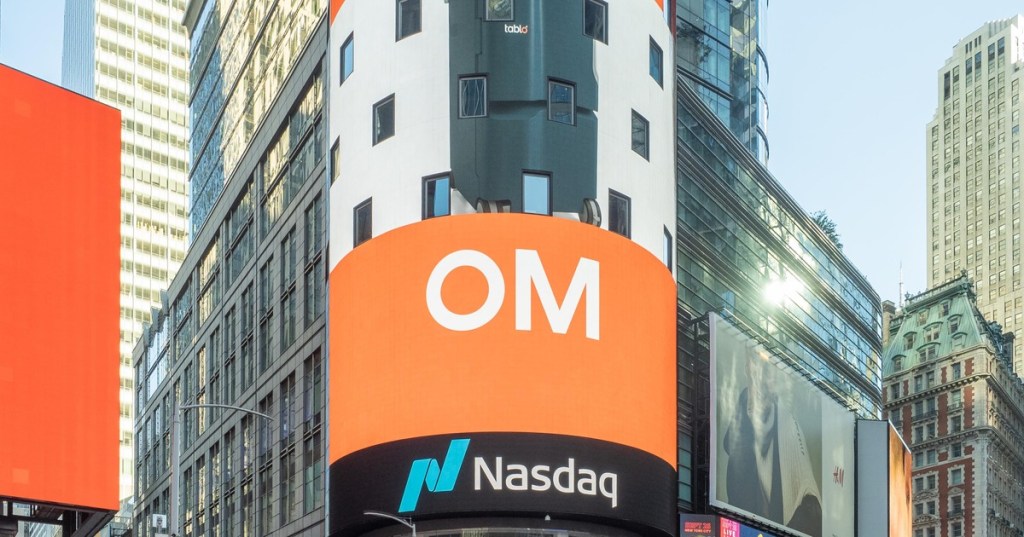
Featured image: The Nasdaq MarketSite in Times Square, where Surgery Partners’ shares trade. Photo by Ajay Suresh via Wikimedia Commons, CC BY 2.0.




Leave a Reply