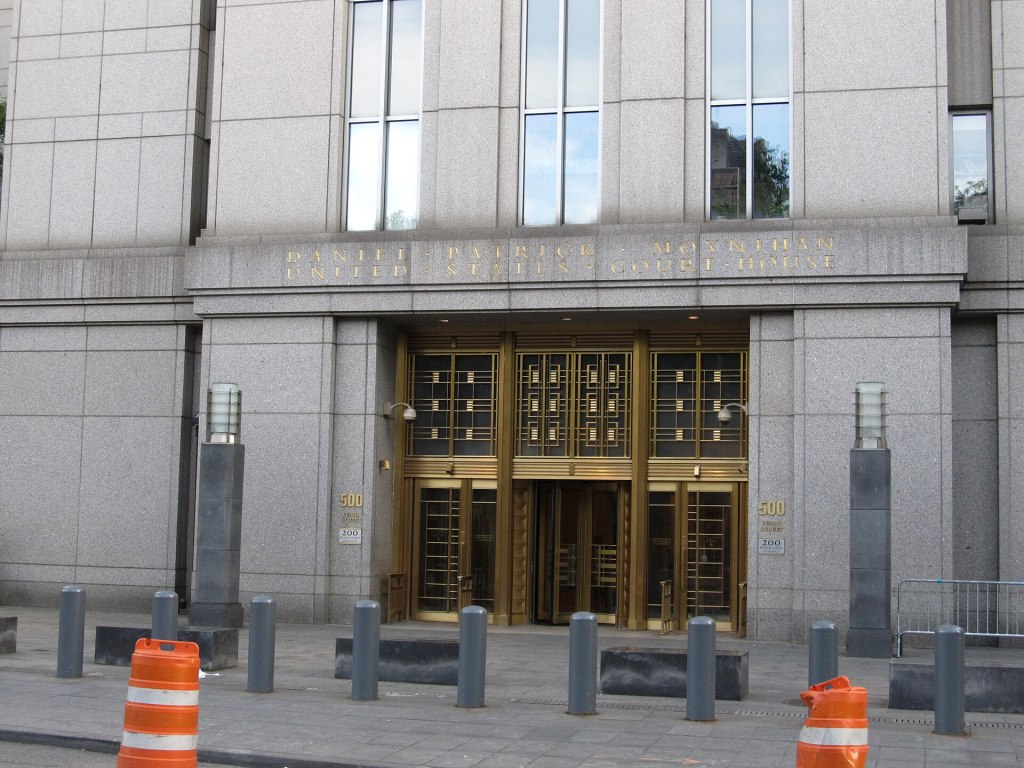
A Manhattan federal judge ruled Monday, Oct. 26, that the Justice Department unlawfully fired Maurene Comey, the former Southern District of New York prosecutor and daughter of former FBI Director James B. Comey. He also rejected, in sweeping terms, the government’s argument that the president may remove career federal prosecutors at will regardless of what Congress has said.
The 55-page opinion and order by U.S. District Judge Jesse M. Furman in Comey v. United States Department of Justice, No. 25-CV-7625 (JMF), granted Comey judgment on her central claims. It ordered retroactive reinstatement and back pay from the date of her firing through Dec. 20, 2025. The court inferred that she took a different job on that date. Nicole Gueron, one of her lawyers, said in an email to The City Politic that Comey was reinstated from July 16 to Dec. 20, as her legal team had requested, and that she will remain at Patterson Belknap, the law firm where she now works.
The Justice Department said it would appeal “in due course,” CNBC reported.
The firing
Comey served nearly ten years as an assistant U.S. attorney in the SDNY’s criminal division. The opinion notes she “was assigned some of the country’s highest profile cases and consistently received the highest accolades from supervisors and peers alike.” On July 16, 2025, she received an email from Justice Department officials in Washington ending her employment “[p]ursuant to Article II of the United States Constitution and the laws of the United States.”
Her lawsuit alleged that she was fired “solely or substantially” because of her father, a longtime adversary of President Donald J. Trump, or because of her perceived political beliefs, or both. The government said the firing was directed and authorized by then-Attorney General Pamela J. Bondi.
The holding
Furman’s analysis rested on two steps.
First, the statute. Federal law says “[e]ach assistant United States attorney is subject to removal by the Attorney General.” But the Civil Service Reform Act also governs how career employees like AUSAs may be removed: “only for such cause as will promote the efficiency of the service,” and only after notice and a chance to respond. Furman wrote that Comey’s removal “indisputably violated the CSRA.” He added that even the government conceded those limits were not followed.
Second, the Constitution. The government argued that Congress cannot regulate the removal of federal prosecutors at all, because prosecution falls within the president’s “conclusive and preclusive” Article II power. It relied on recent Supreme Court decisions, including Trump v. United States and Trump v. Slaughter. Furman disagreed. That argument, he wrote, “flies in the face of nearly two centuries of Supreme Court precedent, rooted in the text of the Appointments Clause, holding that Congress may generally restrict the removal of ‘inferior officers.’”
He said a lower court could not accept the claim that recent rulings had silently overturned that line of cases, and that the claim was wrong on the merits anyway. Accepting it, he wrote, would “unsettle the very equilibrium established by this Nation’s constitutional system” and “risk a return to the spoils system that Congress has sought to end since the nineteenth century.”
The scorecard
The ruling was not a clean sweep for either side.
- Comey won judgment on Counts One, Two, Five and Six, including declarations that the government violated the separation of powers, the Administrative Procedure Act, and her Fifth Amendment due-process and statutory rights.
- The government won on Count Three, an ultra vires claim.
- Counts Seven through Ten were dismissed, though not for the reasons the government offered.
- Furman reserved judgment on Count Four, her First Amendment claim. He noted that it raises constitutional questions, such as executive privilege, that courts try to avoid. He ordered Comey to show cause by Nov. 9 why the count should not be dismissed. The government may respond within a week.
He also stayed discovery, which spares the administration, for now, from an inquiry into who decided to fire Comey and why. The amount of back pay and any award of attorneys’ fees remain open.
What it means
The opinion fits squarely into the largest structural argument in American law right now: how far the Supreme Court’s recent removal-power decisions extend. The administration has argued that those decisions reach deep into the career civil service. Furman drew a firm line between officials the president must be able to remove at will and inferior officers, like line prosecutors, whose removal Congress may regulate so long as they answer to a principal officer the president can fire.
Both sides should keep some perspective. For Comey’s supporters, the ruling validates the legal claim, but it does not decide the motive question, which the court left for later. For the administration, losing in district court was always likely on this theory. Its real audience is the Second Circuit and, beyond that, the Supreme Court, which has shown real interest in presidential control of the executive branch but has not adopted anything as broad as the argument made here.
Comey’s lawyers, Nicole Gueron, Ellen Blain and Deepa Vanamali of Clarick Gueron Reisbaum and Margaret Donovan of Koskoff, Koskoff & Bieder, said in a statement to The City Politic: “This hard-earned victory belongs to Ms. Comey, to all civil servants, and to all fighting for the rule of law. As the Court correctly held, to accept the government’s argument about unlimited executive power ‘would be to unsettle the very equilibrium established by this Nation’s constitutional system.’ This decision reaffirms our bedrock system of checks and balances: the President is not above the law.” The Justice Department has not said when it will file its appeal.
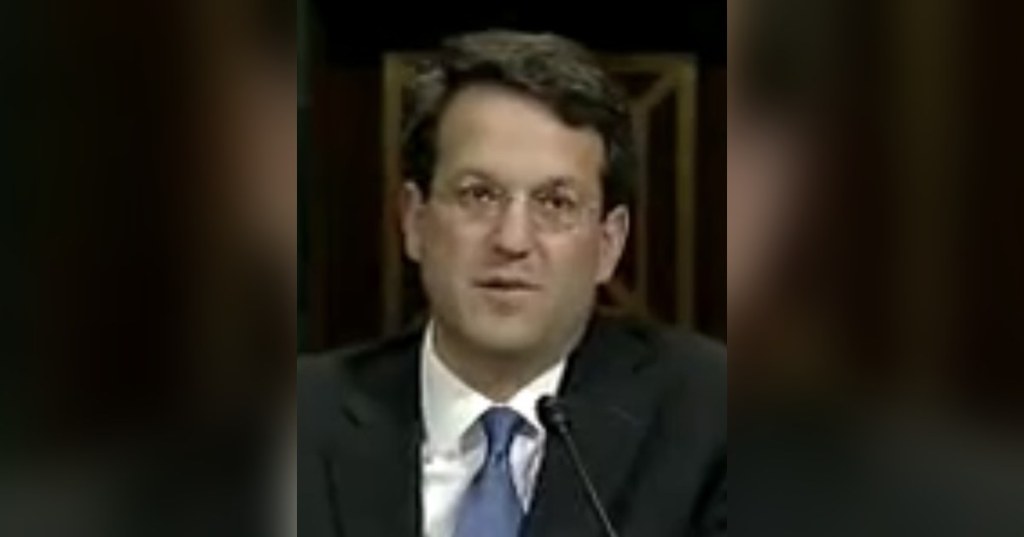
Featured image: U.S. District Judge Jesse M. Furman at his 2011 Senate Judiciary Committee confirmation hearing. Photo by U.S. Senate Judiciary Committee via Wikimedia Commons, public domain.





Leave a Reply