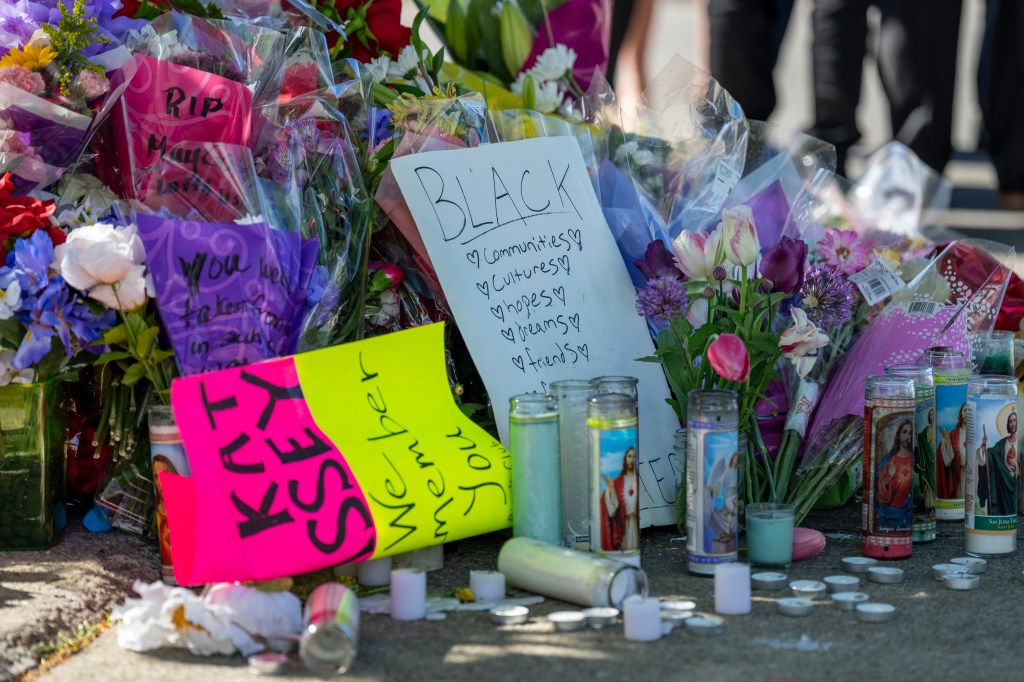
After a gunman killed 10 Black people at a Tops supermarket in Buffalo in May 2022, New York lawmakers noticed a detail: he had worn body armor, and a security guard’s shot did not stop him. Within weeks the state banned most civilians from buying or selling it.
On Oct. 21 a federal judge in the same city struck that ban down.
In a 47-page decision and order in Heeter v. James, No. 1:24-cv-00623-JLS-HKS, Judge John L. Sinatra Jr. of the U.S. District Court for the Western District of New York granted summary judgment to the challengers and permanently enjoined enforcement of the ban on purchases and sales. He also granted the state’s request for a 14-day stay so it can appeal to the U.S. Court of Appeals for the Second Circuit.
The law
The 2022 package added Sections 270.21 and 270.22 to the Penal Law and Section 396-eee to the General Business Law. Together they barred the sale, purchase and delivery of body vests to anyone outside an “eligible profession,” including police, peace officers and the military. A first offense was a class A misdemeanor; a repeat offense was a class E felony.
The plaintiffs are two New Yorkers, Benjamin Heeter and Joseph Wurtenberg, and the Firearms Policy Coalition, a gun-rights group that has brought several challenges to New York’s gun laws. The defendants are Attorney General Letitia James, State Police Superintendent Steven G. James, Acting Erie County District Attorney Michael J. Keane and Monroe County District Attorney Sandra Doorley, according to the court docket.

The reasoning
The case turned on a threshold question under the Supreme Court’s 2022 decision in New York State Rifle & Pistol Association v. Bruen: is body armor an “arm” at all?
New York said no. In its briefs the state argued that “body armor is not an ‘Arm’ as the term would have been commonly understood in 1791 or 1868,” calling it a “tactical accessory to firearms.” It also pointed to what it described as a “long uncontradicted Anglo-American tradition of armor regulation,” including laws from English monarchs.
Judge Sinatra, appointed by President Donald J. Trump in 2019, rejected each argument. “Indeed, body armor is an ‘Arm’ protected by the plain text of the Second Amendment,” he wrote. Because it is, the state had to show that the ban fits the nation’s “historical tradition of sufficiently analogous regulations.” Then came his summary: “New York fails that test.”
The English examples, he wrote, were “irrelevant to the regulation of arms in the United States,” and he called the ban “a novel outlier unsupported by any mainstream tradition.” And he concluded that “body armor—in some form—has been available to citizens throughout American history, and the Second Amendment protects an individual’s right to purchase it for self-defense.”
He also turned the state’s own appellate precedent against it. The Second Circuit has upheld some weapons restrictions on the ground that the weapons are “uniquely designed to create mayhem,” a line the judge quoted from that court’s 2025 decision upholding Connecticut’s assault-weapons law, a case the Supreme Court has since agreed to review as Grant v. Higgins. Body armor, he wrote, is “a purely defensive arm,” and the state offered no evidence on which a factfinder could conclude otherwise.
The scope of the order
The state argued that a statewide injunction would violate the Supreme Court’s 2025 ruling in Trump v. CASA, which limited “universal” injunctions. Judge Sinatra disagreed, reasoning, as several other district courts have, that CASA addressed nationwide orders against federal policies, not orders barring state officials from enforcing a state law. He noted one contrary ruling from Arizona.
On the stay, the judge said he did not think the state was likely to win on appeal. But he gave it 14 days anyway, noting that a state “suffers a form of irreparable injury” whenever its laws are blocked and that the plaintiffs, who sued in 2024, had never sought a preliminary injunction. That stay was due to run out in early November, but the coalition said in an email to The City Politic that it has since reached an agreement with New York “for an expedited appeal in exchange for a stipulated stay during the appeal.” With the agreed stay, the group said, the injunction won’t take effect when the 14-day stay expires. “We want a prompt resolution of this case and a permanent end to New York’s unconstitutional body armor ban,” it said.
The ruling is limited to buying and selling. As the Firearms Policy Coalition noted, it does not affect separate state laws that increase penalties for wearing body armor while committing certain crimes.
The reactions
The Firearms Policy Coalition celebrated. Its president, Brandon Combs, called the decision “a humiliating defeat for New York’s authoritarian gun control regime.”
The attorney general’s office said it was reviewing the ruling, Courthouse News reported. According to the coalition, the state has since agreed to an expedited appeal to the Second Circuit.
The policy debate will not end with the ruling. Supporters of the ban point out that the Buffalo shooter and other mass shooters have used armor to keep firing after being shot, and that the law exempted the professions with the clearest need for it. Challengers argue, as the judge found, that a vest is purely defensive and that law-abiding people have legitimate reasons to want one. The coalition described the ruling as the first known federal judgment striking down a general ban on buying body armor. Its plaintiffs, it told The City Politic, “brought this case because they want to exercise their right to purchase defensive body armor,” but the group said it was “not going to speculate about any specific purchases or retailers’ business decisions.”
The Second Circuit has generally sided with New York on gun rules since Bruen. Judge Sinatra’s ruling sets up a direct test of whether that court is willing to treat protective gear differently from weapons. With the Supreme Court now reviewing Grant v. Higgins, its answer could shape how the appeals court approaches the case.
The coalition said Grant is the companion case to its own Viramontes v. Cook County, which it described as the lead case now before the Supreme Court, and that the justices will hear both on Dec. 2 on whether governments can ban commonly possessed semiautomatic rifles like the AR-15. “While Heeter involves defensive armor rather than semiautomatic firearms, these cases raise fundamental questions about the constitutional limits on government bans of protected arms,” the group said. “We intend to defend our historic Heeter victory in the Second Circuit while pursuing a nationwide ruling against unconstitutional arms bans in Viramontes.”
For now, the law remains enforceable. Under the agreement the coalition described, it will stay that way while the Second Circuit hears the state’s expedited appeal.
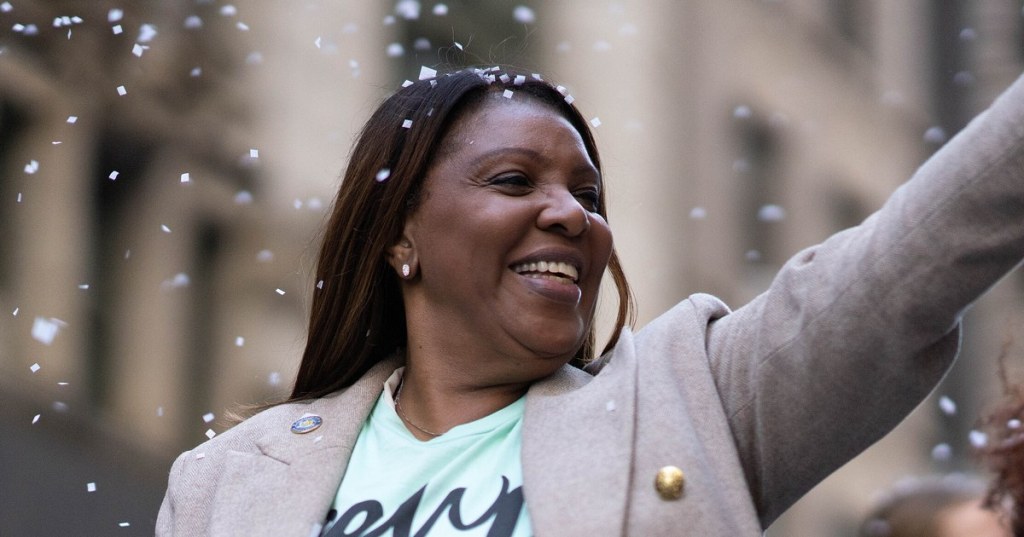
Featured image: New York Attorney General Letitia James in Lower Manhattan, October 2024. Photo by Anthony Quintano via Wikimedia Commons, CC BY 2.0.



Leave a Reply