
For more than six decades, the Empire State Building’s fortunes have run through one family’s firm. Wien & Malkin, the partnership built by Lawrence Wien and his son-in-law, Peter L. Malkin, later became Malkin Holdings; and in 2013, as Wikipedia’s account of Peter Malkin’s career records, Peter and his son Anthony took the portfolio public as Empire State Realty Trust, raising $930 million. Peter became chairman emeritus. Anthony, known as Tony, became the public company’s chief executive.
Thirteen years later, a shareholder has turned up with a filing that no founding family enjoys reading.
The filing
On October 5, Erez Asset Management and its founder, Bruce Schanzer, filed a Schedule 13D with the Securities and Exchange Commission disclosing beneficial ownership of 10 million shares of ESRT’s Class A common stock, or 5.8 percent. According to RealtyWire’s reading of the filing, the trigger date was October 1, and the shares cost approximately $43 million including commissions. A related fund, Erez REIT Opportunities LP, holds 7.5 million of those shares.
The choice of form matters. A passive investor crossing 5 percent files the short Schedule 13G. The 13D is the long form, used by holders who intend to influence a company’s strategy, and it obliges them to say what they want.
What Erez wants, according to the filing, is a conversation. The firm says it believes ESRT’s shares are undervalued and that it has already talked to management and the board about capital allocation, operations and strategy, “including a potential strategic review of some or all” of the company’s assets. It says it intends to discuss those matters with management and the board, and may raise governance, board composition, capital structure, dividend and buyback policy, and executive compensation. Beyond that, the filing describes no present plan for a takeover bid, merger or delisting.
The Real Deal cast the arrival as an activist at Tony Malkin’s gates. That is a fair description of the form. It is a little early to call it a campaign.
Who is knocking
Schanzer is not a stranger to the REIT world. According to RealtyWire’s summary of the filing, he formed Erez in August 2022 to invest in small-capitalisation REITs, after more than a decade as president and chief executive of Cedar Realty Trust. Before that he was a managing director in Goldman Sachs’ real estate investment banking group, worked at Merrill Lynch, and began his career as a real estate lawyer in New York. The firm lists its address in New Rochelle.
He has done this before. In 2024, Franklin Street Properties reached a cooperation agreement with Erez and another investor, RealtyWire noted.
The problem on the 86th floor
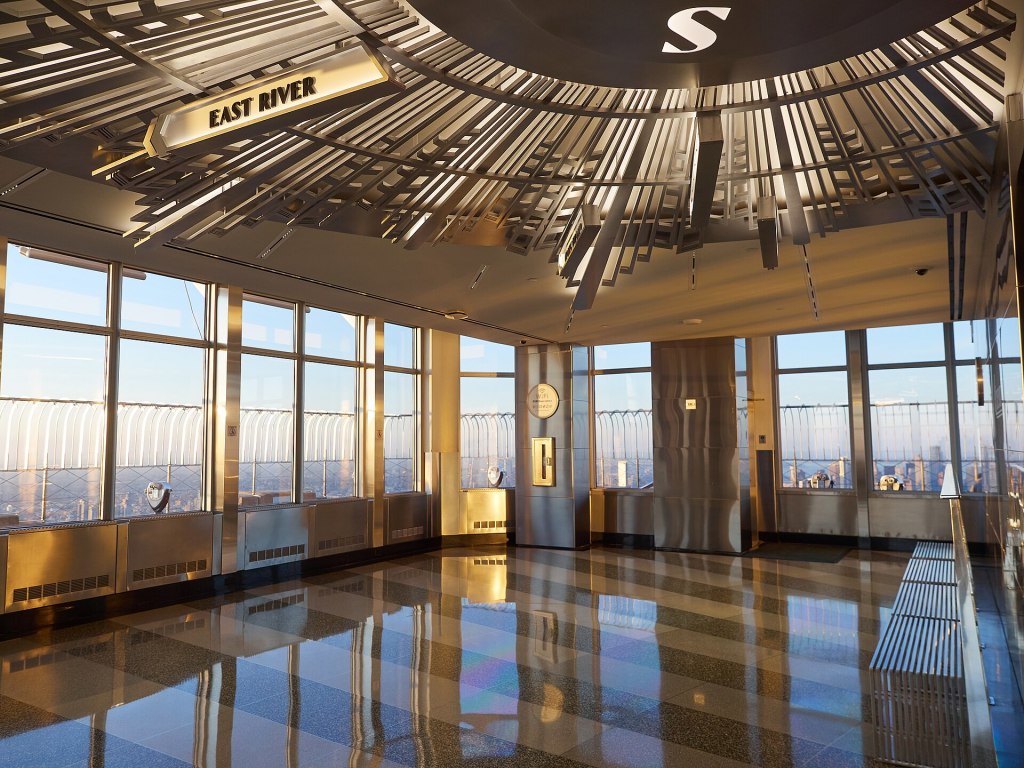
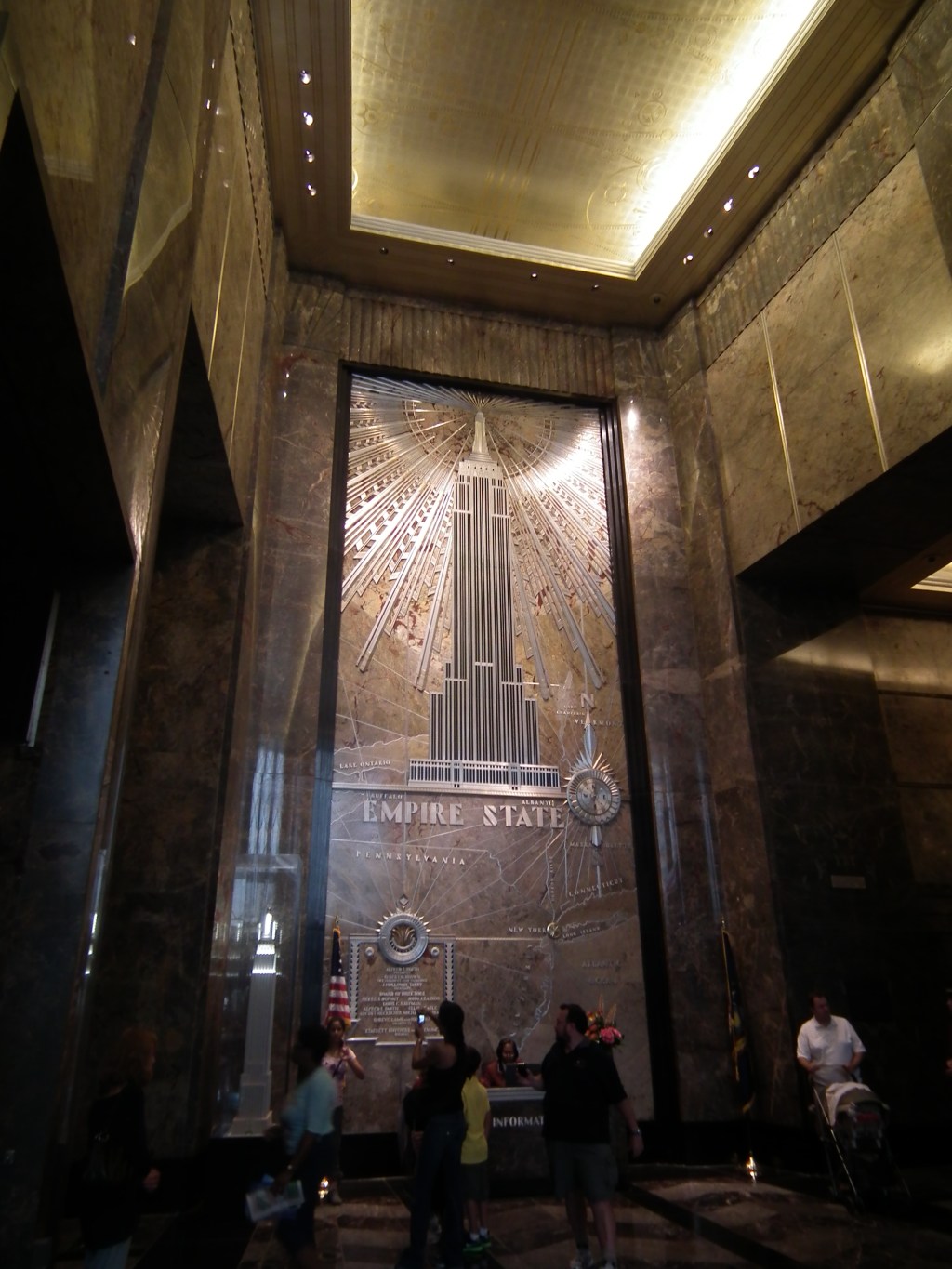
ESRT is a concentrated bet on Manhattan: an office, retail and residential portfolio in New York City anchored by the Empire State Building. The office business has held up reasonably well. In its second-quarter results, released on July 29, the company said its commercial portfolio was 94.9 percent leased, and it reported its 20th consecutive quarter of positive office leasing spreads, at 17.8 percent.
The trouble has been the observation deck, the business that tourists know best and that once made ESRT unusual among office landlords. Observatory revenue fell to $24.2 million in the second quarter from $33.9 million a year earlier, and observatory net operating income roughly halved, to $12.4 million from $24.1 million. The company cited reduced international tourism and weakness in its pass programme.
The consequences reached the bottom line. ESRT took a non-cash goodwill impairment of $166.1 million on the observatory business, which, together with a $124.6 million gain on the sale of 250 West 57th Street, left a net loss of 15 cents a share. Core funds from operations were 21 cents a share. The company cut its full-year Core FFO guidance to 75 to 79 cents a share, from 85 to 89 cents in February, and said it was now assuming observation-deck NOI of $55 million for the year.
In other words, the asset that gives ESRT its name and its glamour is currently the part of the business doing the most damage. That is the opening an activist looks for: a sum-of-the-parts argument in which a profitable Manhattan office portfolio is weighed down by a tourism business with limited visibility.
The family question
The Malkins’ position is not that of a typical founding family at a public company. Tony Malkin is chairman and chief executive, with Christina Chiu as president, and the family’s role runs through the history of the building itself. Any strategic review that considered selling or separating assets would therefore be about more than balance sheets. It would touch a legacy that runs from Lawrence Wien’s property syndications through the 2013 public offering.
That does not mean the family is cornered. Erez holds 5.8 percent, not a controlling stake, and the filing is explicit that it has no present plan for a takeover. The company has also been active on its own: in the second quarter it sold 250 West 57th Street for $275 million and spent $110 million buying the land under 111 West 33rd Street and 1400 Broadway, recycling capital into a December 2025 acquisition of 130 Mercer Street in SoHo. It has no unaddressed debt maturity until January 2028.
ESRT has not made a public statement in response to the Erez filing that The City Politic has been able to find.
What to watch
As it had announced, ESRT reported third-quarter results after the market closed on Monday, November 2, with a conference call at noon Eastern on Tuesday, November 3. Three things were to be read closely: whether observatory NOI is tracking the $55 million assumption; whether guidance moves again; and whether management addresses Erez directly.
The release answered the first two. Observatory net operating income was $15.6 million, down from $26.5 million a year earlier; the company said visitation “continued to be weak” but left its $55 million framework for 2026 unchanged. ESRT reported Core FFO of $0.20 a share for the quarter, raised its full-year Core FFO guidance to $0.77 to $0.80 a share, and said it had sold 1359 Broadway for $217.5 million and repurchased $85.8 million of its stock. The release did not mention Erez.
The 13D clock also matters. Erez is required to amend its filing promptly if its plans change, including if it seeks board seats or proposes a transaction. An amendment would turn a conversation into a campaign.
For now the Malkins have something families in these situations often lack: time, and a building that remains among the most recognisable office towers in the world. Whether that is enough to persuade a value-minded shareholder is a question the family began answering this week.
Featured image: Anthony E. Malkin, chairman and chief executive of Empire State Realty Trust, at the World Travel & Tourism Council Global Summit in April 2019. Photo by World Travel & Tourism Council via Wikimedia Commons, CC BY 2.0.





Leave a Reply