
Two large asset managers reported third-quarter results on Tuesday morning, Oct. 27, and both had good news about flows. That is unusual in itself for traditional active managers. But the money came in through very different doors, and the two firms show the two strategies now available to an asset manager that wants to grow.
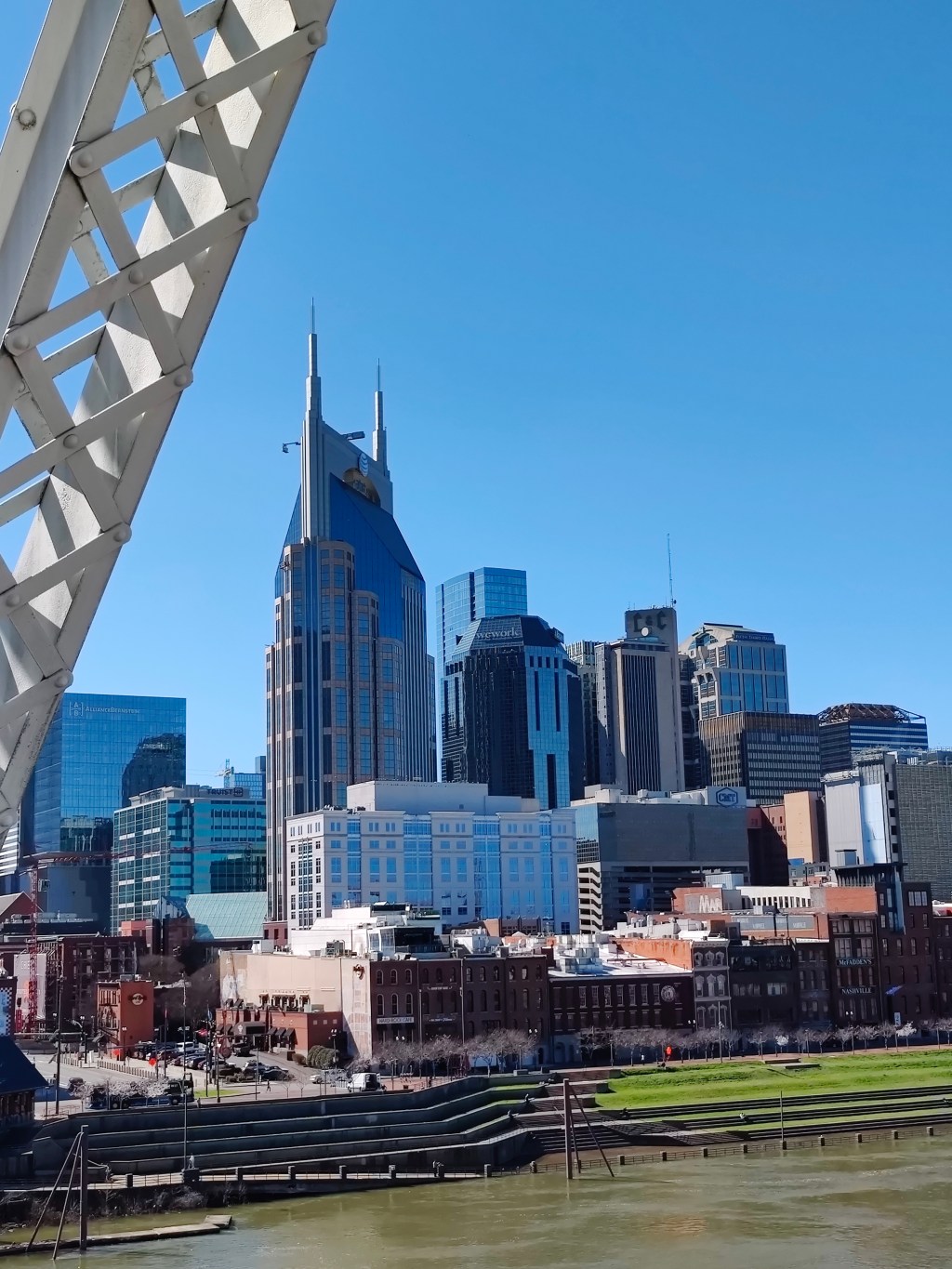
AllianceBernstein, which moved its headquarters to Nashville but still keeps a large office at 1345 Avenue of the Americas, said it took in $6.6 billion of net new money. That was its strongest quarter in four years. Invesco, the Atlanta-based manager behind the Invesco QQQ fund, reported $35.1 billion of net long-term inflows and ending assets of $2.54 trillion.
AllianceBernstein: the private-markets engine
AB’s growth came almost entirely from institutions buying credit. Its institutional channel took in $15.7 billion, up from $0.6 billion in the second quarter. Alternatives and multi-asset strategies brought in $15 billion, including roughly $12 billion of commercial mortgage loans onboarded from its majority owner, Equitable Holdings. Private-markets assets reached $105 billion, up 33 percent from a year earlier. The firm says that already exceeds the top of the range it had targeted for 2027.
“Activity was led by strong institutional demand across both liquid and illiquid credit,” said Seth Bernstein, AB’s chief executive. “While institutional appetite for private assets remained the primary growth driver, our alternatives/MAS franchise grew organically across all three channels, even excluding the CML mandate.”
The rest of the business was harder going. Retail clients pulled a net $8.4 billion, and the private-wealth channel lost $0.7 billion. Active equity strategies lost about $12.5 billion, partly offset by $2.5 billion going into passive equity. Ending assets fell slightly from June to $900.4 billion, as market losses of $11.7 billion outweighed the net inflows.
Earnings were steady rather than spectacular. Adjusted net revenue rose 2.2 percent from a year earlier, to $904 million. Adjusted operating income was flat at $303 million, and the adjusted margin slipped to 33.5 percent from 34.2 percent. AB Holding will distribute $0.88 a unit, up 2.3 percent.
The larger story lies ahead. In March, Equitable and Corebridge Financial announced an all-stock merger, expected to close by the end of this year. The combined insurer plans to move at least $100 billion of Corebridge assets to AB over time. Bernstein noted that none of that money is in AB’s current $13.1 billion pipeline of awarded but unfunded institutional mandates. “Insurance capital helps us seed and scale differentiated private market capabilities, which we can then extend across third-party insurance, wealth and retirement,” he said.
That is the bull case: a captive insurance balance sheet that feeds a private-credit franchise, which can then be sold to outsiders. The bear case is the other side of the same coin. A great deal of AB’s growth depends on its parent, and the parts of the business that face outside clients, retail and active equity, are still shrinking.

Invesco: scale, ETFs and a cleaner balance sheet
Invesco’s quarter was a story of scale. Of its $35.1 billion in net long-term inflows, $28.5 billion went into ETFs and index products and $6.7 billion into the QQQ. Retail clients supplied $41.7 billion, while institutions took out a net $6.6 billion. Money-market funds added another $52.9 billion. Annualized long-term organic growth was 6.3 percent, and it was the firm’s 13th consecutive quarter of net long-term inflows.
The QQQ’s conversion from a unit investment trust to an open-end ETF last December has transformed Invesco’s revenue. Investment management fees rose $327.5 million from a year earlier, mainly because the firm now earns a management fee on the QQQ. Adjusted net revenue rose 16.5 percent to $1.38 billion. The adjusted operating margin widened to 40.7 percent from 34.2 percent, and adjusted diluted earnings were $0.72 a share, against $0.61 a year ago.
Andrew Schlossberg, Invesco’s chief executive, used the results to highlight the balance sheet. On October 26 the company bought back another $1.5 billion of the preferred stock held by MassMutual, funded by a five-year floating-rate bank loan. “This ultimately enables reduced leverage, increases our balance sheet flexibility, and enhances earnings available to common shareholders,” he said. That brings total repurchases to $3 billion over 18 months and leaves $1 billion outstanding. Net debt fell to $315.8 million from $708.6 million in June.
The weak spots were in active management. Fundamental fixed income lost $2.6 billion, fundamental equities $1.9 billion and private markets $0.4 billion. GAAP diluted earnings fell to $0.65 from $0.76 in the second quarter, mainly because of investment losses. Headcount is down 11.4 percent from a year ago, after last year’s divestitures and the sale of its Canadian fund management agreements in June.
Two models, one squeeze
Taken together, the two reports describe the same squeeze from opposite ends. Active stock-picking is losing money at both firms. AB is replacing it with private credit and insurance mandates, which pay higher fees but depend on a small number of very large relationships. Invesco is replacing it with ETFs, which charge lower fees on far more assets but tie revenue closely to the stock market, and especially to the Nasdaq-100 companies that the QQQ tracks.
Each approach has its advocates. Defenders of AB’s model say private credit is where institutions want to be for the next decade, and that permanent insurance capital is the most durable kind of asset a manager can have. Defenders of Invesco’s model say low-cost passive products have won the argument with retail investors, and that a 40 percent margin is the reward for scale. Critics of the first worry about valuations in private credit and how closely AB is tied to its parent. Critics of the second note that a sharp fall in large-cap technology stocks would hit fee income quickly.
For New York’s buy side, the lesson is the same either way. Both firms are betting their next five years on parts of the business that need fewer stock pickers.
Featured image: 1345 Avenue of the Americas in Midtown Manhattan, home of AllianceBernstein’s New York office. Photo by Ajay Suresh via Wikimedia Commons, CC BY 4.0.





Leave a Reply