On Tuesday morning, Oct. 20, NYPD warrant officers went to the homes of two Brooklyn activists, Jamie Kowalski and Daniel Koh, and arrested them on stalking and harassment charges. The case is small by the standards of Brooklyn’s courthouses: the top count is a class B misdemeanor that carries up to three months in jail. But it raises a question that New York courts will likely have to answer more often. When does naming a police officer, in his own neighborhood, stop being protest and become a crime?
The charges, first reported by Gothamist, involve fliers aimed at NYPD Officer Conrado Abreu-Gerez. He was one of two officers who shot and killed Eudes Pierre on Eastern Parkway in Crown Heights in 2021. According to city and state investigations, Pierre charged at one of the officers with a knife. The state attorney general’s office concluded that criminal charges should not be brought, and a police oversight agency found the officers acted within NYPD guidelines. The fliers, according to police, read “A killer cop lives here” and “wanted for murder.”
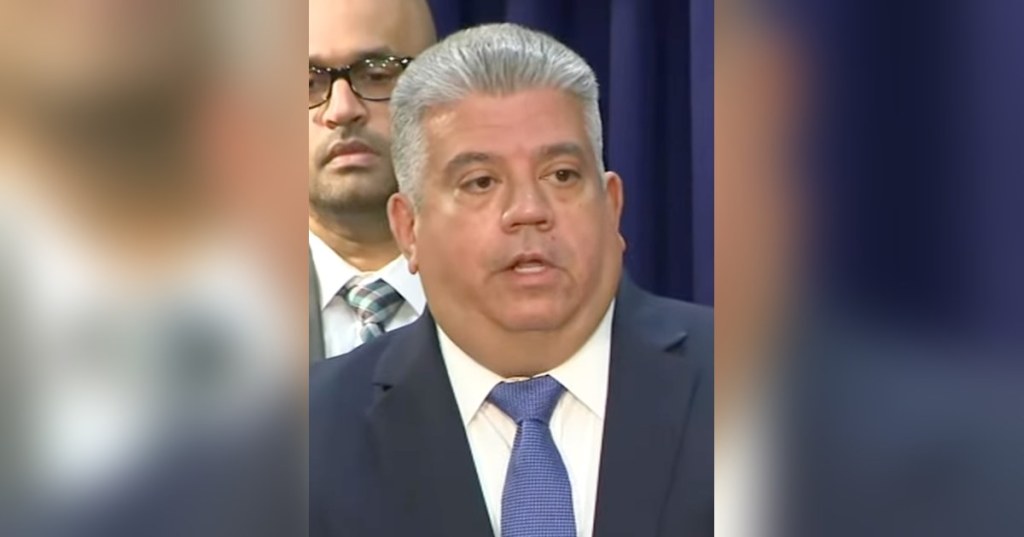
The charges are accusations. Kowalski and Koh have not been convicted of anything and are presumed innocent; how they pleaded at arraignment was not reported. Both were released under supervision and are due back in court in December. The case is being prosecuted by the office of Brooklyn District Attorney Eric Gonzalez.
What police allege
NYPD spokesperson Bradley Weekes told Gothamist that the charges rest on three incidents. In the first, in August, police allege that activists knocked on the officer’s door, asked a family member whether he lived there, and then put a “wanted killer cop” poster on a lamppost across the street. After the officer moved to another Brooklyn apartment, police and prosecutors allege, Kowalski and Koh twice posted fliers on the glass entrance of his new building, at a nearby subway entrance and on a lamppost.
That detail matters. Stalking and harassment under New York law usually turn on a course of conduct and on whether it was aimed at a specific person in a way likely to cause reasonable fear. Where a flier was posted, and how often, can matter as much as what it says. The door-knock, if proven, is the allegation that most clearly goes beyond words on paper.
Both defendants belong to the New York Alliance Against Racist and Political Repression, which holds a monthly demonstration outside the 71st Precinct in Crown Heights calling for the arrest of the officers who shot Pierre. They say they focus on Abreu-Gerez because the other officer has retired. They acknowledged posting fliers in his neighborhood but, citing the open case, declined to say exactly where.
What the defendants say
Neither defendant has backed down. Kowalski called the case “ridiculous trumped up charges.” Koh framed the fliers as a public warning: “We’ve been putting up fliers to let the community know … that there is a killer cop who lives and works among them,” he told Gothamist.
The Pierre case is painful on both sides. To the activists, Abreu-Gerez is an officer who killed a man and faced no consequences. To the department and the officer’s union, he is a cop who was cleared by an independent state review and whose home address has now become a protest site. Both views reflect something real, and the court will not settle that dispute. Its job is narrower: to decide whether the specific conduct charged is a crime.
What the scholars say
Two First Amendment scholars and a defense lawyer who reviewed the case for Gothamist doubted it would hold up. Eugene Volokh, professor emeritus at UCLA School of Law, reviewed the charges, the fliers and the NYPD’s account and said, “I think that they are not guilty of violating either of the statutes.” He added that if the fliers were posted where posting is barred, a lesser charge such as trespassing might apply, but only if police enforce that rule evenly and not just against fliers that criticize officers.
David Hudson, a fellow at the Freedom Forum, called criticism of government officials “the most fundamental of all First Amendment free speech principles.” He said, “I’d be arguing First Amendment all day long on this one.” Defense attorney Ron Kuby agreed: “In the United States of America, people are free to write and say nasty, nasty things about other people without it rising to the level of criminal conduct.”
What the union says
The Police Benevolent Association sees it very differently. PBA president Patrick Hendry said the union was “glad that these unhinged individuals were arrested” and called the fliers “vile threats and harassment.” He urged elected officials to “protect police officers and their families, as they have already done for judges.” That proposal deserves a serious hearing on its merits. Congress and a number of states have moved in recent years to shield judges’ home addresses because of real threats against them. Whether police officers, who are more numerous and act directly on the public’s behalf, should get the same protection is a fair question for Albany. It should be debated as a statute, though, and not settled one misdemeanor case at a time.
The read
Cases like this tend to turn on facts the public does not yet know. If prosecutors can show repeated conduct aimed at the officer’s home and family, the kind of behavior that would alarm a reasonable person whatever the message, the charges could survive a First Amendment challenge. If the case rests mostly on the fliers’ wording, the scholars quoted above expect the defense to prevail.
Either way, both the Brooklyn District Attorney and the NYPD have an interest in a quick and clear resolution. A prosecution that collapses would encourage the protests it was meant to stop. One that stretches the stalking statute to cover angry political speech would invite a lawsuit. The next court date is in December.
Featured image: Brooklyn District Attorney Eric Gonzalez at 350 Jay Street in Brooklyn, May 2023. Photo by NYC Mayor's Office via Wikimedia Commons, CC BY 3.0.



Leave a Reply