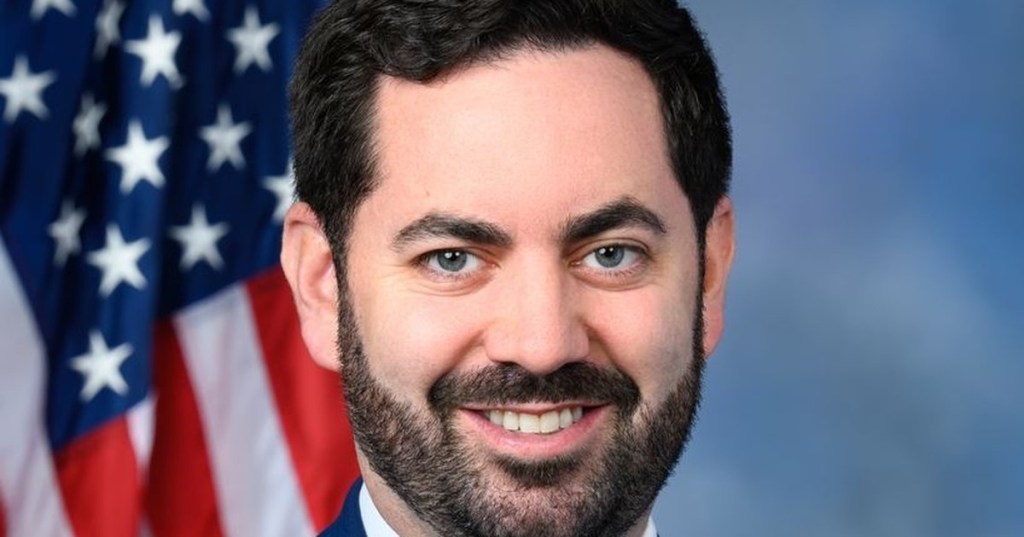
The first thing a defeated congressman does, it turns out, is vote. On Monday evening, Nov. 9, six days after the voters of New York’s 17th District and New Jersey’s 7th District sent them home, Representatives Mike Lawler and Tom Kean Jr. were recorded as yeas on Roll Call 316.
The bill was the American Enrichment Deployment Act, H.R. 9612, a measure from Representative Russell Fry of South Carolina aimed at building out domestic uranium enrichment. It passed under suspension of the rules, 394 to 3, at 7:07 p.m. Every Republican present voted yes. The three no votes were all Democrats, none of them from this region. Nobody was making speeches about the midterms. That is rather the point of a lame-duck session: the business of government resumes on schedule, and the people who just lost keep their voting cards until Jan. 3.
The results, briefly
The numbers from Nov. 3 are not subtle. In the 17th, Democrat Cait Conley, an Army veteran who served on President Biden’s National Security Council and at the Cybersecurity and Infrastructure Security Agency, beat Lawler by about 53 percent to 47 percent, according to Ballotpedia’s tally, 165,399 votes to 145,890. Lawler had won the seat by a little more than half a point in 2022 and by six points in 2024, in a district Kamala Harris carried narrowly. The two candidates raised a combined $21 million.
In New Jersey’s 7th, the swing was larger. Rebecca Bennett, a former Navy helicopter pilot running for office for the first time, took 57.3 percent to Kean’s 41.1 percent, carrying all six county portions of the district and flipping 47 municipalities Kean had won two years ago, the New Jersey Globe reported on Monday, Nov. 9. The Globe found 20-point swings in Morris and Somerset counties and roughly 25-point swings in Sussex and Warren, two of the most Republican places in the state. The results are still unofficial, with provisional and cured mail ballots to count.

Not a sweep
It would be easy, and wrong, to read the region as one wave. The Republicans who held on did so convincingly. Nick LaLota won Suffolk County’s 1st District with about 51 percent, and Nicole Malliotakis carried Staten Island and southern Brooklyn with 56 percent, according to results compiled by NBC News. On the Democratic side, Laura Gillen and Josh Riley, both freshmen in swing seats, were re-elected, and Tom Suozzi won his Long Island seat by about 10 points.
Lawler’s case deserves a fair hearing, because he made it well. He ran as a bipartisan dealmaker, and his campaign pointed to independent rankings that placed him among the most bipartisan members of the House, as well as an endorsement from Jared Golden, a Maine Democrat. He was one of the few Republicans who regularly took on his own party’s leadership over the state and local tax deduction, and he spent the last weeks of the campaign pushing a super PAC coordination bill aimed at a practice both parties use. A district can like its congressman and still vote against his party. Many in the Hudson Valley appear to have done exactly that.
In a statement provided to The City Politic by his office, Lawler pointed to the same record. “We passed more than two dozen bills, 17 of which were signed into law, delivered more than $140 million back to the district, and helped thousands of constituents navigate issues with the federal government,” he said. “I’ve always believed that you can be a principled conservative and still work with anyone, regardless of party, to deliver results for the people you represent.” He also accepted the verdict: “Ultimately, voters made their decision, and I respect that. This was a difficult national environment for Republicans, and clearly that played a role in the outcome.”
Kean, the son of a popular former governor, had built a similar brand in a district that Donald Trump carried by a single point in 2024. The Globe’s precinct math suggests that brand was not enough to hold back a broader shift, one that had already shown up when Mikie Sherrill carried the 7th in last year’s governor’s race.

What the lame duck can still do
Neither man is powerless for the next eight weeks. The House is narrowly divided; Republicans held a 219-214 majority with two vacancies going into the election, by Ballotpedia’s count, which means a handful of members can still decide a close vote. Year-end deadlines on government funding and defense policy are the usual business of a lame duck. Lame-duck members tend to be the freest people in Congress: no primaries to fear, no donors to placate, and every reason to think about what comes next, whether that is a rematch, a statewide run or a job downtown.
Monday’s vote was not one of those tests. Enrichment policy has broad support in both parties, and the bill cleared by a margin that let everyone go to dinner. The harder votes, if they come, will be the ones where outgoing members have to decide whether to vote with their leadership or with their own judgment.
Lawler, for one, says he means to use the time. “There is still important work to get done, and I have no intention of taking my foot off the gas,” he said in the statement. “My priority is getting as many of our outstanding legislative and appropriations priorities across the finish line as possible.” His list includes community project funding for local projects in the Hudson Valley, the Northeast Lobsterman Protection Act, getting “the Foreign Service Modernization Act and other national security priorities included in the NDAA,” and “closing loopholes that allow Chinese companies to access American semiconductor technology through the cloud,” along with two local bills naming post offices after Sheriff Adrian “Butch” Anderson and Paul Piperato.
“I won’t be returning to Congress in January, but I’m not walking away from public service or my commitment to the Hudson Valley,” Lawler said. “I’ll figure out what comes next in due time.”
The incoming class
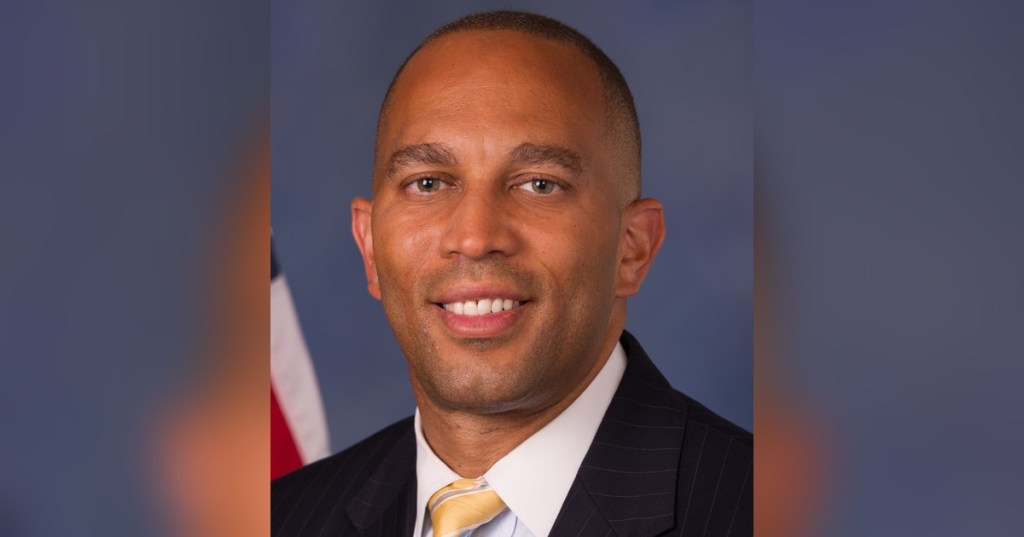
For the delegation, the change in January will be real. Conley and Bennett are both military veterans with national-security résumés, both first-time members, and both elected in districts that had sent Republicans to Washington. Nationally, CBS News counted more than 40 House seats flipped by Democrats, which puts the party’s leader, Hakeem Jeffries of Brooklyn, in line to run the chamber in January.
That is a story for January. For now, the House clerk’s roll shows two men who lost on Nov. 3 doing the job they still have. Whatever one thinks of their politics, it is a decent way to leave.
Featured image: Rep. Mike Lawler, who lost New York’s 17th District to Cait Conley on Nov. 3 (official House portrait, cropped). Photo by U.S. House of Representatives via Wikimedia Commons, public domain.





Leave a Reply