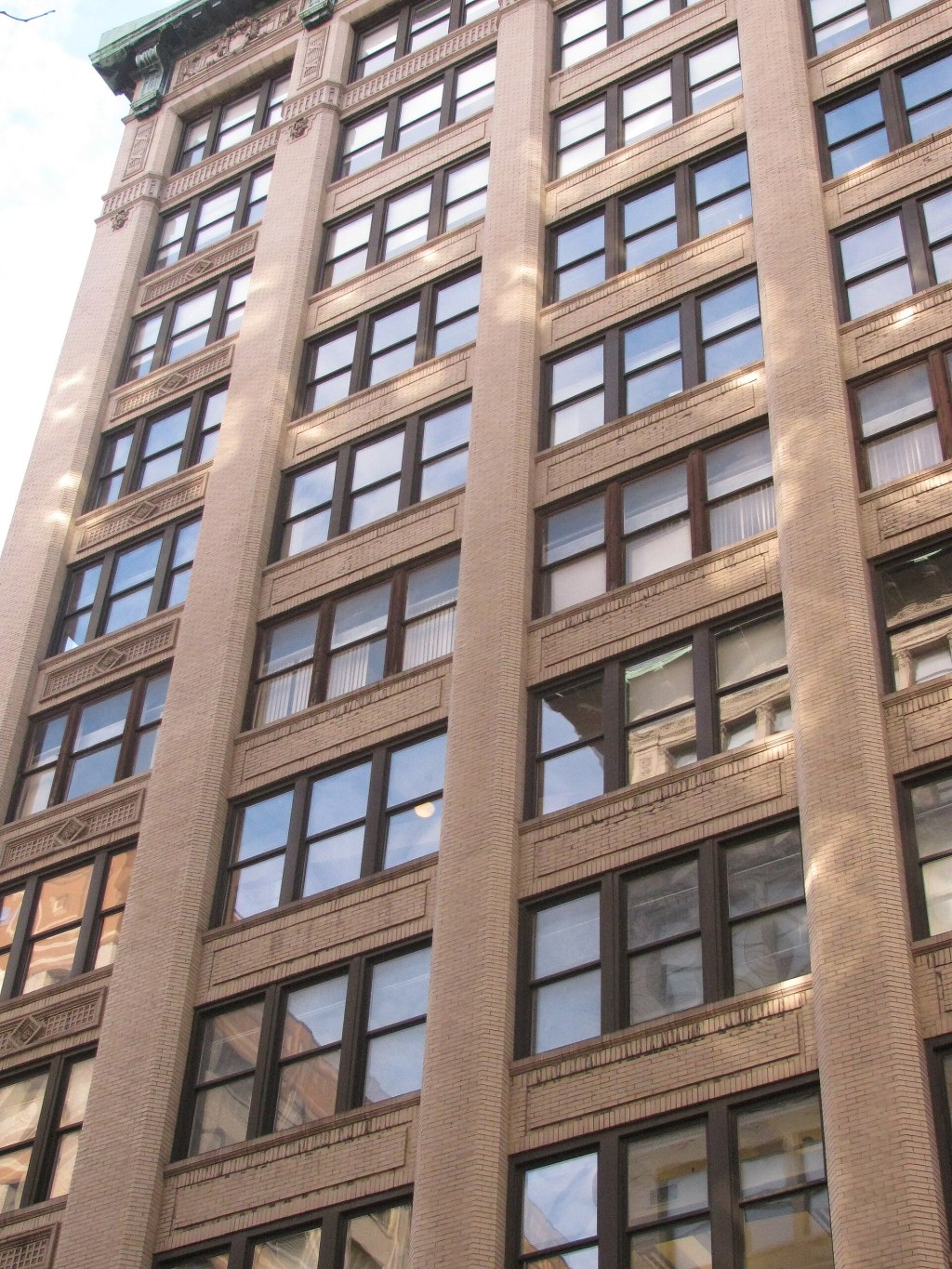
Between Union Square East and Irving Place, on a block of East 16th Street, there is a nine-story parking garage with no cars in it. For eleven years it has belonged to Tishman. As of this week, it belongs to a builder who intends to knock it down.
Pro-H Group, a developer and general contractor led by its founder, Burton Hung, paid $44.25 million for 110 East 16th Street, a source familiar with the transaction told Commercial Observer. The Real Deal first reported the sale. Pro-H and its lender announced the deal on Monday, Nov. 9. The plan is a 22-story condominium with 52 apartments of one to four bedrooms and what the announcement calls a full suite of amenities.
The lender
The money came from the Northwind Group, a Manhattan real estate private-equity firm and debt fund manager, which provided Pro-H with a $30 million first-mortgage acquisition and predevelopment loan. That is roughly two-thirds of the purchase price, a sizable bet on a project that has not yet broken ground.
Northwind’s founder made the bull case in one sentence. “With Manhattan’s new development condominium inventory at its lowest level in over a decade and limited new supply on the horizon, this project will deliver much-needed housing to one of the city’s most supply-constrained and sought-after neighborhoods,” said Ran Eliasaf, the firm’s founder and managing partner.
The brokers agreed, which is what brokers are for. “110 East 16th Street is a rare development site in the heart of Union Square, where the new development pipeline is very slim,” said Robin Schneiderman of Brown Harris Stevens, who represented Pro-H. “Pro-H Group recognized the site’s potential for a marquee project.” Jonathan Hageman of JLL represented Tishman.
The decade
Tishman bought the site in 2015 for $35 million. It then spent roughly a decade seeking city approvals and buying air rights for a 250-foot condominium tower, according to The Real Deal’s account as summarized by Commercial Observer. The New York Business Journal described the project Pro-H is inheriting as a stalled one. A blueprint sketch filed with the Buildings Department credits the design to Morris Adjmi Architects.
On the headline numbers, Tishman’s return looks thin. Going from $35 million to $44.25 million over eleven years works out to a little over 2 percent a year, before the cost of carrying an empty garage, buying air rights and paying lawyers and architects through a long approvals process. None of those costs has been disclosed. What Pro-H is buying, in other words, is not just dirt. It is time: a site whose entitlement work is largely done, in a neighborhood where, as everyone in the deal keeps saying, there is very little else to buy.
The math from the buyer’s side is easier to see. At $44.25 million for 52 units, Pro-H is paying about $850,000 in land cost per apartment before a single floor goes up. That is a number that only works if the finished apartments sell at Union Square prices, and it explains the lender’s emphasis on scarce supply.
The skeptic’s view
There is a cautious reading too. A decade of planning by one of the city’s best-known developers ended in a sale, not a groundbreaking. The announcements did not say why. Developers sell sites they could build for many reasons: a change in strategy, the cost of capital, or a judgment that someone else will take construction and sales risk for less. Pro-H’s model, as a builder that is also its own general contractor, may be part of the answer. It can capture the construction margin that a pure developer pays to someone else.
Condo math is also unforgiving. The building will come to market in a city that has just added a surcharge on luxury second homes and is debating taxes on the wealthy, and a meaningful share of buyers for new Manhattan condominiums have historically been people for whom the apartment is not a primary residence. None of that changes the scarcity argument. It does make the sellout price harder to predict.
Tishman’s year
The sale comes less than a year after Tishman and its joint-venture partner, MetLife Investment Management, sold their 34-story InterContinental New York Times Square for $230 million, one of the largest single-hotel deals of 2025, Commercial Observer noted. Taken together, the two sales look like a firm realizing value from long-held assets rather than starting new ground-up projects.
What to watch
The next filings will tell the story: demolition permits for the garage, a new-building application under Pro-H’s name and, eventually, a condominium offering plan with the attorney general’s office, which will show the price Pro-H thinks Union Square will bear. If the sponsor’s sellout figure is high enough to make $850,000 a door look cheap, Tishman’s decade will look like the patient work that made someone else’s profit possible. If not, the garage may stand empty a while longer.
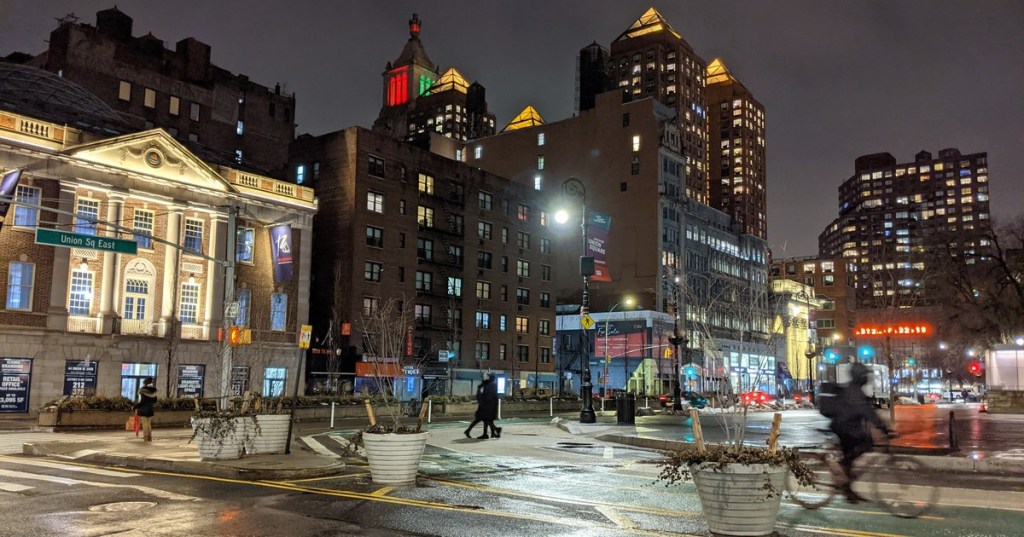
Featured image: Union Square East, a block from the 110 East 16th Street garage site Tishman has sold to Pro-H Group. Photo by Eden, Janine and Jim via Wikimedia Commons, CC BY 2.0.




Leave a Reply