For a decade New York knew Camari Mick by her pastries, which were famous enough to have their own fans and someone else’s name on the door. At the Musket Room and Raf’s she made rum cakes and a beef patty croissant that people still bring up. “Being in Michelin-starred restaurants, you’re cooking somebody else’s story,” she told Eater in September. “Why wouldn’t I want the opportunity to cook mine?”
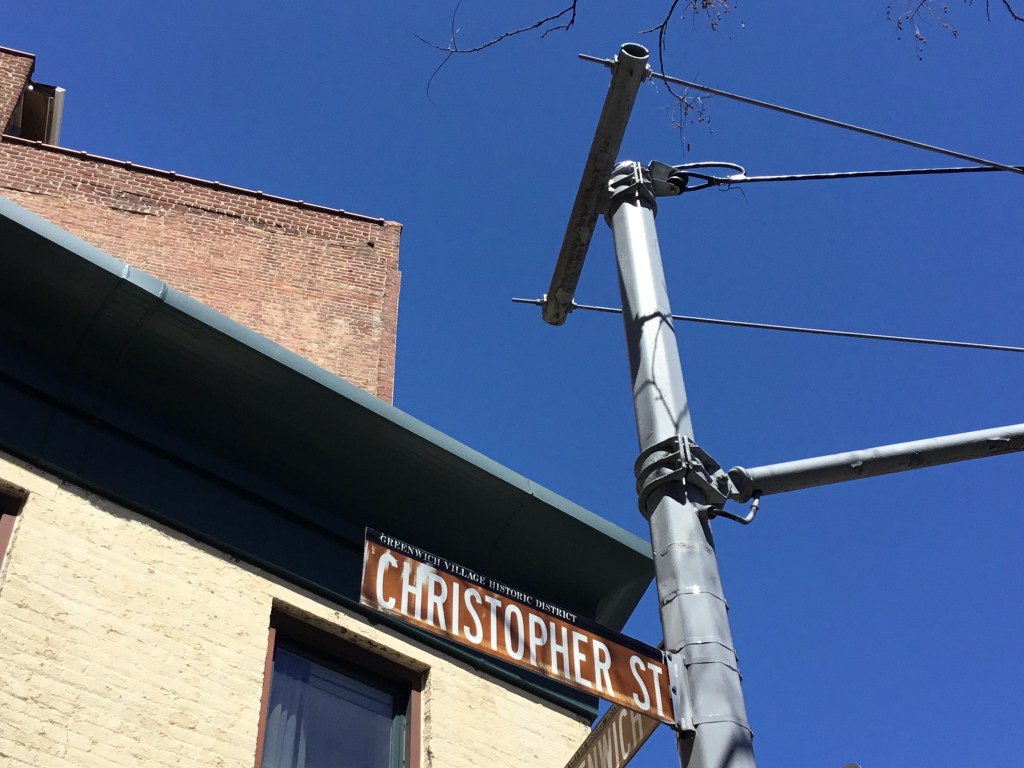
Calabash, at 183 Christopher Street near Weehawken Street, is the answer. It is an Afro-Caribbean bakery and café by day and, two nights a week, a prix fixe with a single seating. It is small, earnest, unusually ambitious and, by the critical record so far, a success.
The Backers
Calabash is Mick’s own, with no restaurant group or investor named in any of the coverage. It is a collaboration with Heermance Farm, the upstate farm whose former New York event space it occupies, and Mick told Eater she has asked the farm to grow particular produce for her. Her chef de cuisine is Tajeh Porter, who came from Nura. Jasmine L. Pierce is the hospitality brand consultant. Mick told Eater that this version of Calabash is a “proof of concept” and that she means to build a hospitality group around Black and brown chefs. “I’m trying to build something legendary,” she said.
The Room
It is 1,300 square feet with 30 seats, designed by the Washington firm Drummond Projects, per Eater. The walls are a gallery: work by Black and brown artists curated by Cierra Britton, with staff trained, Eater reported, to talk about the art as well as the food. Mick’s ambition is to pair particular bites with particular pieces. There is no liquor. The drinks list runs to fermented drinks, nonalcoholic cocktails and adaptogenic beverages made with lion’s mane mushrooms.
The name comes from the gourd, dried and used across the African diaspora as a vessel or instrument. Mick told Eater she first called the project L’Atelier Ebenè and dropped it because it did not fit what she wanted to do, which was to “decentralize European standards.”
The Menu, and What It Costs
The daytime menu on the restaurant’s own site is short and priced like the West Village: cornbread pancakes, $19; a breakfast sandwich, $18; head cheese terrine, $20; heermance greens, $16; fritay, $16; marinated sardines, $22; and suya frita at market price. Eater described the pancake as served with a salted maple sabayon and the sardines as set on a Trinidadian bake with tomatillo chow. The laminated pastries and fermented breads are the point of the morning. The coffee is African-sourced and the tea Kenyan.
Dinner is a prix fixe at one 6:30 seating on Fridays and Saturdays. The restaurant’s site lists the fall menu at $125. Patch reported $175, a figure it said included tax and nonalcoholic pairings. We print both. The Infatuation, which also reports $125, describes five courses. Among the dishes Mick discussed with Eater are a suya steak frites with fries cut from ripe plantains, steak from Prince Abou’s, a Black-owned halal butcher in Harlem, and a suya-spiced au poivre. She also mentioned a goat ragù with pappardelle and a gizzada turned into a sticky bun. Once a month there is a Pay What You Can dinner.
The Consensus
The record is short but warm. The Infatuation’s Molly Fitzpatrick reviewed it on Oct. 16 under the headline “Calabash has big ideas and an even bigger heart.” She called it “an extraordinary meal.” In her account, dinner opens with nonalcoholic sparkling rosé and half an hour of wandering the room among the paintings, with canapés inspired by the art. Then come “five memorable courses” for $125. She singled out hoppin’ John dolmades wrapped in collard greens and “extravagantly fatty pork belly with jollof.” She also praised a dessert called Granny’s Cheese Toast, which she said “tastes like the homiest baked alaska imaginable.” The OpenTable blog, by Tanay Warerkar, covered the opening. Eater’s Nadia Chaudhury introduced the project in September. No major newspaper critic has filed yet.
Two dates are printed two ways. Daytime service opened on Oct. 2. The OpenTable blog gives dinner’s start as Oct. 16, while Patch gives Oct. 9. Hours are also a moving target. The restaurant’s site lists coffee from 8 a.m. to 3 p.m. and brunch from 10 to 3, Thursday through Sunday. Eater’s September announcement said 8 to 4. OpenTable lists Thursday through Sunday, 8 to 3. Check before you go.
Our Judgment
Here is the column’s view of the record. Calabash is doing something more interesting than the usual chef’s-first-room. It is a pastry chef’s restaurant, which means the morning is probably its surest hour, and the prices suggest Mick knows it. A $19 pancake is a West Village pancake, but the critics’ attention to it says it may be worth the price.
The dinner is the bigger wager. A dry room, a single seating and a price somewhere between $125 and $175 ask a lot of a 30-seat restaurant two nights a week. That the early critics say it delivers is the best sign yet that New York will pay for a story told this personally. The Pay What You Can night and the farm partnership are the details that keep the ambition from looking like a pose.
The risks are the ones the chef herself named. A “proof of concept” in a borrowed space can move, change or vanish. Go while it is here.
The Particulars
- Verdict: Recommended, on the strength of the record. The daytime menu is the safer bet; the dinner is the adventure.
- Price: Daytime dishes $16–$22 on the restaurant’s menu; dinner prix fixe $125 (restaurant’s site) or $175 including tax and nonalcoholic pairings (Patch).
- Address: 183 Christopher Street, near Weehawken Street, West Village, Manhattan.
- Hours: Thursday–Sunday daytime, from 8 a.m. (closing at 3 p.m. per the restaurant and OpenTable; 4 p.m. per Eater’s September report). Dinner Friday and Saturday, one seating at 6:30 p.m.
- Reservations: OpenTable. No alcohol served.
Reservations weighs menus, prices, the published record and the critical consensus; when our critic has dined, we say so. Our critic has not dined at Calabash for this review.
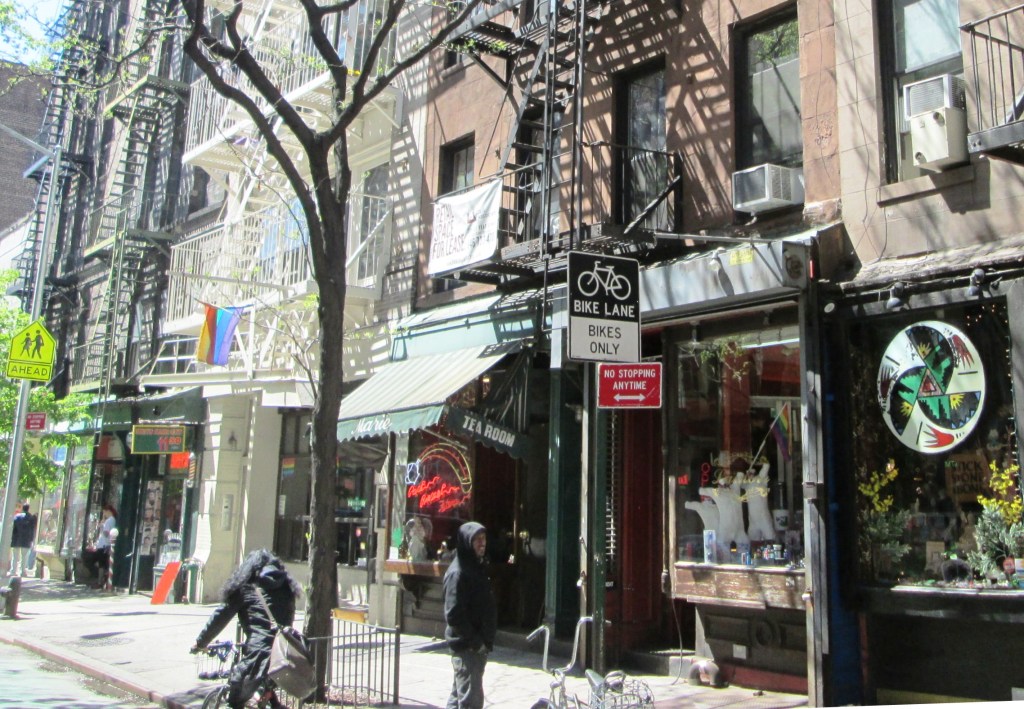
Featured image: Christopher Street between Bleecker and Hudson Streets, a few blocks east of Calabash. Photo by Beyond My Ken via Wikimedia Commons, CC BY-SA 4.0.



Leave a Reply