The midterms are over, and the robots did well. According to the Wesleyan Media Project, campaigns and outside groups spent more than $137 million through Oct. 11 on 220 ad videos made at least partly with artificial intelligence, Fortune reported. In 2024 the group found less than $50,000. More than 70 percent of this year’s AI videos carried no disclaimer.
Two members of New York’s delegation want that last number to be zero.
Rep. Yvette D. Clarke, the Brooklyn Democrat, reintroduced the REAL Political Advertisements Act on Oct. 15, according to her office’s release. The bill, H.R. 10814, would require any federal political ad that contains AI-generated images or video to say so, “in a clear and conspicuous manner.” Brooklyn’s Our Time Press took stock of her AI bills on Nov. 7. And Sen. Chuck Schumer has asked the Federal Communications Commission to reject a conservative group’s request to let AI-voiced political robocalls reach cellphones without consent.
What the Clarke bill does
The text is short and specific. If a covered ad “contains an image or video footage which was generated in whole or in part” with generative AI, it must say so. The bill offers a safe harbor for what counts as clear. Printed disclaimers must be in letters at least as large as most of the ad’s text. Audio ones must be spoken clearly for at least three seconds at the start or end. Video ads with sound need both, with the written version on screen for at least four seconds.
The bill also reaches further than disclaimers. It would widen the Federal Election Campaign Act’s “electioneering communication” rules, now aimed at broadcast, cable and satellite, to cover paid ads on large online platforms, defined as those with 50 million or more monthly U.S. users. News stories, commentary and editorials are exempt unless a party or candidate owns the outlet. The Federal Election Commission would have 120 days to write rules, including a definition of AI-generated content. The requirements would take effect Jan. 1, 2027, whether or not the commission has acted.
“As generative AI technologies continue to evolve, clear disclosure standards to preserve transparency are essential to civic engagement,” Clarke said in her release. “Unfortunately, Congress has failed to keep up the pace with this rapidly advancing technology, leaving voters vulnerable to AI-generated misinformation and disinformation.” Her co-sponsors are four Democrats: Reps. Debbie Dingell, Jim Costa, Valerie Foushee and Adelita Grijalva. The bill sits in the Committee on House Administration, where its 2023 predecessor died, The Latent noted.
Schumer and the robocalls
Schumer’s front is the telephone. On Oct. 19 he filed comments urging the FCC to deny a petition from the Club for Growth, a conservative group, for an expedited waiver of the rule that bars political robocalls to cellphones using artificial or prerecorded voices, including AI voices, without the recipient’s consent, according to his caucus office. He warned of deepfake impersonations and fake endorsements. Clarke’s release cited the same fight, describing it as an FCC proposal to waive the ban.
The partisan arithmetic
The numbers have a party. Republican campaigns and committees accounted for 81 percent of the AI ads and 88 percent of the spending, the Wesleyan Media Project found, per Fortune. The most-discussed example came in Texas, where a Ken Paxton ad showed an AI-generated James Talarico writing in a Bible with a crayon. But not every AI ad was a deception. In Pennsylvania, Republican Stacy Garrity’s ad against Gov. Josh Shapiro opened with its own disclosure: “This ad was created with AI, thanks to big, beautiful data centers.”
That lopsidedness is why the bill will be read as partisan, and why its sponsors will need to answer the Republican objections on the merits.
The strongest case against
The best Republican argument is not that deepfakes are fine. It is that this bill is broader than deepfakes. “Generated in whole or in part” could cover an AI-made stock shot of a handshake, a sunrise or a crowd, footage that misleads no one. Travis Ridout, co-director of the Wesleyan Media Project, told Fortune that AI can stand in for B-roll and location shoots, which helps candidates “with tighter budgets.” A rule that makes cheap production look sinister falls hardest on challengers, not incumbents.
There is a constitutional argument too. Compelled statements in political speech get close scrutiny. Disclaimer rules have survived in the past, but a label like “contains AI” can carry a stigma that “paid for by” does not. Conservatives also distrust handing the FEC, which they see as slow and partisan, 120 days to define “content generated by artificial intelligence,” with the law taking effect whether or not it finishes. And the online expansion would sweep a large share of paid digital advocacy into federal reporting rules that now stop at broadcast.
Clarke’s answer is that disclosure is the least restrictive option. The bill bans nothing. It tells voters what they are looking at.
What to watch
The House Administration Committee is under Republican control and has not moved her bill before. A bipartisan version narrowed to realistic depictions of real people would have the best chance. On the phone front, the FCC’s decision on the Club for Growth petition will come first, and it needs no act of Congress. The next campaign will start sooner than either.
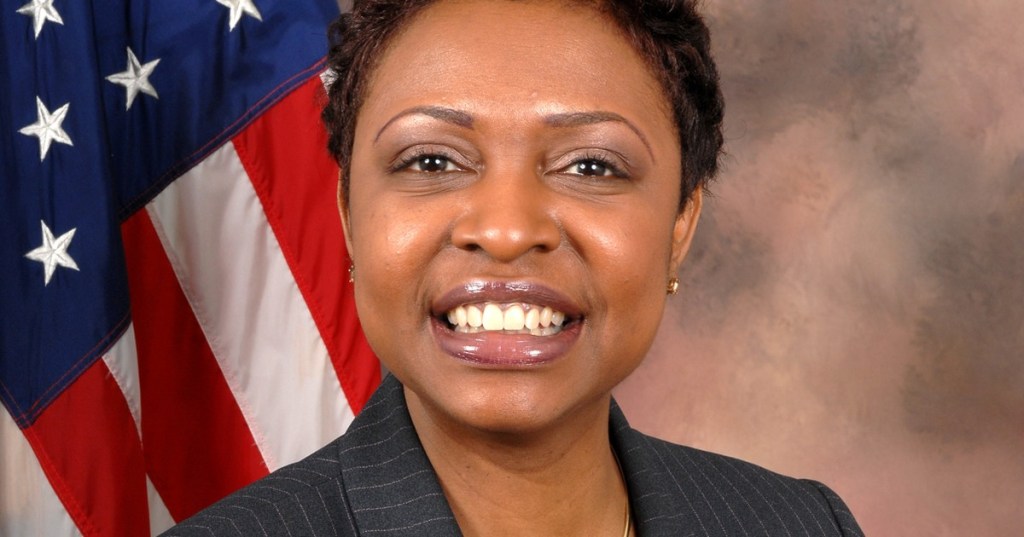
Featured image: Rep. Yvette D. Clarke, Democrat of Brooklyn, who reintroduced the REAL Political Advertisements Act. Photo by the U.S. Congress via Wikimedia Commons, public domain.




Leave a Reply