Few people ever think about the welds on the gas mains under their streets, and that is how it should be. Making sure no one has to think about them is the whole purpose of the inspector, who X-rays each joint for cracks and voids that could someday become a leak or an explosion. Last week, a federal judge in White Plains sentenced a man who, prosecutors said, skipped that step hundreds of times and billed for it anyway.
Michael Vasconcellos, 45, of Mahopac, received 30 months in prison from U.S. District Judge Cathy Seibel, followed by three years of supervised release. He was also ordered to pay more than $64 million in restitution, Mid-Hudson News and Daily Voice reported. He had pleaded guilty to one count of conspiracy to commit wire fraud. The case is United States v. Treibert, No. 7:25-cr-00383, in the Southern District of New York.
“Michael Vasconcellos fabricated gas pipeline test results designed to prevent gas leaks and explosions, putting the lives of New Yorkers at risk,” U.S. Attorney Jamie McDonald told the court, according to Mid-Hudson News. “Instead of doing his job, the defendant left New Yorkers relying on critical safety checks that never happened and cost a utility company more than $64 million in remediation.”
The trick, and its name
The scheme had a name in the trade: “radaring.” According to the indictment and the U.S. Attorney’s Office, Vasconcellos and a co-defendant would X-ray one weld and then submit copies of that same film as proof that other welds had been inspected. One good joint could stand in for a dozen that nobody examined. Their reports said the welds had passed, and the utility paid for each one.
Prosecutors said this went on from 2016 to 2023 on pipelines “being installed throughout New York City and Westchester County.” “Vasconcellos and Treibert lied about having inspected hundreds of welds that they never actually reviewed and created fraudulent records to cover up what they had done,” the government wrote. “As a result, the utility paid for hundreds of sham inspections and was deceived by both defendants into thinking that its pipelines had passed critical safety tests that were never performed.”
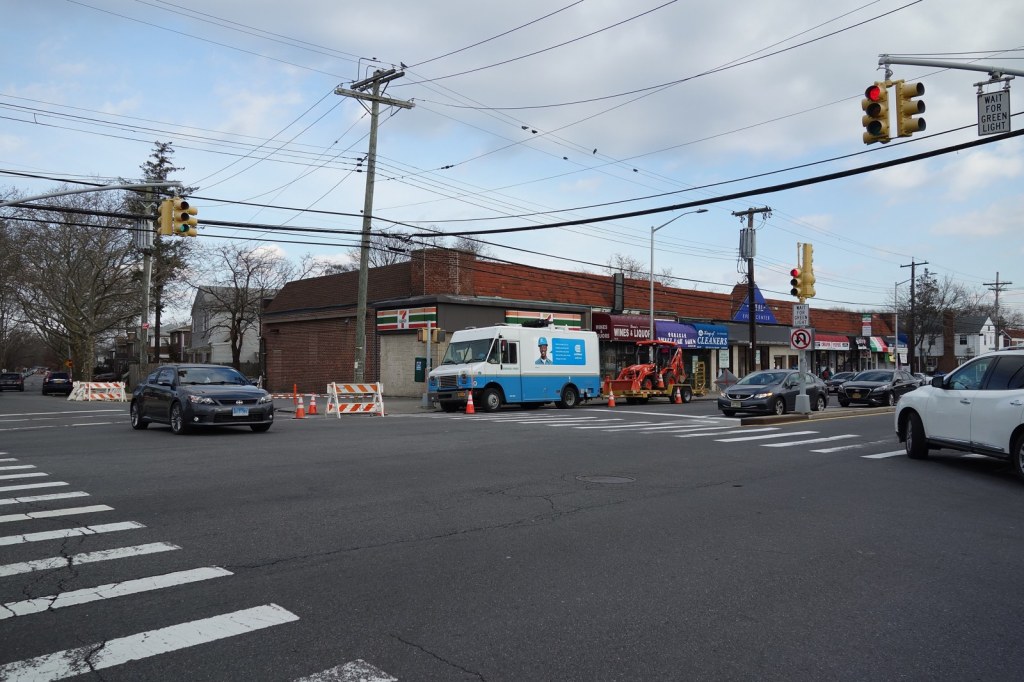
Court papers call the victim “Utility-1.” Since the charges were unsealed in August 2025, Gothamist and Crain’s New York Business have identified it as Consolidated Edison, and the affected welds as running through the Bronx and Westchester.
The co-defendant
The other man named in the indictment, Liam Treibert, 30, of Wendell, N.C., was charged with wire fraud in the same case. Public reporting on the sentencing did not say how his case stands. He is presumed innocent unless and until he is proved guilty. When the two were charged, then-U.S. Attorney Jay Clayton said that “they lied about having performed hundreds of inspections and then covered up those lies with fraudulent paperwork. Their actions put the lives of New Yorkers at risk.” The New York State Inspector General, Lucy Lang, whose office took part in the investigation, was credited in the original announcement. Assistant U.S. Attorneys David A. Markewitz and Jay McMahon are prosecuting the case.
What $64 million buys
The figure in the restitution order is the most revealing number in the case. When a utility discovers that its inspection records cannot be trusted, it cannot simply inspect a few welds and hope. It generally has to go back to the joints the men claimed to have checked, often under streets long since repaved. Prosecutors put the utility’s remediation bill at more than $64 million.
Con Edison said in 2025 that it had the problem in hand. “We have identified and are addressing known weld irregularities linked to third-party contractors and in the meantime have implemented enhanced monitoring to ensure the continued safe operation of our gas system,” spokesperson Jamie McShane told Gothamist at the time. “Today’s indictment will help deter future misconduct against Con Edison.”
The larger question
Whether Vasconcellos can pay $64 million is another matter. Restitution orders in fraud cases often exceed what a defendant can pay, and the government collects what it can over many years. The more lasting questions concern oversight. The inspectors worked for contractors and not for the utility, and the fraud continued for seven years before anyone discovered it. The utility’s ratepayers fund much of the construction of the gas system, and it is regulated by the New York State Public Service Commission. The obvious questions for those regulators are how hundreds of recycled X-rays got past quality control, and whether anyone else used the same shortcut.
Thirty months may sound light for a scheme that the U.S. Attorney said put “the lives of New Yorkers at risk,” but federal sentences in fraud cases depend on loss amounts, guilty pleas and acceptance of responsibility. Judge Seibel weighed all of those. For everyone who lives above those mains, the reassuring part is the restitution figure itself: it is, by the government’s account, the bill for going back and checking the work properly.
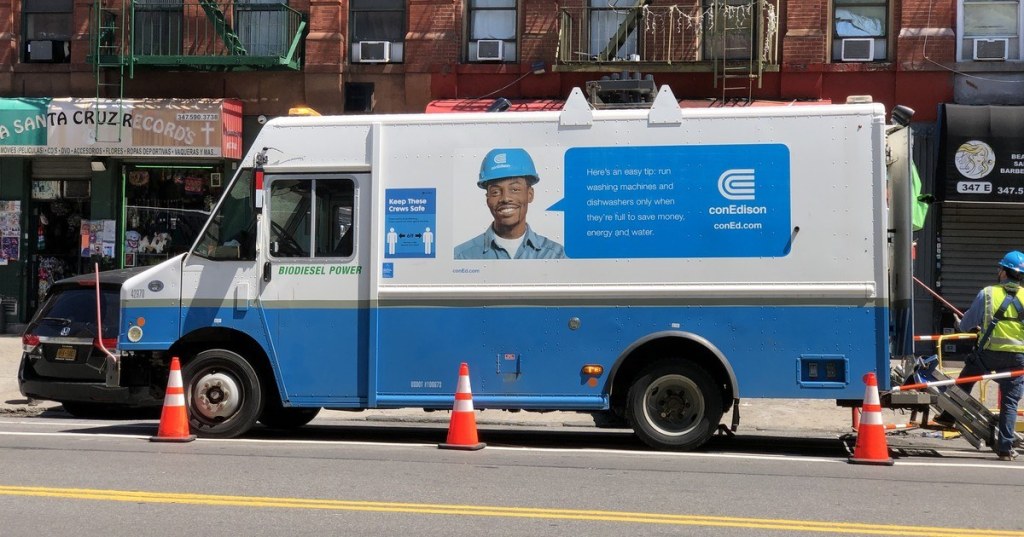
Featured image: A Consolidated Edison truck on East 138th Street in the Bronx, 2024. Photo by Famartin via Wikimedia Commons, CC BY-SA 4.0.




Leave a Reply