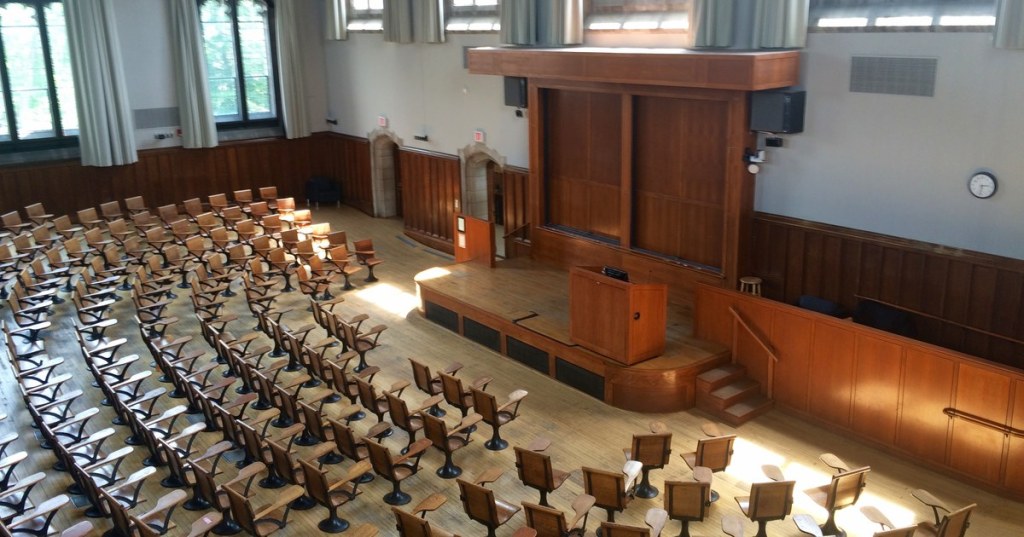
For 133 years, Princeton University left its students alone in exam rooms. Under the Honor Code adopted in 1893, students signed a pledge, faculty left, and students were expected to report any cheating they saw. This month, for the first time in the university’s modern history, every in-person midterm had a proctor. The result, according to The Daily Princetonian’s Abby Gober and Joann Kim, was mostly uneventful.
“It really didn’t change anything,” Ella Kowal ’29 told the paper. Zhao Song Zhou ’29 said it “didn’t feel different than having no proctors.”
How Princeton got here
The faculty voted on May 11 to require proctors at in-person exams. There was one vote against. The policy took effect July 1, after a May 4 memo from Dean of the Faculty Gene Jarrett making the case for the change. The Honor Code itself was not repealed. Students still sign the pledge, and the university’s published guidelines say proctors are there to observe and document. They do not stop exams or confront students, and any suspected violations still go through the student-run honor system.
What the faculty saw
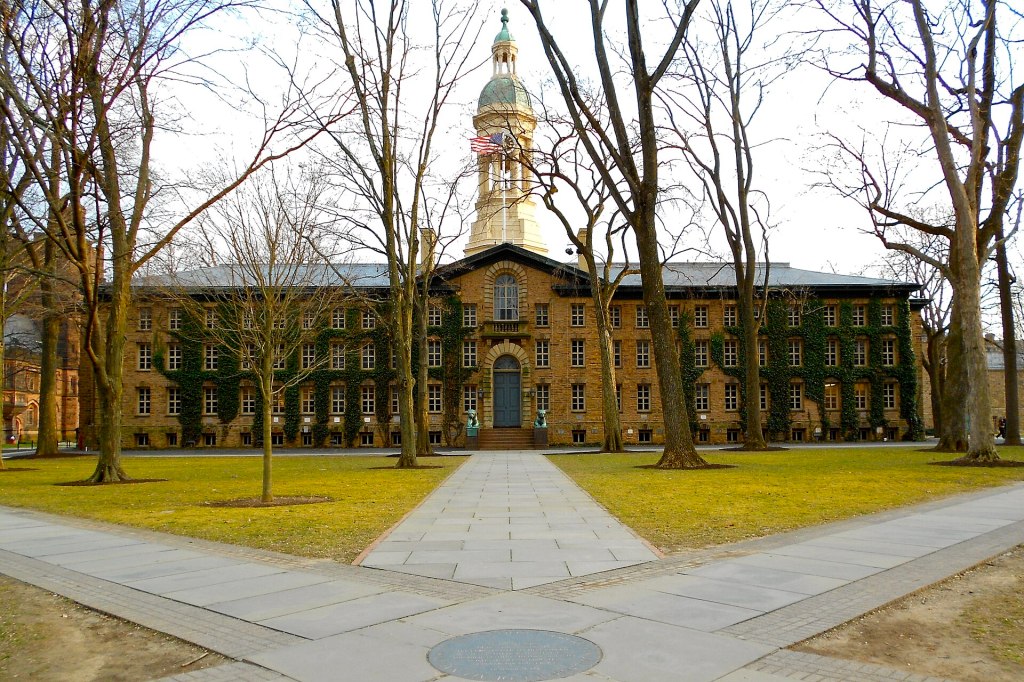
Professors running the biggest exams reported little to note. “I was pleased that there was nothing to report,” said Joel Cooper, who teaches PSY 101 to about 140 students. “The Honor Code seems to work, whether students are being proctored or not.” Paul Frymer, who teaches POL 220, said of the old system that “there’s a level of faith” built into it.
The burden fell more on teaching staff. Jingyun Chloe Wu, head teaching assistant for CHM 201, described a staffing ratio of one proctor per 50 students in a roughly 200-person lecture, which she described as a burden. She also said proctors walking the aisles were “a little distracting.”
The students wrote some of the rules
The reason the change went smoothly may be that students helped write the rules. Isaac Bernstein ’28, chair of academics for the Undergraduate Student Government, told the Prince that 50 to 60 students attended an Oct. 7 roundtable on the policy. All three of his recommendations were adopted: proctors do not collect phones, they do not interrupt exams, and the guidelines are public.
Bernstein said that under the old system there was “a lot of pressure as students to create reports.” Shifting monitoring to proctors takes some of that pressure off students, without ending the student role in deciding honor cases.
The bigger worry is AI
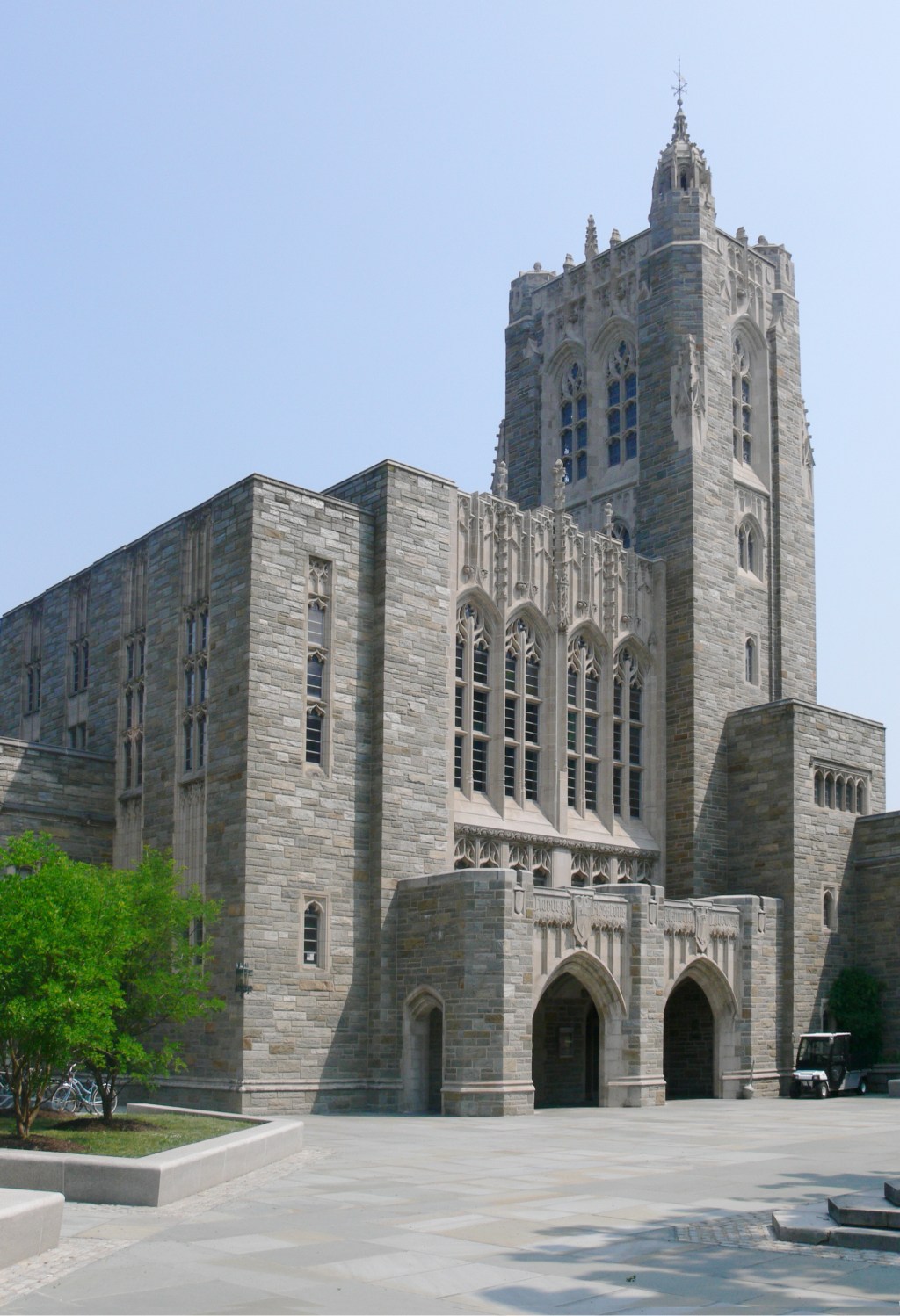
If proctoring is Princeton’s answer to cheating on exams, the harder problem is everything else students turn in, now that AI can write a passable essay. A second Prince report in late October, by Mia Chen, Katharine Glover and Tara Prakash, looked at how faculty are adapting.
The guidance from the top is clear. Dean of the College Michael Gordin wrote in a memo: “unless you have an affirmative pedagogical reason to introduce networked digital devices into the classroom, don’t.”
Several freshman seminars are now piloting analog classrooms. Heather Christie, who teaches FRS 171, said: “We’re all just more present in the room together. I love it.” Alec Dun described “students who feel liberated” without screens. Jeffrey Smith, who teaches ENV 221, described a shift “from evaluating outcomes to evaluating the process.”
The economics department is taking a different approach. Smita Brunnermeier, its director of undergraduate studies, said “a large majority of our students were using AI.” The department now asks for AI disclosure checklists and prompt logs, and has added oral defenses for junior papers and senior theses. In computer science, David Walker said the department’s committee is still gathering information.
Why it matters beyond Princeton
Princeton’s Honor Code has been one of the best-known examples of student self-government in American higher education, and other campuses watch what Princeton does. What this term’s experience suggests is modest but useful. A long tradition can be adjusted without being abandoned, students accept new rules more readily when they help write them, and the larger threat to academic integrity is no longer the exam room.
The technology problem will not be solved by proctors. Notebooks, oral defenses and seminar rooms without laptops are an attempt to go back to older ways of teaching, and the university will have to show, over time, that they work.
Featured image: McCosh 50, the largest lecture hall at Princeton University. Photo by David Keddie via Wikimedia Commons, CC BY-SA 4.0.




Leave a Reply