In Western New York the casino money has always arrived with a story attached, and the story depends on who is telling it. To Albany, the $564.8 million the Seneca Nation wired to the state in March 2022 was a debt finally paid, after an arbitration panel and two federal courts said it was owed. To the Nation, it was something else. Its president at the time, Matthew Pagels, called it the governor’s “Seneca ransom money.” Within hours of its arrival, Gov. Kathy Hochul announced that the state’s share, “more than $418 million,” would go to a new stadium for the Buffalo Bills.
Four years on, with a new compact reportedly near and the Nation’s president saying it may contain no revenue sharing with the state at all, the episode deserves a closer look. So do the people around it: a former governor who presided over the state’s gaming expansion, a Buffalo hospitality giant that runs slot-style machines inside the Nation’s exclusive territory, and a first gentleman who was that company’s general counsel.
What the Senecas bought
The bargain was struck in 2002. Under the Nation-State Gaming Compact, the Senecas received what the U.S. Court of Appeals for the Second Circuit later called “exclusive rights to maintain certain gaming machines in a large portion of Western New York,” an exclusivity zone running west of Route 14. In exchange they paid the state a share of the “net drop” from those machines: 18 percent in years one through four, 22 percent in years five through seven, and 25 percent in years eight through 14. “New York received no other consideration in the Compact,” the court noted. The state, in turn, passes a quarter of what it receives to the host cities of Buffalo, Niagara Falls and Salamanca.
That structure is not incidental. The Indian Gaming Regulatory Act forbids states to impose any “tax, fee, charge, or other assessment” on tribal gaming beyond regulatory costs, and federal courts and the Interior Department have generally permitted revenue sharing only where a tribe receives a meaningful economic benefit in return, usually exclusivity. The compact ties its payments to exclusivity: they stop for any category of machine if the state breaches it, according to the 2019 arbitration award that quotes the text.
The machines at the tracks
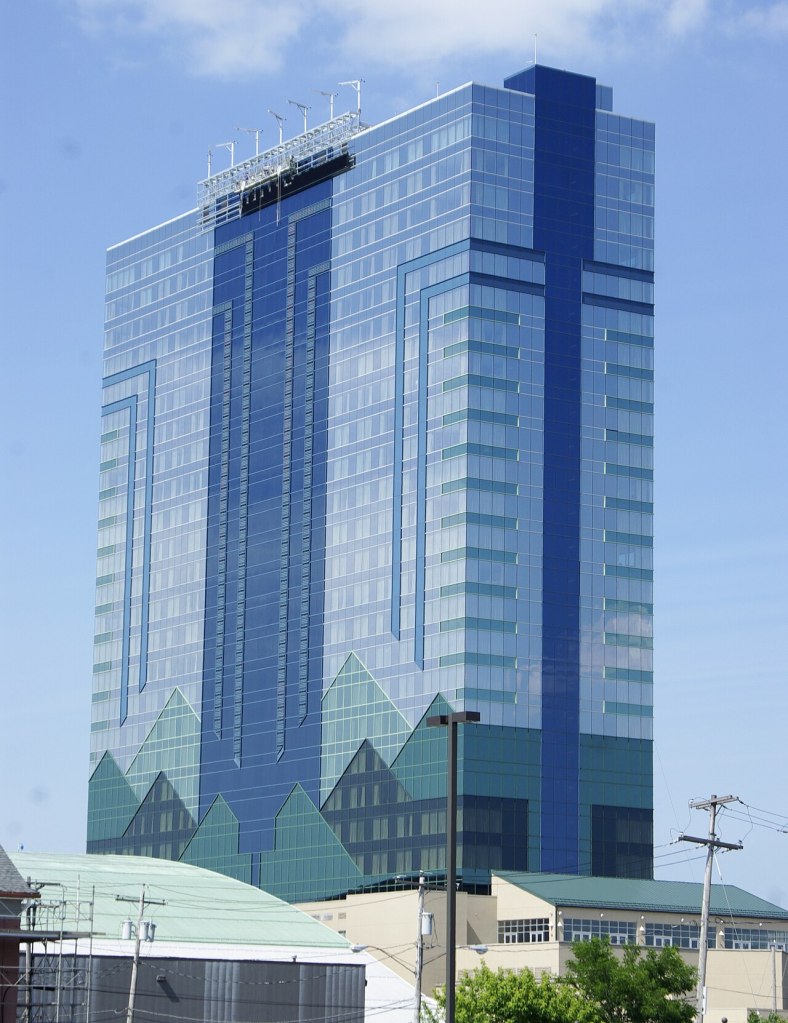
The trouble began almost at once. Starting in 2004, the state put video lottery terminals at harness tracks inside the zone, at Hamburg, Batavia and Farmington, Buffalo Toronto Public Media reported. Hamburg Gaming, at the Erie County Fairgrounds, is owned by the Erie County Agricultural Society’s Buffalo Trotting Association and operated by Delaware North, the Buffalo company of the Jacobs family. Finger Lakes Gaming & Racetrack in Farmington is a Delaware North property. Batavia Downs is owned by the public Western Regional Off-Track Betting Corp.
The Senecas have long argued that those terminals hollowed out the exclusivity they paid for; the compact itself counts “video lottery games” among the covered devices. The state answered that its terminal program was authorized before the compact was signed, runs inside the state lottery, and that a state court found the machines were not slot machines under state law. The dispute led to withheld payments in the 2000s, which ended in a June 2013 settlement with Gov. Andrew Cuomo. In it the state “reconfirm[ed]” the exclusivity and the Senecas resumed payments, keeping $209 million. In the same deal, the Nation “recognizes the right of the existing video lottery facilities at racetracks in Western New York to continue to operate,” and the Gaming Commission promised to enforce exclusivity rules in their marketing and operation. Cuomo’s Upstate gaming law that year kept new commercial casinos out of the zone.
Whether that history amounts to the state and Delaware North cheating the Nation, as some of the Nation’s defenders now put it, is an argument, not a finding. No court or arbitrator has ruled that the racinos breached the compact, and the Nation itself signed the 2013 accord accepting the existing tracks. What the record does show is that the exclusivity the Senecas paid hundreds of millions of dollars for was never as total as the word suggests, and that one of the principal beneficiaries of the exception was a politically connected Buffalo company. Jeremy Jacobs Sr., Delaware North’s chairman, gave Cuomo’s campaign $50,000 in 2010 and more in 2014, according to state campaign-finance records compiled by LittleSis.
The arbitration, the courts and the freeze
After the compact’s 14th year the Senecas stopped paying, arguing that nothing in the text required payments during its seven-year renewal. An arbitration panel disagreed in January 2019, finding the compact ambiguous and ordering payments at 25 percent, including $255.9 million for 2017 and 2018. A federal district judge confirmed the award, and in February 2021 the Second Circuit affirmed, rejecting the Nation’s argument that the amended terms needed the Interior Secretary’s approval. The Cuomo administration, for its part, had urged the Nation to “make the state and local communities whole,” Politico reported.
Hochul inherited the unpaid judgment. In late March 2022, the state served a restraining order that froze several Seneca bank accounts. Within days the Nation’s council authorized the transfer of $564,842,625.20, covering 2017 through 2021. Pagels accused the state of “holding the Seneca people and thousands of Western New Yorkers hostage.” Hochul said, “The courts have consistently ruled in the State’s favor, yet no payments were made. Upon taking office, I sought to negotiate in good faith.” By the law’s lights she was collecting a court-confirmed debt. Her critics call it a shakedown. The courts called it enforcement.
From the casino floor to Orchard Park
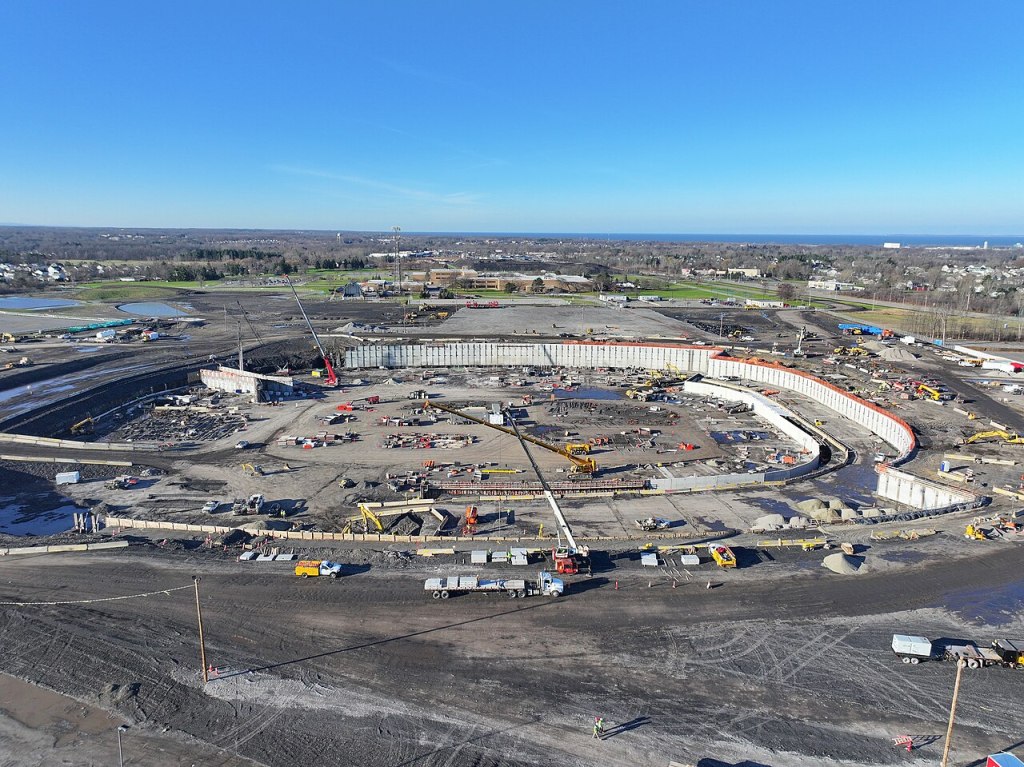
The stadium link is not an inference; the governor drew it herself, in writing. “These funds were generated in Western New York, and I am directing the State’s share, which is more than $418 million, to the new Buffalo Bills stadium,” her March 29, 2022 statement said. The state’s total commitment to the stadium was about $600 million, with Erie County adding more, WHEC reported; money is fungible, but the governor chose to tie these dollars to that project. The rest went to the host communities.
The team is owned by Terry Pegula and his wife, Kim, through Pegula Sports and Entertainment. Pegula made his fortune in natural gas: his East Resources drilled the Marcellus Shale, and he sold most of it to Royal Dutch Shell in 2010 for $4.7 billion. To his detractors in a state that banned fracking, he is the hydrofracker who got a stadium; to the Bills’ fans, he is the owner who kept the team in Buffalo.
The husband, the company and the recusal
Then there is the family dimension. William J. Hochul Jr. served as U.S. Attorney for the Western District of New York from 2010 until October 2016. Days before he left, Delaware North named him general counsel. He was paid $650,375 there in 2022, according to the Hochuls’ tax returns as reported by Politico, and $1.47 million in 2023, the year he left, a figure the administration attributed to bonuses and separation pay, the Times Union reported.
Critics of the family have suggested that his office looked away from the state’s treatment of the Senecas, despite the federal government’s trust responsibility to tribes. The City Politic found no public record that the Western District received, or declined, any referral concerning the compact or the racinos. On the Buffalo Billion, the record is narrower than the lore. That case, which ended in the conviction of Cuomo associates, was brought by Preet Bharara’s Southern District; officials said the complaint originated there, and a court spokesman would not say whether the Hochul marriage played a role. William Hochul said on leaving that his departure had “nothing to do” with any conflict, and that his recusals “generally do not become public,” WBFO reported.
As governor, Kathy Hochul signed recusals from Delaware North matters in August and October 2021 and left the Seneca compact talks to senior staff. In March 2022, the Nation’s president noted that the first gentleman’s company “operates Video Lottery Terminals within the Seneca Nation’s supposed gaming exclusivity zone with the State’s blessing” and would “make millions of dollars in concession business inside the State-owned stadium.” The second half did not come to pass: Delaware North, the Bills’ concessionaire since 1992, confirmed in May 2023 that it would not serve the new stadium, and the contract went to Legends. Claims that Delaware North was the driving force behind the stadium, or wanted more kitchen space, could not be confirmed in lobbying records or published reporting.
William Hochul left Delaware North on Aug. 15, 2023. That day, the governor’s counsel rescinded the recusals, citing “the complete termination of any financial ties,” and her office said she was “no longer recused from negotiations with the Seneca Nation,” Spectrum News reported. She has since engaged directly, inviting President J.C. Seneca to Albany and apologizing for the Thomas Indian School, WGRZ reported. Whether a governor whose household earned more than $2 million from a Seneca competitor should be the one to close the next compact is a judgment voters, and the Nation, are entitled to make. The recusal rules, as written, permit it.
What comes next
President Seneca now says an agreement in principle contains none, and that it could go to the Legislature in the spring. The governor’s office says there is “currently no agreement.” If he is right, the cities of Buffalo, Niagara Falls and Salamanca lose a revenue stream worth $10 million to $13 million a year to Niagara Falls alone, by its mayor’s estimate, and the state will have traded its share of the zone for peace.
To many in Western New York, the arc from the racino floor to the stadium financing looks like something worse than politics, and some say so plainly. No court has agreed. The Senecas called it ransom. Albany called it enforcement.



Leave a Reply