Rutgers University is older than the United States, and on Oct. 21, a New Jersey appellate panel found that the age matters.
In a ruling under docket number A-3160-23, Judges Lisa A. Firko and Stanley L. Bergman Jr. of the Appellate Division of New Jersey Superior Court held that Rutgers does not need the state’s permission to add new degree programs. They reversed administrative determinations made in 2023 and 2024 by the state Office of the Secretary of Higher Education, which had concluded that Rutgers was subject to a 2021 law giving that office a veto over new majors. The ruling was first reported by the New Jersey Monitor.
The 2021 law
For decades, the New Jersey Presidents Council, a body created by state law in 1994 whose members are presidents and administrators of public and private colleges, reviewed and commented on proposed academic programs. It could not stop them.
In 2021, the Legislature gave the Office of the Secretary of Higher Education the power to reject new programs if the council found that they would duplicate existing programs, require significant state funding, lack market demand, or fall short of “sufficient academic quality.” According to the Monitor, the rules took effect in March 2022, and Rutgers challenged them soon after. It argued that the regulations infringed on its autonomy and that state law exempted it.
The exemption
The judges’ reasoning starts in 1912. That year, they wrote, the Legislature began regulating colleges’ academic degrees, and later laws tweaked that regulation many times. But those laws typically excused institutions founded at least 25 years before the 1912 law, that is, before 1887. Rutgers was founded in 1766.
The second support is the Rutgers Act of 1956, passed, as the judges described it, specifically to keep the state from exercising unlimited regulatory power over the university, including by imposing new obligations through later statutes and regulations. The same law created Rutgers’ Board of Governors, which the court said is how the state already oversees the university’s academics.
“The State was granted the authority to appoint the majority of the Board’s voting members (through appointment by the Governor, with the advice and consent of the Senate), and the Commissioner of Education was designated a non-voting member of the Board of Governors,” the judges wrote. “Thus, the Board of Governors serves as the oversight with respect to Rutgers’s academics and degree programs.”
The third is the Higher Education Restructuring Act of 1994, which gave college boards final authority over their institutions’ management, including programs and degrees. “The Act was clearly intended to free public colleges and universities from the Department of Higher Education’s control over their operational decisions,” the judges wrote. “Nothing in the Act’s history suggests that it was intended to impair Rutgers’s autonomy.”
“A significant difference”
The state, the judges wrote, played down the change. The court did not. “The State minimizes this expansion of its authority,” the judges wrote. “But, it is a significant difference for Rutgers.”
The difference is the one between commenting and vetoing. Under the old system, the state could advise Rutgers on a new program. Under the 2021 law, as the higher-education office read it, the state could stop one. The court held that the second power does not reach Rutgers.
The judges also noted, according to the Monitor, that they found no evidence the state had ever rejected a new program Rutgers proposed. The fight was over authority, not any particular major.
The university and the state
Rutgers is New Jersey’s flagship university, with more than 69,000 students and more than 27,000 faculty and staff, according to the Monitor. Dory Devlin, a university spokeswoman, told the Monitor that Rutgers was “pleased.” “Today’s ruling preserves the University’s academic freedom to design and implement programs of its own choosing, consistent with its charter as codified under state law,” she said. The Monitor reported that she did not have details on which programs the university had added or dropped in recent years.
The Monitor reported that spokespeople for the state attorney general’s office and the Office of the Secretary of Higher Education did not respond to its requests for comment. The state may petition the New Jersey Supreme Court to review the decision.
What comes next
The ruling turns on Rutgers’ particular history: its founding date, its 1956 statute and its Board of Governors. Whether other institutions could make similar arguments was not before the court. For the state’s largest university, at least, decisions about new degree programs rest with its own board, which the court found is where the Legislature put them.
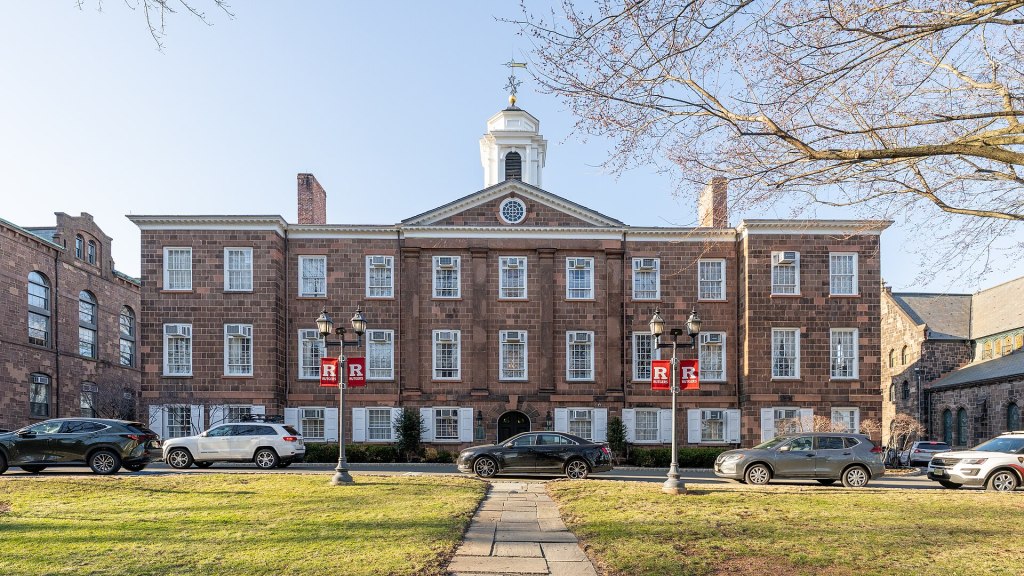
Featured image: Old Queens at Rutgers University, New Brunswick. Photo by ajay_suresh via Wikimedia Commons, CC BY 4.0.


Leave a Reply