The $100 million never arrived. That, more than any ballot of co-op shareholders or any lawsuit from a fashion designer, is how a $2 billion romance with one of Manhattan’s last great residential hotels came undone.
On Tuesday evening, Oct. 13, according to the New York Times and The Real Deal, the co-op board of the Pierre, the 96-year-old tower at Fifth Avenue and East 61st Street, terminated its agreement with Motasem Khashoggi, the Harvard-trained Saudi businessman whose entity, Sabre Park Avenue LLC, had proposed to buy the entire building. A $100 million deposit, due in early September and then extended another month, never cleared. “After this termination, they have their building, which I’m sure they know the condition of, and I have my money,” Khashoggi told the Times from Saudi Arabia. “So I don’t know who’s the bigger loser here.”
For two years the Pierre has been the city’s most elegant soap opera: a fight over whether a faded landmark should be sold wholesale to a Gulf buyer and remade by Brunei’s Dorchester Collection, or left in the hands of the widows, divorcées, moguls and celebrities who call it home. The answer, for now, is the latter. The carpet is still worn. The pipes are still a concern. The Commerce Secretary’s basketball court still sits unused in a penthouse nobody has ever really lived in. And the sale, for the moment, is dead.
A hotel that is also a co-op
The Pierre is that rare Manhattan hybrid: roughly 70 co-op apartments stacked atop a working hotel of nearly 200 rooms, managed since 2005 by Mumbai-based Taj Hotels. Elizabeth Taylor kept an apartment there. Audrey Hepburn checked in. Yves Saint Laurent once owned a two-bedroom. The living roster, as Vanity Fair catalogued this summer, still includes Tory Burch, Art Garfunkel, Michael Eisner, Austin Hearst, and Larry Ellison, who now owns Shari Redstone’s former pair of apartments on the 25th floor. More than 400 employees keep the place humming; a 2021 New Yorker profile counted forty-nine languages among them.
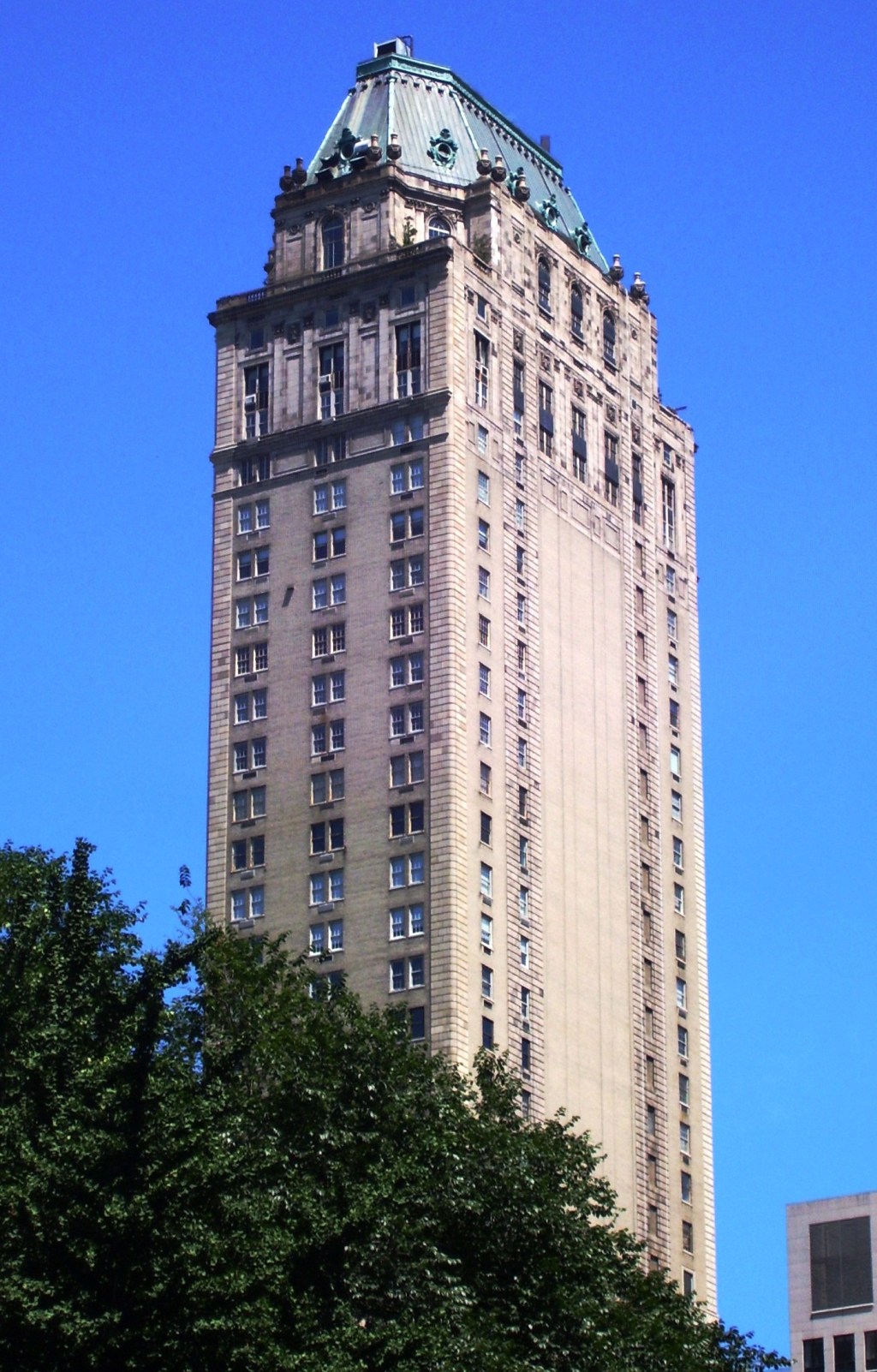
It is also, by common consent, tired. Engineering studies cited by the Times found water leaks penetrating apartments and infrastructure, corroded pipes, and fire-safety systems described as antiquated. Scaffolding has framed the façade for years. Rooms rent for less than at the Plaza or the Ritz-Carlton around the corner. The co-op’s biggest shareholder, U.S. Commerce Secretary Howard Lutnick, bought the 16-room penthouse for $44 million in 2017, never moved in, and, after a storm wrecked the place, installed a private basketball court so he could shoot hoops in the sky.
Lutnick finds a buyer
In November 2023, as Vanity Fair and the Times reconstructed, the Pierre board hired Newmark, then chaired by Lutnick and still majority-owned by his Cantor Fitzgerald, to explore a sale of the hotel portion. That same month, according to a businessman who spoke to the Times on condition of anonymity, Lutnick told a small gathering at the hotel that he wanted “to get someone to buy this.” By May 2024 he was in London with Khashoggi and Dorchester president Christopher Cowdray. WhatsApp messages later reviewed by both outlets show Lutnick telling Khashoggi he would be “delighted” to give his son an internship and was “excited” to invest in companies together, including the SPACs that were a Cantor specialty. (A source familiar with Khashoggi’s thinking told Vanity Fair he never did invest. Lutnick, through a spokesman, declined to comment to the Times on the collapsed deal; the Commerce Department did not respond to a request for comment from The City Politic.)
What followed was a slow reveal. Residents were first told a hotel operator might buy selected apartments; then, in September 2025 presentations by Fried Frank lawyers, that everyone would have to leave within a year. An escrow of $10 million, funded by the shareholders, would be “used for eviction proceedings” against holdouts. The hotel’s union contract would be bought out for tens of millions. Burch’s LLC sued the board for more transparency; a New York Supreme Court judge dismissed the suit once documents appeared in a data room. By July 29, 2026, Khashoggi and Dorchester finally pitched the full vision in the Cotillion Ballroom: $2 billion for the building, a $1 billion renovation, a grand new entrance on 61st Street, a pool in the basement, structural renovations throughout. Residents would get above-market cash for their units and a chance to buy back in at a discount. The staff would not.
Tina Beriro, then 85, a philanthropist who has lived at the Pierre for more than twenty years, put the objection that would define the opposition. “How are we going to enjoy all the perks of this wonderfully renewed building when we’re forced to sell at a price you determine, and we have to buy reconfigured apartments, not our own, at market prices?” she asked, on a recording reviewed by Vanity Fair. “Many of us are going to be dead by the time you finish.” Austin Hearst told the presenters they had done “a miserable fucking job.” When Eisner said he had lost faith in Taj, Burch snapped, per the Times: “Then sell your apartment. If you’re not happy here, leave.” He replied that he was not on the board and was “not forcing anybody.” She answered that he did not need to force everyone else to sell and fire the staff in the process.
The deposit that wasn’t
By early September the board had set a $100 million deposit deadline. Khashoggi missed it. The board gave him thirty more days. On Tuesday, Oct. 13, with the wire still not cleared by 5 p.m., the board called the deal off. Michael Stern, the co-op board’s chairman, and David G. Johnson, its president, wrote shareholders the next day that the building would now try to undertake needed repairs “with a minimum of disruption.” Negotiations continue with Taj over how those repairs will be funded. Dorchester said in a statement that it “remains committed to the vision for the Pierre and looks forward to continuing its partnership” with Khashoggi’s company; Dorchester did not respond to The City Politic’s questions about what that commitment means now. Khashoggi insisted he had the funds and that his bank had held up the transfer; he did not know whether he would try again. Khashoggi Holding did not respond to a request for comment from The City Politic, nor did the Pierre’s Taj management. Nicholas Arons, a lawyer for some of the opponents, told the Times: “We still don’t know what really happened.”
Arons, of Katsky Korins, an attorney who represents numerous shareholders and residents at the Pierre, now thinks he does. “My clients are extremely happy that they will not be forced to leave a home that they love,” he said in a statement to The City Politic. “For over a year we asked why this transaction — which cost the building millions of dollars in fees — was so lacking in transparency, and I think we now have our answer: a secret buyer who could not wire in the 5% deposit.” Arons said that his clients believe they are entitled to a full financial accounting of what the episode cost the corporation that owns the Pierre, and that they expect Taj and the building to be able to work out an arrangement for the repairs that does not require special assessments, an outcome he said would be more likely once shareholders vote in a new board.
Beriro, who turned 86 last Thursday, was clearer. “I am relieved,” she told the paper. “A group of old lady widows and divorcées — look what we did! And without us, we would have been gone.”
What the Pierre is worth, and to whom
Had the sale closed, Lutnick stood to clear roughly $60 million on the penthouse he bought for $44 million, the Times reported, and Newmark, now helped run by two of his sons, would have collected a $30 million advisory fee. Those figures made the conflict-of-interest charge — that Cantor’s chairman had put himself on both sides of a deal for his own co-op — impossible to ignore, even after Lutnick stepped down from Newmark upon becoming commerce secretary. A Newmark spokesperson has said the firm’s selection was unanimous and based on its experience with complex New York deals; Newmark did not respond to The City Politic’s request for comment on the fee. A Sabre Park Avenue spokesperson told Vanity Fair that any implication of improper conduct was “categorically false.”
The numbers that matter now are different. The Pierre still needs work measured in the hundreds of millions. Taj is still the manager. The 400-plus employees are still on the payroll. The co-op still has, according to city records cited by Vanity Fair, a new $75 million mortgage. And across Grand Army Plaza, the Plaza Hotel has just announced its own multi-year closure for a landmark façade restoration — a reminder that even the grandest Fifth Avenue addresses are, finally, buildings that age.
The Pierre’s shareholders have kept their building. Whether they can afford to keep it standing is the next chapter. For a co-op that once counted Elizabeth Taylor among its residents, it is a curiously practical cliffhanger: not who will buy, but who will pay for the pipes.
Photo: The Pierre, seen from Central Park South, by Beyond My Ken via Wikimedia Commons, CC BY-SA 4.0.


Leave a Reply