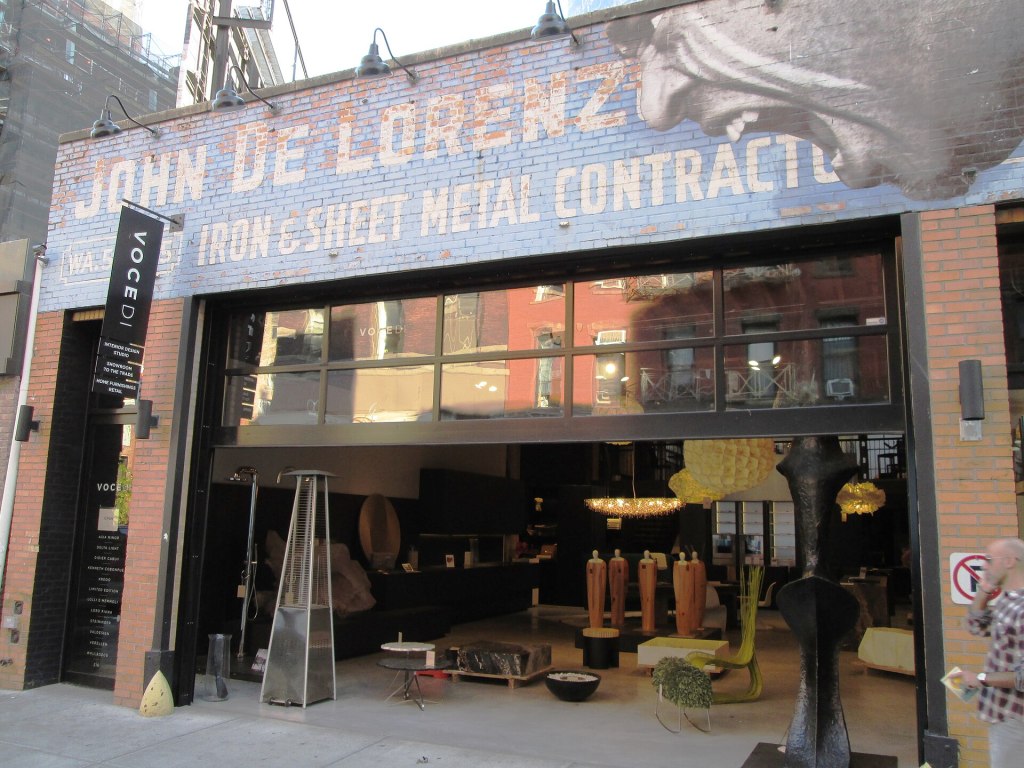
There was a time when the corner of Grand Street and West Broadway meant one thing: Keith McNally’s Lucky Strike, the bistro where downtown went for steak frites and an alibi. That time is now officially over. On Saturday, Oct. 10, the space reopened as Straker’s, the first restaurant outside Britain from Thomas Straker, a London chef with more than two million followers on both Instagram and TikTok, a cookbook, and what Eater New York called “an almost-evangelical enthusiasm for butter.”
New York has received many British exports over the years: the Beatles, the Wolseley, a great many investment bankers. It has rarely received one that arrives having already sold it the butter. Straker’s All Things Butter line, Eater reports, is now in Whole Foods stores nationwide. The restaurant is, in a sense, the flagship store.
“I’m either going to use it or lose it”
Why New York, and why now? Straker, in a frank interview with Eater’s Melissa McCart, offered two reasons, one sociological and one bureaucratic.
The sociological: “People live outside of their apartments in New York — they’re out having breakfast, lunch, dinner — whereas in London there’s a lot more eating at home. People might eat out twice a week there; here, you end up eating out all the time. The market is so strong. If you do something that has an appeal, you can almost guarantee you’re going to be busy.”
The bureaucratic: “I have a U.S. passport. I was born in Washington, D.C., so I thought, I’m either going to use it or lose it.” He added, by way of a closing argument: “So I thought, why not? I’m American.”
It is hard to think of a more New York reason to open a restaurant than “I had the paperwork,” and it is a nice inversion of the usual story, in which the American chef discovers his soul in London. Straker, raised in England, discovered he had a passport.
A year late, two million over
What he did not discover was a quick build. Straker told Eater he signed the lease in April of last year after about six months of negotiating, and that the transformation of Lucky Strike ran “12 months delayed and about $2 million over budget.” In a town where restaurateurs typically describe their overruns in the passive voice, if at all, this counts as refreshing candor.
The money went, in part, into tearing out the old kitchen and putting in an open kitchen and an open bar. Post Company did the interiors, with direction to echo the London original while leaving “nods to Lucky Strike.” The back dining room, Straker says, is “sexy and comfortable,” “sophisticated but casual,” which is to say exactly what a SoHo dining room has been required to be since roughly 1989.
The kitchen is run by Luka Coyne, an Australian; Straker says he has three Australians in his top team. Nearly everyone else was hired locally. “The only way it works is if you create the culture here,” he said. “We know the formula; we just have to apply it here without changing it too much.”
The flatbread
The formula, in edible form, is a mussel flatbread that has been on the London menu since that restaurant opened and that Straker describes as “the one thing we’re definitely bringing over.” It is built on a 48-hour cold-ferment dough, he told Eater, topped with mussels cooked down in wine, the reduced stock turned into a chile butter, chopped mussels folded through, whole ones on top, and the whole thing baked in the wood oven. “I wanted to create a fresh bread-and-butter course that was hot and that you could eat with a couple of drinks,” he said. “I can guarantee it’ll still be there in 10 years if we’re lucky enough to be there.”
Otherwise the menu structure is “almost unchanged” from London, with local substitutions: striped bass for sea bass, perhaps Maine lobster, and dairy from Connecticut farms he visited. The butter on the table, naturally, is his own British product. “My ethos is always: How can I take something and do the least to it to make it exceptional?” he said.
The wine list leans celebratory. Krug is available by the glass, along with an English sparkling wine for those who want to make a point.
The influencer question
The skeptic’s question about any restaurant whose chef is better known on a phone screen than in a dining room is whether the cooking can carry the following. In London, his restaurant, modern British cooking with Italian leanings, has drawn a dining-room following of its own. In New York, the answer will come from a tougher crowd: neighbors who remember Lucky Strike, critics who have seen many celebrity openings, and a reservation book on Resy that will tell its own story in about six weeks.
But the bet is a shrewd one. SoHo has spent the past few years filling with brand flagships, and Straker is, among other things, a brand. A restaurant that doubles as a butter showroom, run by a man with two million followers per platform, on one of downtown’s most storied corners, is less a gamble than a marketing plan with a wood oven.
And yet the thing he talks about most is the room. “The space has got an amazing energy,” he told Eater. “As soon as I walked in there, I knew.” Plenty of people said the same about Lucky Strike, once.
The City Politic has reached out to Straker’s for comment and will update this story with any response.
Photo: Grand Street between Thompson Street and West Broadway in SoHo. Beyond My Ken / Wikimedia Commons, CC BY-SA 4.0.


Leave a Reply