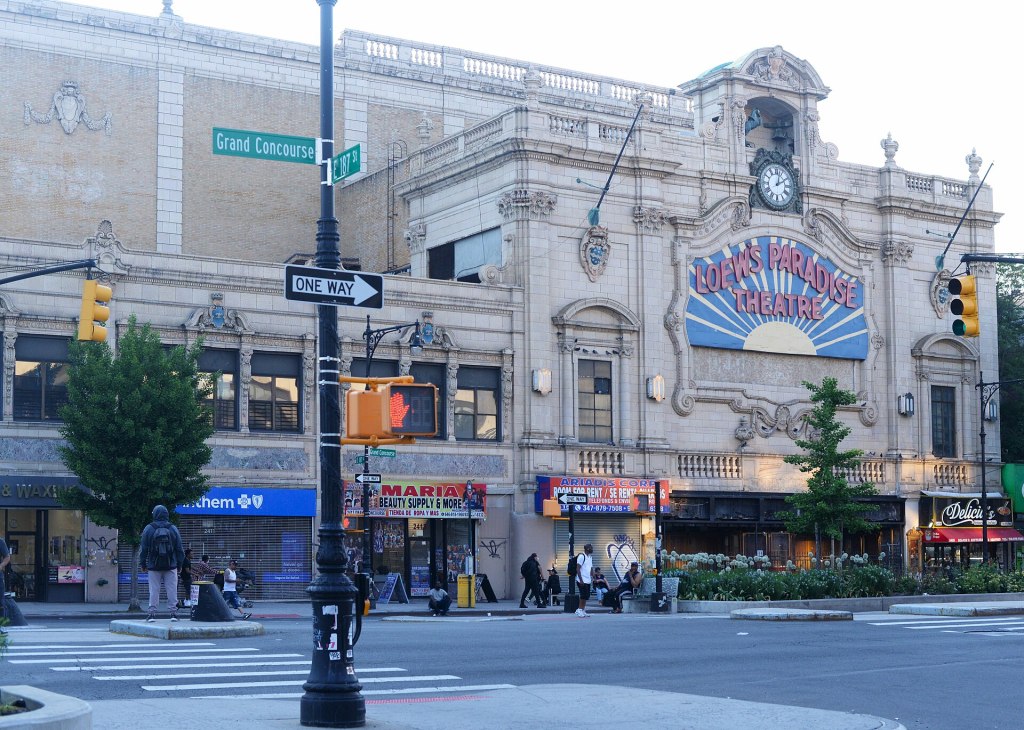
Every October, for one weekend, New York stops pretending it does not want you to see inside. The doors of private gardens swing open, power plants admit visitors in sneakers, and a city that charges admission for nearly everything opens a 1929 movie palace to the merely curious. Open House New York Weekend is under way, Oct. 16 through 18, and if you are reading this on Saturday, you still have a day and a half.
The organization’s festival page lays out the scale: more than 300 destinations across all five boroughs, more than 150 of them drop-in, with no ticket required. The festival counts 50,000 participants and 1,000 volunteers, and describes itself, without much exaggeration, as “1 citywide festival.” The rest require advance tickets because of space or security limits, OHNY says. But the drop-in list alone is enough to fill a weekend.
A greatest-hits list
The real estate site CityRealty, in a guide by Michelle Sinclair Colman, calls the weekend “your annual reminder that New York is basically one giant backstage pass,” and its picks make the case. Among them: Roy Lichtenstein’s former studio, with a tour led by a Whitney Museum art historian; the active construction zone of Phase 2 of the Second Avenue Subway in East Harlem; and the Paradise Performing Arts Center in the Bronx, the 1929 movie palace that CityRealty notes was one of five Loew’s Wonder Theatres, with some 4,000 seats.
The guide also lists the hidden gardens of 610 Loft & Garden at Rockefeller Center, with views of St. Patrick’s Cathedral; Hildreth Meière’s Art Deco “Red Room” at Printemps New York, which CityRealty says is wrapped in 8,000 square feet of red-and-gold glass mosaic; Jack Shainman Gallery’s space in the Clock Tower Building in Tribeca; and Con Edison’s East River Generating Station, where electricity and high-pressure steam are produced for the city. Rounding out its list are the new Vanderbilt University campus in Manhattan, the Brooklyn Navy Yard and the New York Sign Museum, which, CityRealty reports, has rescued more than 50 vintage signs.
That is, in one weekend, a Pop artist’s studio, a subway tunnel, a Bronx movie palace, a Rockefeller rooftop, an Art Deco mosaic, a power plant and a museum of bodega signs. No other city on earth offers that combination, and no other city would think to.
Themes with a point
OHNY is not merely a tour guide; it has an argument, and this year the argument has two strands. The first is “Part and Parcel,” the latest edition of its Urban Systems series, which the organization describes as an exploration of how zoning “has shaped the city over the past century and how new laws will reshape it for the next hundred years.” It is a timely subject. The city’s recent zoning overhauls have been widely described as the most consequential land-use changes in decades, and most New Yorkers, if asked, could not tell you what a floor area ratio is. A weekend that lets them see the results in person is civic education disguised as sightseeing.
The second strand is “WTC at 25,” a collection of tours presented with the New York Building Foundation. “A quarter-century after the darkest day in the city’s modern history,” OHNY writes, “the World Trade Center has been almost completely rebuilt.” The tours go behind the scenes of the site’s landmarks, including, per CityRealty, the rebuilding gallery and artists’ studios at 3 World Trade Center. In a fall when the city has marked the 25th anniversary of Sept. 11 in concert halls and memorials, a chance to see the rebuilt site as working architecture rather than as symbol is its own kind of commemoration.
The festival’s printed identity, OHNY notes, was carved in stone by Chris Pellettieri, whose Pellettieri Stone Carvers’ Academy is itself one of the open sites. That is the weekend’s ethos in a single gesture: the people who make the city get to show it off.
How to do it
A few notes for Sunday. Check the festival’s updates page before you go; OHNY warns that there are changes, additions and cancellations through the weekend. Lines at the marquee drop-in sites can be long, so the smart move is to cluster by neighborhood and go early. And do not neglect the less glamorous entries: the infrastructure sites are often the most memorable, because they are the ones you will never otherwise see.
The festival is made possible, OHNY says, with support from Bloomberg Connects and public funding from the New York State Council on the Arts and the city’s Department of Cultural Affairs, along with a long list of private funders. It is, in other words, a rare public good in a city that rarely gives anything away. For one weekend a year, the gatekeepers stand aside.
The larger point
It is easy to be sentimental about OHNY, and we will be, briefly. New York is a city of closed doors: co-op boards, private clubs, members-only floors, ticketed everything. Much of what this magazine covers takes place behind those doors. The genius of Open House New York is that it inverts the city’s usual logic for 72 hours. The power plant, the rooftop garden and the artist’s studio are, for a moment, as accessible as the subway.
Then Monday comes, the doors close and the city goes back to charging admission. Go while you can.
The City Politic has reached out to Open House New York for comment, and will update this story with any response.
Photo: Loew’s Paradise Theater on the Grand Concourse, the Bronx, by Sashimi-b via Wikimedia Commons, CC BY 4.0.


Leave a Reply