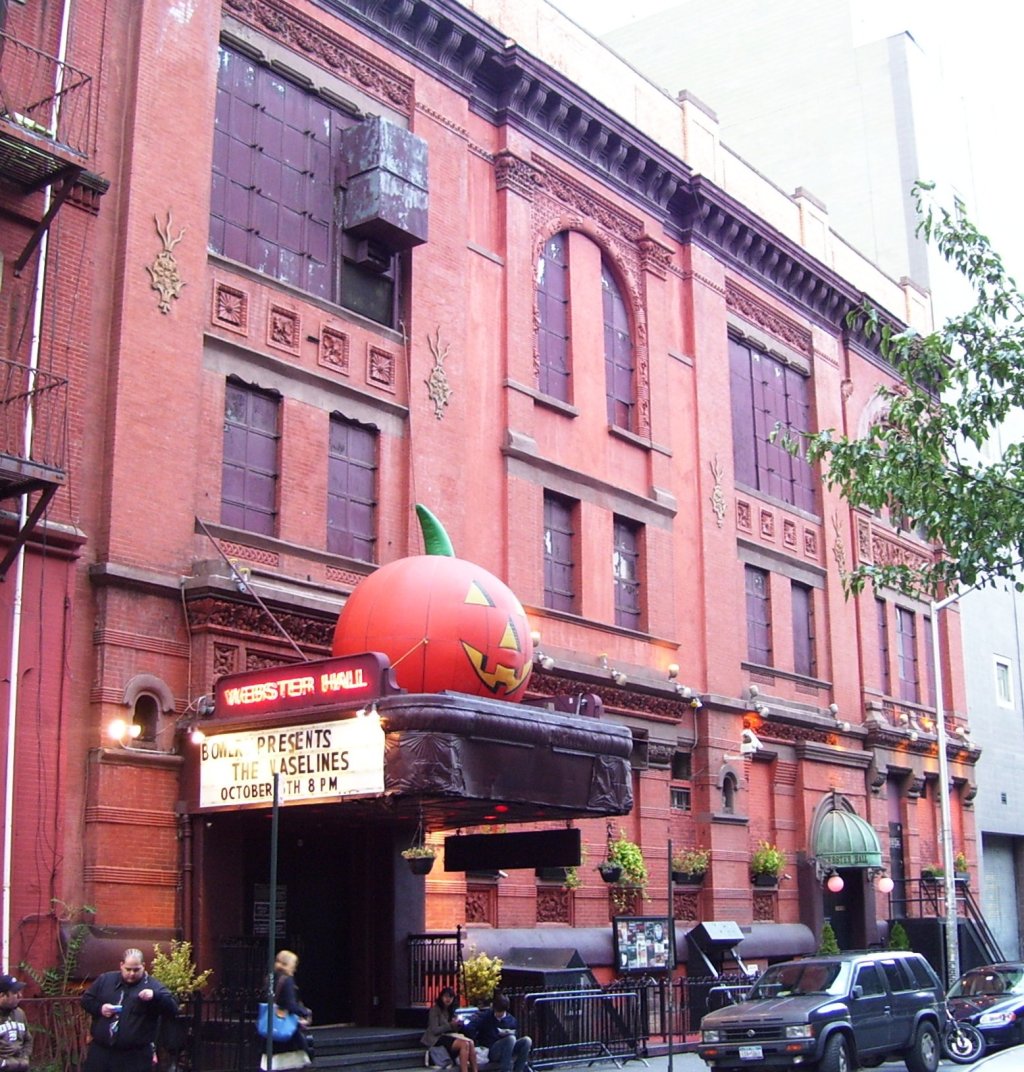
Every October, for one long weekend, the most literate people in New York agree to stand in line on East 11th Street. They do it in good coats, holding tote bags and opinions, and they do it for the privilege of watching a writer from The New Yorker ask a famous person a very good question. The New Yorker Festival‘s 27th edition ran from Friday, Oct. 23, through Sunday, Oct. 25, and its lineup read less like a speaker list than like the seating chart for a dinner party you would sell an organ to attend.
The magazine laid the whole thing out in its 2026 festival guide, compiled by Shauna Lyon and Rachel Syme, after Condé Nast announced the full program on Aug. 31. Tickets went on sale Sept. 2. Most of the action was concentrated in three rooms: Webster Hall at 125 East 11th Street, the Joyce Theater at 175 Eighth Avenue and the T. Rowe Price Theatre at 150 West 17th Street. That made it, functionally, a Chelsea-and-Village weekend, with the walk between venues long enough to argue about what you had just heard and short enough not to miss the next thing.
Friday: the warm-up act was not a warm-up act
The festival opened with a scheduling cruelty that set the tone. At 6 p.m., the program put Hannah Einbinder, of Hacks, at Webster Hall with Syme, while over on West 17th Street, at the T. Rowe Price Theatre, the Shouts & Murmurs veterans Ian and Cora Frazier, who happen to be father and daughter, joined articles editor Susan Morrison for a master class on humor writing at a magazine founded, in 1925, as a “comic weekly.” Half an hour later, Ken Burns was due on the Joyce stage with Michael Luo. Ticket holders had to choose; there are no refunds on regret.
At 8:30, the evening split again. King Princess was booked at Webster Hall in conversation with music critic Amanda Petrusich, and Parker Posey, who has spent three decades as the most quotable person in any independent film, with Michael Schulman at the Joyce. At the T. Rowe Price Theatre, Vinson Cunningham, Naomi Fry and Alexandra Schwartz took their podcast, Critics at Large, live in the same slot, dispensing advice they cheerfully admit they may not be qualified to give, which is a little like scheduling a debate club against a rock show and assuming the audiences won’t overlap. They do. This is New York.
Saturday: novelists at breakfast, a movie star at lunch
Saturday started at 10 a.m., which is an hour at which only novelists and the very anxious are fully awake. Ann Patchett and Louise Erdrich, two novelists who also happen to own bookstores, were paired with fiction editor Deborah Treisman. Meanwhile, at the Joyce, Jill Lepore, Gideon Lewis-Kraus, Andrew Marantz and Joshua Rothman took on the future of artificial intelligence, a subject on which the magazine has published enough words to train a modest language model.
At 12:30, Michael Douglas, who has a memoir to discuss, One Helluva Ride, was scheduled with Ariel Levy at Webster Hall. In the afternoon, the program turned pointedly civic. “Who Gets to Be an American?” brought together Isabel Wilkerson, Jonathan Blitzer, Jelani Cobb and Luo. At 3 p.m., the hosts of The Political Scene podcast, Susan B. Glasser, Jane Mayer and Evan Osnos, were set to tape live at Webster Hall with the Democratic strategist David Plouffe, midterms very much on the agenda. At the same hour, the artist Lorna Simpson was paired at the Joyce with Thelma Golden, director of the Studio Museum in Harlem, a pairing that alone justified the price of admission. At the T. Rowe Price Theatre, Jia Tolentino was in conversation with Barbara Smith, a co-founder of the Combahee River Collective and of Kitchen Table: Women of Color Press, about the feminist movement and the legacy of Gloria Steinem, who was also on this year’s roster.
Then the evening tilted toward the theater crowd. Cole Escola, the Tony-winning author and star of Oh, Mary!, was billed with Julian Lucas at Webster Hall at 5:30, and Matthew Broderick at 6 p.m. at the Joyce with Naomi Fry. At 8, Petrusich returned to Webster Hall with the Pixies, and Benito Skinner, the comedian who turned a gift for impressions into a television career, took the Joyce with Schulman. The program also listed Paul Dano with the Theater of War project, live cartoon improv with Emily Flake, and trivia hosted by Mina Kimes for those who prefer their culture competitive.
Sunday: the main event, several times over
If you could buy tickets for only one day, the smart money was on Sunday. At 10 a.m., Min Jin Lee and Elizabeth Strout shared the Webster Hall bill with Katy Waldman, while the Joyce hosted “Portraits in Power,” a panel of the magazine’s profile writers, including Isaac Chotiner, Clare Malone, Jane Mayer, Lawrence Wright and Daniel Zalewski, on the craft of writing about people who would rather you didn’t. Ben Lerner and Valeria Luiselli were slated to talk fiction with Cressida Leyshon.
At 12:30, Aaron Sorkin, whose film The Social Reckoning returns him to the subject of Facebook and whose A Few Good Men is headed back to Broadway, was scheduled with Tyler Foggatt. At 3 p.m., Ethan Hawke was paired with Emily Nussbaum. In the same hour, Tessa Hadley and Colm Tóibín joined Treisman, and at 3:30 Colson Whitehead and Lucas took over the Joyce.
The late afternoon was where the festival tipped its hand. At 5:30, Conan O’Brien, the festival’s headliner, was set to sit down at Webster Hall with the magazine’s editor, David Remnick. At the same hour, the Joyce hosted Dr. Becky Kennedy and Emily Oster, the two people most responsible for how a certain kind of Brooklyn parent talks to a toddler, in conversation with Dhruv Khullar, and Mahershala Ali was billed with Vinson Cunningham. At 8 p.m., the comedian Atsuko Okatsuka shared the stage with cartoon editor Emma Allen, and Mariska Hargitay sat down with Syme. The last word went, fittingly, to music: Wynton Marsalis at the Joyce at 8:30 with Nick Trautwein.
The party at the Algonquin
As the festival has grown, so has its social life. According to Variety’s Todd Spangler, Autograph Hotels, one of this year’s sponsors along with the Marguerite Casey Foundation and Taylors of Harrogate, hosted the VIP party for a second year at the Algonquin Hotel on West 44th Street. It is a sly bit of programming. The Algonquin is where the magazine’s founding circle gathered at the Round Table in the 1920s, trading insults over lunch that later appeared, lightly edited, in print. A century on, the magazine’s guests were drinking in the same building, and the insults have been replaced by panel moderation. Progress, of a kind.
Why it still matters
There is a cynical reading of all this: a magazine company running a branded event, selling tickets to subscribers, with a hotel chain picking up the bar bill. That reading is not wrong, exactly. But it misses what made the weekend work. In a city where culture increasingly arrives through a phone, the festival insists on the old format: a room, a stage, two chairs and a writer who has done the reading. The questions are better than the ones on podcasts, the answers are less rehearsed than the ones on late-night television, and the audience is the most demanding in the country, because it is made up of people who read the whole article.
Anyone who missed it can start planning for next October, and resign themselves to the line. It moves faster than you’d think, and the conversation in it is often nearly as good as the one on stage.
Featured image: Webster Hall, 125 East 11th Street, in October 2010. Photo by Beyond My Ken via Wikimedia Commons, CC BY-SA 4.0.


Leave a Reply