Quick: where is your vaccination card? If the honest answer involves a parent’s attic in another state, a pediatrician who retired during the Clinton administration or a shrug, you are in good company, and this is the fall to do something about it.
On Oct. 5, Gov. Kathy Hochul signed Executive Order No. 65, declaring a statewide disaster emergency over measles. It is the kind of phrase that conjures images of the National Guard, and it is easy for a Manhattanite to read it and assume it is somebody else’s problem. The outbreak, after all, is concentrated upstate. But the order, and the numbers behind it, have practical consequences for anyone who lives, works or travels in New York City.
The numbers
When the governor signed the order, the state counted 108 confirmed cases in 2026 as of Oct. 3, 92 of them reported since July 15 in under-immunized communities across 18 counties, according to the order itself. The count has kept climbing. As of Oct. 17, the state Health Department reported 162 cases, Medical Daily reported, a 50 percent jump in two weeks. By Oct. 20, the figure had reached 169, the highest since 2019, according to Epicenter NYC. In 2019, New York saw 911 cases.
New York City’s own tally is small by comparison. The city Health Department counted seven confirmed cases in the five boroughs this year as of Oct. 23, three in Brooklyn and four in Manhattan, all of them related to international travel, the department told The City Politic in a statement. Four of the patients are children and three are adults, there have been no deaths, and the city recorded 20 confirmed cases in all of 2025, the department said. Next door, the picture is grimmer. Pennsylvania, home to the country’s largest outbreak, had recorded 977 cases and five deaths as of Oct. 2, according to the executive order.
“While there has been an increase in measles cases across New York State, the risk to the general public in New York City remains low due to high vaccination coverage among New Yorkers,” the department said. “Vaccination is the best protection against measles. We strongly advise parents to get the MMR vaccine for their children as soon as they are eligible.” Most of the city’s cases, the department added, have been among recent international travelers who were unvaccinated or could not document an MMR vaccination, which is this column’s argument in a single sentence.
Dr. Sharon Nachman, division chief for pediatric infectious disease at Stony Brook Children’s Hospital, offered Epicenter NYC a useful corrective for anyone tempted to think of the outbreak as a rural curiosity. The emergency declaration, she said, “shows it to the entire state, saying measles is everyone’s problem.” She also suspects the official count is low, because some families who notice a rash never take a child to the doctor. “It’s unlikely that those measles cases happened in a vacuum,” she said.
What the emergency actually changes
The order is less dramatic than its title, and more useful. Through Nov. 4, unless it is extended, it widens the circle of people allowed to give the MMR vaccine, which protects against measles, mumps and rubella. Paramedics and advanced emergency medical technicians can vaccinate. So can licensed midwives. Pharmacists, normally limited in what they can give young children, may vaccinate children 2 and older. Nurses may order measles tests. The state Education Department’s Office of the Professions has posted guidance for the licensed professions affected.
There is also a bureaucratic change with real consequences for city residents. Under a notice from the city’s Bureau of Immunization, providers in New York City must now report every MMR dose to the Citywide Immunization Registry within 72 hours, for children and adults alike, and the usual requirement to obtain consent before reporting an adult’s dose is suspended while the order is in effect. In plain English: if you get a measles shot this fall, there will be a record of it, which is more than many adults can say for the shots they got as children.
Who should check their status
Here is where the Upper East Side, the West Village and everywhere in between should pay attention. According to the city Health Department, adults born before 1957 are generally considered immune, on the theory that nearly everyone caught measles before a vaccine existed. For most adults born in or after 1957, one documented dose is enough. But the city recommends a second dose for health care workers, college and graduate students, and international travelers.
There is a wrinkle for one particular cohort. A small percentage of adults born between 1957 and 1968 received an inactivated measles vaccine that was later discontinued because it was less effective. The city advises anyone in that group who received it, or who does not know which vaccine they got, to be revaccinated. If you cannot produce written proof of immunity, the advice is simple: get the shot. The city notes there is no harm in an extra MMR dose for someone who may already be immune.
The stakes are not abstract. The state Health Department says up to 90 percent of people without immunity who are exposed will catch measles, and the virus can linger in a room for up to two hours after an infected person has left it. About one in five people who get measles in the United States is hospitalized, the city says. Two doses of MMR are about 97 percent effective; one dose is about 93 percent.
Holiday travel and the grandparent problem
The timing is unfortunate. The order runs into the start of the holiday season, when New Yorkers fan out to Pennsylvania, upstate and abroad, and relatives fan in. The state recommends that travelers be fully vaccinated at least two weeks before leaving the country, and that babies 6 to 11 months old who are traveling internationally get an early dose, which does not count toward their routine two.
Babies under 6 months cannot get the MMR vaccine at all. The state’s advice is to protect them by making sure the family members and others who spend time around them are vaccinated. That includes the grandparents and the nanny.
What to do this week
First, find your records. New York City residents whose vaccinations were reported to the Citywide Immunization Registry can look them up through the city’s My Vaccine Record service. Your pediatrician, your parents’ pediatrician or your college health service may also have them.
Second, if you cannot find them, ask your doctor or pharmacist about a dose or a blood test. The city Health Department’s Fort Greene Immunization Clinic in Brooklyn offers low- or no-cost vaccination for people without a provider.
Third, if you develop a fever and a rash, especially after travel, call your doctor before you walk in. The state advises calling ahead so that a clinic can see you without exposing a waiting room full of people. And if you think you have been exposed and are not immune, call right away: the state says an MMR dose within three days, or immunoglobulin within six, may prevent illness.
None of this requires panic. It requires paperwork, which, in New York, is its own form of wellness.
The state Health Department did not respond to a request for comment, and Stony Brook Medicine did not respond to a request to interview Dr. Nachman.
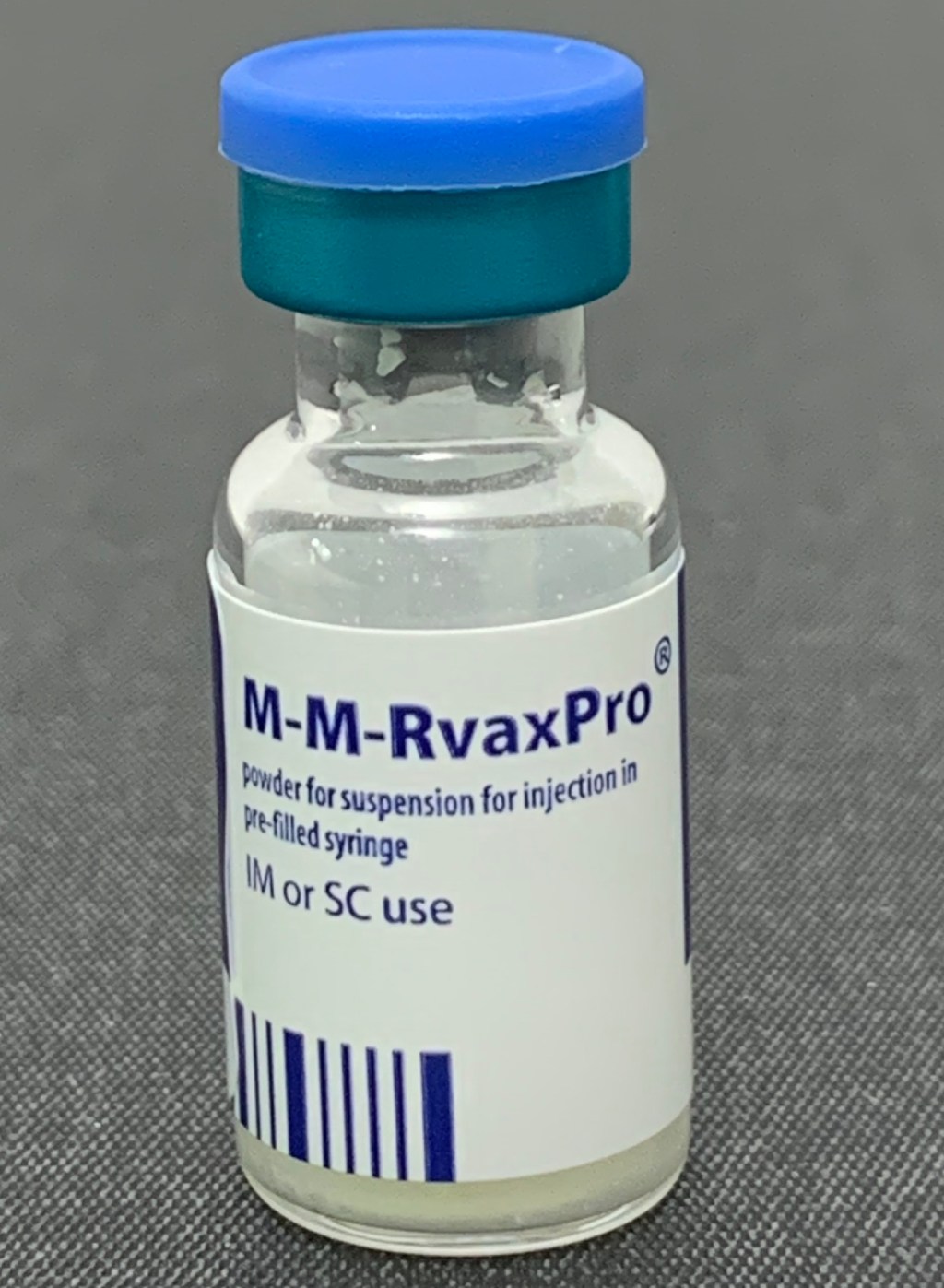
Featured image: A pre-filled syringe of live MMR vaccine (M-M-RVAXPRO). Photo by Whispyhistory via Wikimedia Commons, CC BY-SA 4.0.


Leave a Reply