In 2014, Kushner Companies and affiliated defendants acquired a 19-unit residential building from Brooklyn Law School. The law school had housed students there, which exempted the building from rent stabilization. When the sale closed and the exemption ended, the new owner gave tenants in 17 of the units market-rate leases.
Three years later, in November 2017, current and former tenants sued. Their class action, Connors v Kushner Cos., LLC, Index No. 522076/17, sought a declaration that their apartments were still rent-stabilized, damages for overcharges and a calculation of their lawful rents.
On Oct. 21, the Appellate Division, Second Department, affirmed a 2021 order by Justice Edgar G. Walker of Supreme Court, Kings County. The decision, 2026 NY Slip Op 06092, was issued by a panel of Justices Lara J. Genovesi, William G. Ford, Helen Voutsinas and Donna-Marie E. Golia. Neither side got what it came for.
The facts not in dispute
According to the decision, the building was rent-stabilized from 1984 through 1991. Then it came under the temporary exemption the Rent Stabilization Code gives college and school dormitories operated on a nonprofit basis for educational purposes. Two units, 7 and 17, were always stabilized. The other 17 are in controversy. The tenants won class certification in November 2020.
The Kushner companies argued that the units were lawfully deregulated in 2014 under the luxury-deregulation rules then in force. Those rules let owners take an apartment out of stabilization if it became vacant with a legal regulated rent of $2,500 or more a month. The Housing Stability and Tenant Protection Act repealed them in 2019, but the Code provides that apartments lawfully deregulated before then stay deregulated.
Win one: the exemption is not an exit
The tenants’ strongest point, which the court accepted, is that a dormitory exemption is a pause, not an exit. Before 2014, the Code said that when a temporarily exempt apartment returned to the market, the legal rent would be “the rent agreed to by the owner and the first rent stabilized tenant.” That language was removed in 2014.
The court held that the change did not mean newly vacant apartments leave stabilization. “Expiration of a temporary exemption is not a deregulating event,” the panel wrote. Quoting an earlier appellate decision, it said that under either version of the rule, a once-exempt apartment that “returns to the marketplace… resumes its rent-stabilized status, because it was the status it had before the temporary exemption.”
Loss one: but luxury deregulation still applied
The tenants also argued that the first tenants after the exemption should have received stabilized leases. The court disagreed. The rule on exempt apartments, it said, must be read together with other laws, including the deregulation laws in effect at the time.
“Here, the defendants acquired the subject property in 2014 when ‘luxury deregulation’ was available,” the court wrote. “Therefore, although the units resumed their rent-stabilized status when the exemption ended, they were subject to other applicable laws and could have been deregulated, allowing the defendants to offer market leases.”
So the apartments went back into stabilization, and could then be taken out again if the numbers worked. The court affirmed the denial of summary judgment declaring 10 units (3, 4, 5, 6, 10, 12, 13, 14, 15 and 19) stabilized, at least on the tenants’ first-lease theory. It also affirmed the ruling that Units 16 and 18 are not stabilized.
Loss two: no default formula
The tenants wanted the court to apply the “default formula,” which is used when rent records are unreliable or when an owner engaged in a fraudulent scheme to deregulate. The court declined. The last registered rents for the units are known and undisputed. And the tenants’ fraud allegation, the court said, “consists of the defendants offering market-rate leases to the tenants upon acquiring the subject property in 2014.” That, the court held, is not an allegation of a scheme that “tainted the reliability of the prior rents on the base date.”
Loss for the owners: Units 1, 2 and 3
The Kushner side cross-appealed, asking the court to declare Units 1, 2 and 3 deregulated. It lost. The owner bears the burden of proving deregulation, the court said. Annual registration statements filed with the state Division of Housing and Community Renewal are not enough, because “they merely report statements made by the owner and do not attest to the truthfulness of those statements.” The record also showed “conflicting calculations as to the legal rent for Unit 3.”
On Units 1 and 2, the owners claimed the apartments were “newly created” and entitled to a “first stabilization rent.” That policy applies only when an owner substantially changes an apartment’s outer dimensions, so that “the previous apartment, essentially, ceases to exist.” The defendants, the court said, “failed to provide evidence of the work performed.”
Back to Brooklyn
The order was affirmed without costs. Nine years after it was filed, the case returns to Supreme Court in Kings County, where the remaining work is the slow arithmetic of rent stabilization: what each unit’s legal rent was and whether it ever crossed the line.
Newman Ferrara LLP represents the tenants. Nelson Mullins Riley & Scarborough, LLP, with Greenberg Traurig’s Hal N. Beerman of counsel, represents the Kushner defendants.
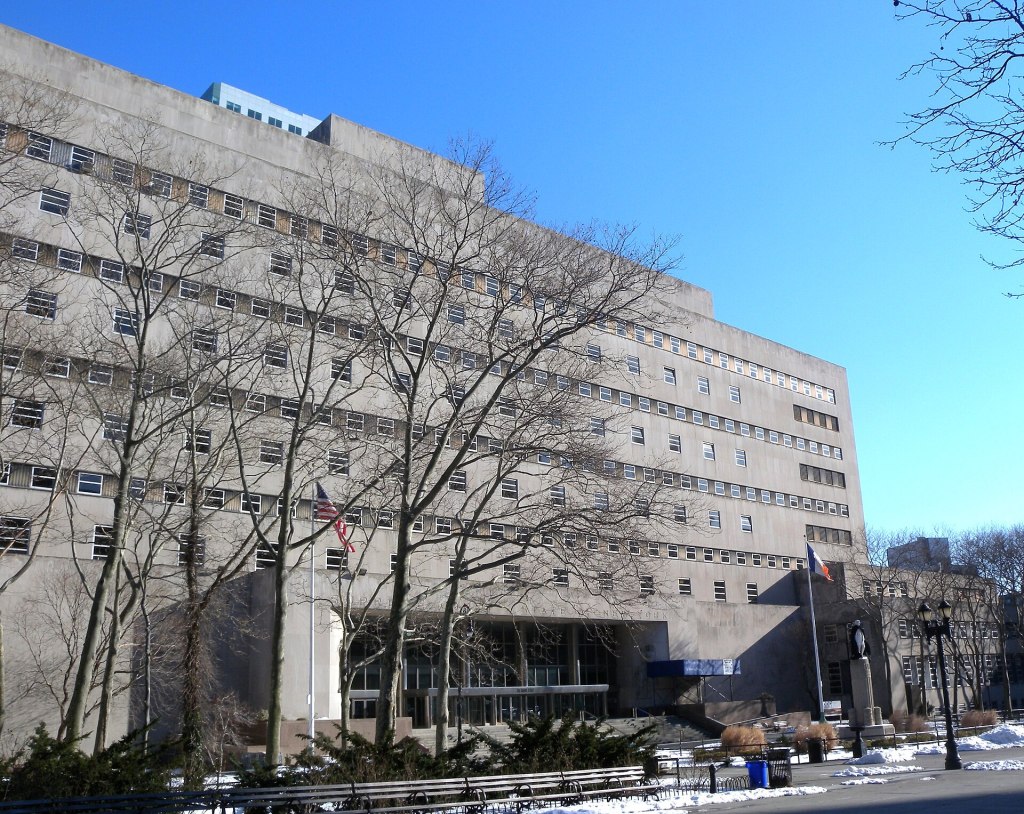
Featured image: The Kings County Supreme Court building in Brooklyn. Photo by Jim.henderson via Wikimedia Commons, CC0.


Leave a Reply