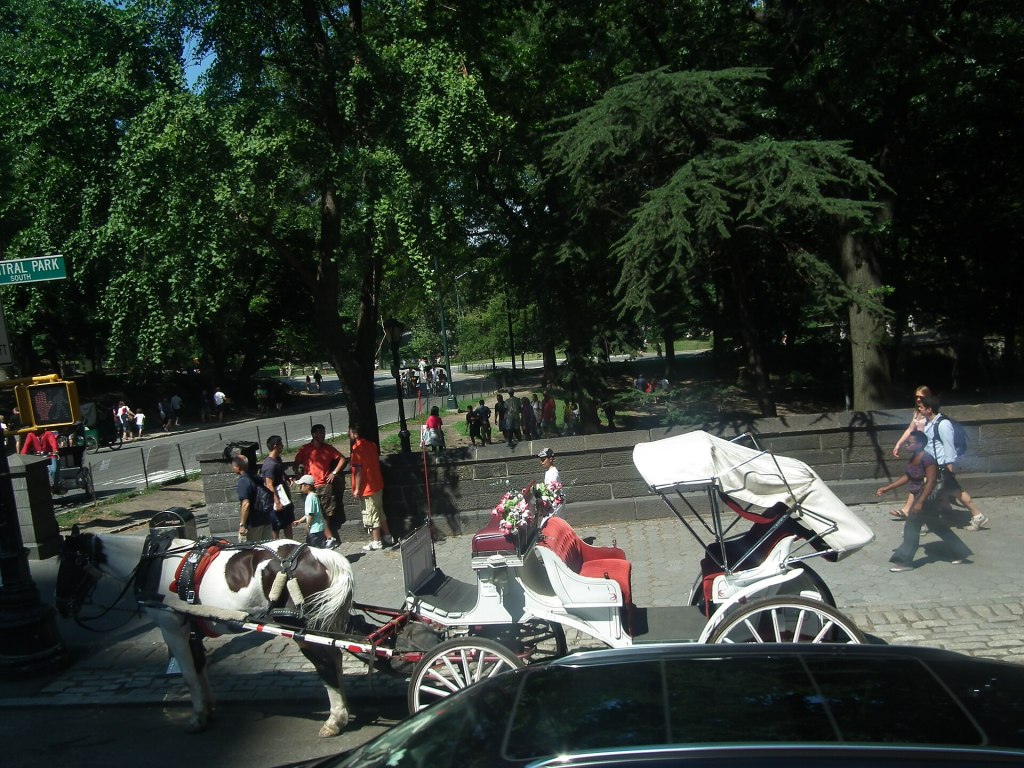
For the better part of two decades, banning the horse carriages of Central Park has been the issue New York politicians promise to fix and then quietly leave alone. Council Member Tony Avella introduced the first ban in 2007. The push under Mayor Bill de Blasio and the Council in 2014 went nowhere. A carriage horse named Ryder collapsed in August 2022, and a bill named for him went nowhere either.
On Oct. 22, the City Council finally did it. By a vote of 40, the Council passed Intro 943-A, which will be known as Romanch’s Law. It ends horse-drawn carriage operations in the city by June 1, 2028, according to the Council’s announcement.
A name, and a reason
The law is named for Romanch Mahajan, 18, who was killed in June after being thrown from a runaway carriage. His death did what years of advocacy, videos and editorials had not. It turned a question about animal welfare into a question about public safety, and it gave members who had ducked the issue a reason to stop.
The bill’s sponsor is Council Member Christopher Marte, who represents Lower Manhattan, and 29 members had signed on to it before the vote. But the more telling detail in the Council’s release is about the Speaker. Julie Menin is the first sitting Speaker to back a ban. That matters in a body where the Speaker decides what reaches the floor. Bills without the Speaker’s support can collect co-sponsors for years and never get a vote. This one got a vote.
The legislative history was not quick, even this year. Robert Holden, then a Council member, had sponsored Ryder’s Law, which would have swapped the horses for electric carriages; it died over cost and logistics. He brought back a version without the electric carriages in November 2025, and it stalled too. After Mr. Mahajan’s death, Ms. Menin announced on June 17 that the Council would hold a hearing, and it did, on July 14, hearing from drivers, advocates and city agencies for several hours. The final bill is broader than a simple prohibition.
What the law actually does
Under the Council’s summary, no licenses for carriage horses, cabs or drivers may be issued on or after June 1, 2028, and any license active when the law takes effect expires for good on May 31, 2028. That leaves a runway of about 19 months. The mayor must designate an agency to produce an industry transition plan by April 1, 2027, for owners, drivers and stable workers. The plan must include a workforce program and must consider compensating owners for the value of their businesses, licenses and equipment. Ms. Menin has also proposed a joint working group with one representative each from her office, the administration and labor.
The law also takes on the question that has dogged every previous ban proposal: what happens to the horses. No later than June 1, 2027, every owner of a licensed horse must certify to the city’s health department that no horse will be sold or transferred for slaughter, for another carriage business or for any inhumane purpose. Owners may keep their animals. Opponents of past bans argued that ending the industry would doom the animals it claimed to protect. The certification requirement is aimed squarely at that argument.
The chorus
Supporters lined up in the Council’s announcement with the air of people who have waited a long time to say I told you so. “After 19 years of relentless advocacy, the passage of Romanch’s Law marks a historic victory for horses, workers, and everyone who deserves safe streets,” said Edita Birnkrant of NYCLASS, the group that has driven the ban campaign. Matt Bershadker of the ASPCA urged the mayor to sign. Ashley Byrne of PETA said Ms. Menin “did what no sitting Council Speaker before her had the hutzpah to do,” and announced $50,000 to help retire the horses.
Betsy Smith, president of the Central Park Conservancy, also offered support. “Central Park belongs to everyone, and everyone deserves to feel safe within it,” she said. The Conservancy’s voice may carry more weight with skeptics than the animal-rights groups, because it speaks for the park’s stewards rather than for the horses. Ms. Menin, for her part, cited heat, overcrowding and a park that now draws more than 42 million visitors a year.
The drivers were heard at the July hearing. They did not carry the day in the chamber. The transition plan and the working group are the Council’s answer to them. Whether that answer is sufficient will be measured in 2028, not in a press release.
The rest of the agenda
The carriage vote overshadowed two other measures passed the same afternoon. The Council approved Intro 905-A, the Community Opportunity to Purchase Act, by a vote of 38 to 9, a year after a veto by former Mayor Eric Adams. amNewYork described the new version as scaled back. The bill, sponsored by Council Member Sandy Nurse, gives certified nonprofits 20 days to express interest when certain residential buildings go up for sale, 70 days to make a first offer and a right of first refusal. “After six years, multiple Mayors, and a veto, we finally passed COPA,” Ms. Nurse said.
The Council also raised the income limit for the city’s rent freeze programs for seniors and people with disabilities, known as SCRIE and DRIE, from $50,000 to $75,000, retroactive to July 1, under Intro 978-B, sponsored by Council Member Farah Louis. It drew less attention than the horses. It will reach far more households.
What comes next
The bill now goes to Mayor Zohran Mamdani, who, according to the advocates quoted in the Council’s release, has made clear he will sign it. The question for the next 20 months is execution: whether the transition program finds real jobs for drivers, whether the working group meets more than once, and whether the certification on the horses has teeth.
For the 19 years since Tony Avella first floated a ban, the carriage question has been a test of whether the city’s politicians would do something they all said they wanted. On Thursday, 40 of them did.
Featured image: A horse carriage in Central Park. Photo by Erik Drost via Wikimedia Commons, CC BY 2.0.


Leave a Reply