There are deals that tell you what the private-equity industry is buying, and deals that tell you what it has become. KKR’s agreement this month to acquire Gen II Fund Services is the second kind.
On October 5, KKR announced it would buy Gen II, a fund administrator, for a total enterprise value of $5.1 billion, from Hg, General Atlantic and other minority investors. The purchase is being made through KKR’s Core Private Equity strategy, the firm’s vehicle for longer-held, lower-leverage investments. The transaction is expected to close in 2027, subject to regulatory approvals.
Fund administration is not a phrase that sets pulses racing at 30 Hudson Yards, or anywhere else. It is the work of calculating a fund’s net asset value, processing capital calls and distributions, preparing investor statements, reconciling bank accounts and producing the tax documents limited partners need. Every private-equity, private-credit and real-estate fund needs it done, and an increasing share of managers no longer want to do it themselves.
Gen II, founded in 2009 by Steven Millner, Steven Alecia and Norman Leben, serves more than 275 investment managers representing over $2 trillion in assets, according to the announcement. Millner remains chief executive.
The sellers’ math
The selling shareholders did well, and said so. General Atlantic and Hg co-led an investment in Gen II in 2020. Since then, according to the release, the company quadrupled its revenue and EBITDA through organic growth and four acquisitions, expanded in the United States and Europe, and built out a digital client portal and automation tools.
Hg, the London-based software and services investor with more than $110 billion under management, described its role in operational terms. Justin von Simson, a partner, and Stefanie Raiola, a director, said in a joint statement that Hg’s value-creation team “drove AI and automation across client onboarding and bank reconciliations, capabilities now led by Gen II’s own team.” General Atlantic, which manages about $130 billion, said it had helped turn Gen II “from a founder-led partnership into a true global platform.”
Morgan Stanley, Robert W. Baird and UBS advised the sellers, with Kirkland & Ellis as legal counsel. Simpson Thacher & Bartlett represented KKR.
The buyer’s thesis
KKR’s case for the deal rests on a structural bet: that the private markets will keep growing, and that the administrative burden of running them will grow faster. “Gen II is exactly the type of financial services business we look for – a sophisticated sector leader with exceptional client relationships and a differentiated service model,” said Chris Harrington, a KKR partner. “The company has become the gold standard in fund administration through its white-glove service model and founder-led culture and is well positioned to benefit from the structural growth of private markets.”
Millner, for his part, said that “KKR’s ownership culture and long-term approach align perfectly with our vision for the future.”
That phrase, ownership culture, is not decorative. KKR said it plans to implement a broad-based employee ownership program at Gen II, giving every employee a stake in future growth. The model, championed inside KKR by the partner Pete Stavros, has become one of the firm’s signature practices across its portfolio, Its supporters describe it as a market-based way to widen capital ownership and share gains with rank-and-file workers; skeptics argue that the payouts are modest relative to sponsors’ returns. Whatever one’s view, it is also a recruiting and retention tool in a business that depends on accountants who are hard to find.
Selling picks and shovels to yourself
The irony of the deal, which no one at KKR is likely to dwell on, is that the industry’s biggest firms are now buying the companies that service the industry’s biggest firms. A fund administrator owned by a large sponsor can expect questions from the other sponsors it serves, some of whom compete with its owner for deals and capital, about how their data are protected. The announcement did not address the point; administrators owned by financial sponsors are not new, and the question is one buyers in this sector routinely have to answer.
The logic for doing it anyway is the same logic that drives most of private equity this year: recurring, contracted revenue tied to a growing asset base is worth paying for, especially when exits for cyclical businesses are hard to come by. Fund administrators are paid on assets and activity. As private credit expands, as continuation vehicles multiply and as wealth-channel funds bring hundreds of thousands of individual investors into structures that need monthly reporting, the volume of administrative work rises regardless of whether any particular fund performs.
There is also a regulatory tailwind. The Securities and Exchange Commission has signaled renewed attention to how private funds value their holdings, and limited partners are demanding more frequent and more detailed reporting. Managers that once kept those functions in-house increasingly outsource them to specialists that can absorb the compliance cost across hundreds of clients.
A busy autumn on Hudson Yards
The Gen II agreement arrives as KKR is also on the selling side of one of the year’s largest financial-services transactions. The firm has agreed to sell USI Insurance Services, the brokerage it has owned since 2017, to Aon in a deal Mergermarket valued at about $17 billion. KKR’s announcement noted that it had exited Integrated Specialty Coverages in 2025.
Put the two together and the shape of the strategy is clear enough. KKR is harvesting a mature services business at a premium price and redeploying into another one at an earlier stage of its growth, through a vehicle designed to hold assets for a decade or more. It is the private-equity equivalent of a long-only investor rotating from one compounder to another, and it reflects the degree to which the largest firms now think of themselves as permanent owners rather than buyers and flippers.
For the rest of the industry, Gen II’s sale carries a simpler message. The back office has become a front-line asset class, and the people who built it in 2009 have been paid accordingly.
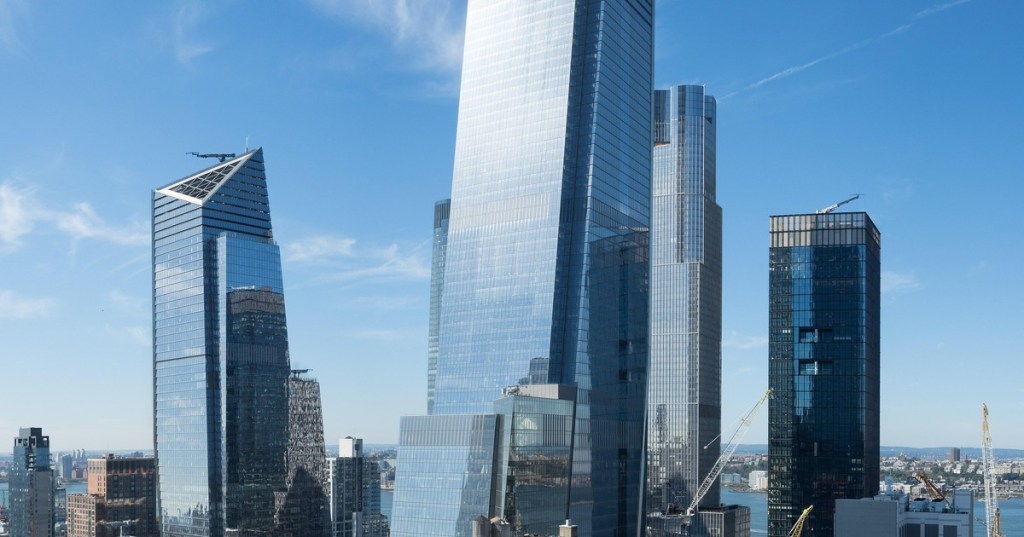
Featured image: Hudson Yards, home of KKR’s headquarters, seen from Hudson Commons. Photo by Rhododendrites via Wikimedia Commons, CC BY-SA 4.0.


Leave a Reply