Staten Island’s Clove Lakes Park is the sort of place borough presidents like to be photographed in: three connected bodies of water and an old boathouse that has been a restaurant since the late 1980s. On Oct. 15, Borough President Vito Fossella stood there for a less pleasant reason. Raw sewage, he said, has been leaking into the water, possibly for decades.
“Clove Lakes is a jewel,” Mr. Fossella said, according to a release from his office. “Thousands of people use it on a regular basis and they have every right to appreciate a healthy, safe environment. Unfortunately, that is not the case.”
He was joined by State Senator Andrew Lanza and Assemblyman Sam Pirozzolo, both Republicans, as is Mr. Fossella. All three called on the city and the state to replace the plumbing at the affected buildings.
The dye tests
The trouble has two known sources, according to reporting by Paul Liotta of the Staten Island Advance/SILive.com.
The first is a Parks Department garage at 21 Slosson Avenue. In March, a Department of Environmental Protection dye test showed that the building’s sewage system was not connected to the septic tank it should have been tied to. The dye turned the water in one of the park’s creeks neon green. SILive reported that sewage from the garage has drained into Brooks Lake for decades.
The second source is the Stone House at Clove Lakes, the restaurant in the park’s old boathouse. On Sept. 1, according to SILive, a DEP dye test found that the restaurant’s sewer system was leaking waste into Clove Lake. The New York Post had first reported the problem. The borough president’s office also said at least two bathrooms on the park grounds had leaked raw sewage into the waterways.
The state Department of Environmental Conservation has issued two notices of violation to the Parks Department and one to the restaurant’s proprietor, a DEC spokesperson told SILive in late September. Parks temporarily banned fishing and boating on the waterways, which include Clove Lake, Martling Pond and Brooks Lake. By the day of the press conference, SILive reported, the signs announcing the ban could no longer be seen.
The summit
The press conference followed a meeting at Borough Hall on Oct. 14 with city officials. The officials acknowledged the need for a permanent fix, the three politicians told SILive, but the meeting produced little progress on long-term solutions. Mr. Fossella said the state was invited and declined to attend. A DEC spokesperson had previously told SILive the agency would not attend that sort of meeting.
The three want more than patches. They are asking for a full overhaul of plumbing at the two buildings, and a deeper study of the contamination. That study, they said, could include draining the waterway and testing the plumbing in other buildings around the park.
“We just have to at least assume that all of the facilities have far outlived their usefulness and the city needs to get into the process of replacing the piping,” Mr. Fossella said, according to his office. “We don’t know what it is doing to the lake itself and to the life beneath the water.”
“I think everyone understands finally that we’re just not going to accept this anymore,” Mr. Lanza said, according to SILive. “We’ve got to fix the problem.”
Mr. Pirozzolo defended the restaurant’s operator. “How do they expect a private businessman to take money out of his pocket to fix this problem?” he asked.
Parks answers
A day later, the Parks Department gave at least a partial answer. A spokesperson told SILive on Oct. 16 that the Stone House proprietor, who holds a Parks concession, would begin work in the coming weeks and expected to finish before the end of winter.
“Parks will support the commencement of this work, including the expediting of permits, to ensure the safety of park patrons and the operation of the concession,” the spokesperson wrote. The department said it “will continue to investigate all identifiable outfalls into the waterbodies at Clove Lakes Park” and follow DEC’s recommendations.
Parks did not say what the repair would involve. SILive reported that since the leak became public, the restaurant has connected its kitchen waste to the municipal sewer through a manhole about 100 yards away and brought in a restroom trailer for patrons. The restaurant’s operator took over the concession in 2014. The Parks Department lists the contract as expiring on May 30, 2042.
The Slosson Avenue garage, which the city fully controls, has seen less action. Parks shut off water at the building after the first DEP test, SILive reported, then restored it to the parts it determined were properly connected. Restroom trailers now serve both sites. The garage facilities have only been used by Parks staff.
The politics of plumbing
Staten Island’s elected officials have spent this autumn in a series of fights with the city. In the past month, Mr. Fossella’s office has also opposed the city’s coming affordable housing “Fast Track” program and called for replacing the Outerbridge Crossing. Clove Lakes is a different kind of issue. Nobody is defending the sewage.
The question is who pays for a permanent fix and when it starts. Under the Parks plan, the restaurant’s operator will begin the work at the Stone House. The city has made no comparable commitment for its own garage.
“This should be the jewel that the people of Staten Island deserve,” Mr. Fossella said, “and now, it’s gone.”
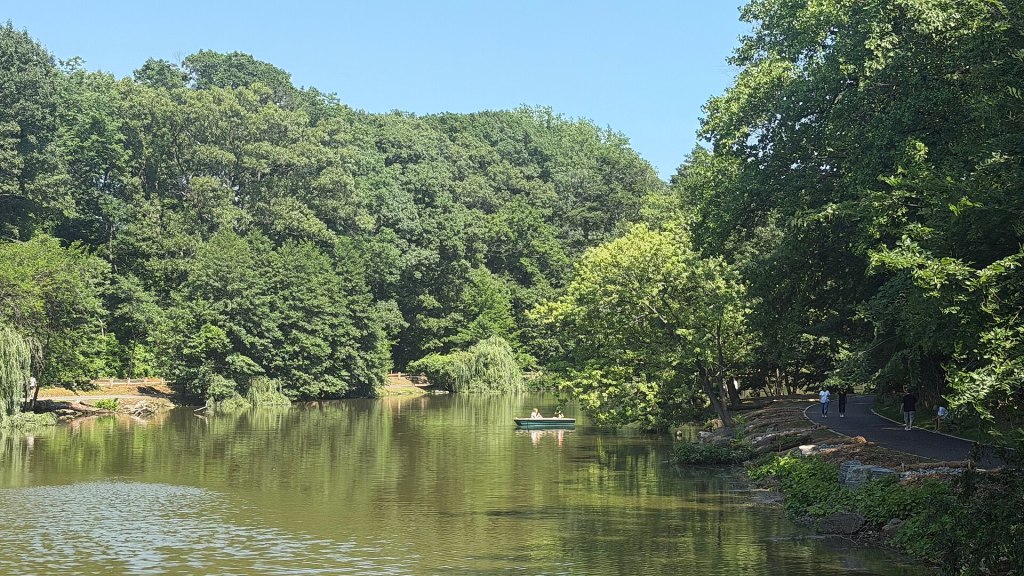
Featured image: Clove Lake in Clove Lakes Park, Staten Island. Photo by Aude via Wikimedia Commons, CC BY-SA 4.0.


Leave a Reply