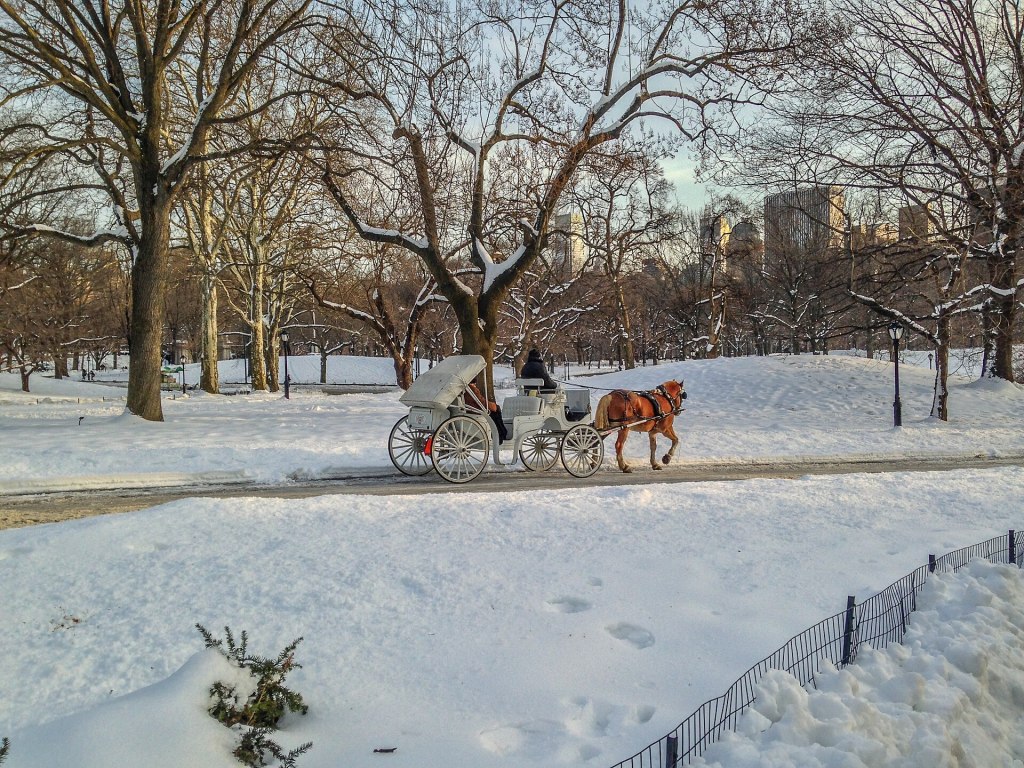
For a hundred and sixty-eight years, the horse-drawn carriage has been the one New York luxury that required no reservation, no dress code and no friend at the door, only a willingness to pay a man in a top hat to haul you past the Plaza at roughly the speed of a crosstown bus. Next Thursday, the New York City Council intends to make it a historical curiosity.
On Oct. 14, Speaker Julie Menin announced that the full Council will vote on Oct. 22 on Romanch’s Law, a bill that would bar new carriage licenses and prohibit the operation of all carriages beginning June 1, 2028. The Council says 29 members are co-sponsoring the measure, a comfortable majority in a 51-member body, and Mayor Zohran Mamdani, whose administration had harbored reservations about earlier drafts, has signed on. “The horse carriage industry is coming to an end in New York City,” the mayor wrote on social media Tuesday night, as quoted by CBS New York. “Our administration will make sure workers and owners are protected and the horses are safe.”
It is, by any measure, the end of the longest-running argument in municipal politics. Bill de Blasio campaigned for mayor in 2013 promising a ban and left City Hall eight years later with the horses still clopping down Central Park South. Council Member Christopher Marte, the bill’s sponsor, thanked the Speaker in the Council’s release “for working with us to finally bring this nearly 30-year debate to an end.”
A tourist’s death, a horse named Deniz
What finally broke the stalemate was not an argument but a death. The bill is named for Romanch Mahajan, an 18-year-old Indian tourist who, according to amNewYork, died in June after being thrown from a carriage drawn by a bolting horse. Weeks earlier, in May, a carriage horse named Deniz collapsed and died, possibly, amNY reported, after eating a toxic shrub.
“The tragic and preventable death of 18-year-old Romanch Mahajan made clear that the status quo is no longer acceptable,” Menin said in the Council’s announcement. “Horse-drawn carriages have long been part of New York City’s history, but in an increasingly busy Central Park, this tradition has become a growing public safety liability.”
The Speaker moved quickly. She announced a hearing on June 17, days after Mahajan’s death, and the Council held it on July 14 at City Hall, a session amNY politely described as “contentious.” The version coming to the floor next week reflects revisions made since then, and Council spokesperson Jack Lobel told amNY that the mayor’s office had reviewed and approved the language.
The fine print on the transition
The real negotiation, as ever in this town, was about who gets paid. The revised bill directs the administration to establish employment programs for drivers and stable workers: job referrals, career counseling, hiring events, help identifying tuition assistance, and a program to help owners find humane homes for their horses. amNY reports that the referrals would point workers toward the MTA, the Port Authority, the Taxi and Limousine Commission and the hospitality trade, and that the bill asks the city to “consider” a program to compensate owners for their businesses, licenses and equipment. The plan is due to the mayor and Speaker by April 2027. Menin’s office is also convening a working group with one representative each from the Speaker’s office, the administration and labor.
“Romanch’s Law will end horse carriage here in Central Park, and we finally got to a place that’s a win-win,” Marte told CBS New York. “Not only making sure that these animals can retire and go to beautiful sanctuaries, but making sure that these workers are protected.”
The drivers’ union does not see a win, or a win-win, or anything resembling one. John Samuelsen, international president of the Transport Workers Union, whose Local 100 represents the drivers, said in a statement quoted by both outlets that “Council Speaker Menin’s bill has no meaningful economic relief for workers. It only says the city should prepare a worker transition plan by April 2027 and include weak measures like job fairs and job counseling.” He went further, accusing the Speaker of having “used” Mahajan’s death to “contrive a public safety crisis,” and called the whole affair “disgraceful political opportunism,” adding, as amNY reported, that “Zohran should not simply go along with it, particularly when immigrant families’ livelihoods are being destroyed.”
That last line is aimed squarely at a mayor whose coalition is built on labor and immigrant New York. Christina Hansen of Local 100 told CBS New York that the industry will challenge the law in court if it passes, arguing it is unconstitutional. “This bill will be devastating for carriage drivers and carriage owners,” she said. “People will be evicted. People will lose their houses.” And, in a line that will be quoted at the hearing-room door: “We will not let the billionaires over at [New Yorkers for Clean, Livable and Safe Streets] win.”
The victory lap
Those billionaires, or at least their advocates, were in a celebratory mood. NYCLASS, which has campaigned against the carriages since the 2013 mayoral race, issued a statement from executive director Edita Birnkrant: “This moment belongs to the advocates and supporters who have spent years fighting with NYCLASS to protect horses and people on our city’s streets. Romanch’s death was a heartbreaking loss that laid bare the devastating consequences of this deadly industry. We thank his family for turning their grief into a powerful call for change.” Steve Nislick, the group’s co-founder and president, credited “Speaker Menin’s fortitude and compassion” in the Council release.
The Central Park Conservancy, which rarely wades into anything more controversial than bench plaques, weighed in too. “For the Central Park Conservancy, this has always been a matter of public safety,” said Betsy Smith, its president and CEO. “We hope for a safe phaseout over the next 20 months that will protect New Yorkers and ensure no one else ever suffers the fate of Romanch Mahajan.”
Council Member Harvey Epstein, who heads the Council’s animal welfare caucus, put it in the plainest New York terms to CBS: “We are too busy, too crazy of a city to have horses walking through the streets of New York.”
What happens on Central Park South
So the clock starts. If the bill passes Thursday, as its co-sponsor count suggests it will, the carriages have about 20 months left. Expect the next chapter to be written in two places: in a courtroom, where the union has promised a constitutional fight, and in the working group, where the question of whether “consider” ever turns into a check will be settled.
In the meantime, the line of carriages outside the park remains, for now, exactly where it has been since before the Civil War. Those who have always meant to take the ride, purely for the irony, of course, have until June 1, 2028.
The City Politic has reached out to Speaker Julie Menin’s office, Council Member Christopher Marte, the Mayor’s press office, TWU Local 100, NYCLASS and the Central Park Conservancy for comment and will update this story with any response.
Photo: A carriage in Central Park in winter. raduranga / Wikimedia Commons, CC BY-SA 4.0.


Leave a Reply