Succession is the drama every New York real estate family eventually stages. Few have staged it as quietly as the Rudins.
Rudin Management was founded in 1925 by Samuel Rudin and his siblings. According to The Real Deal’s profile of the family, it controls 32 properties totaling roughly 13.1 million square feet, and has long followed what the publication calls “a distinctly old-school New York real estate playbook: buy prime buildings without debt and hold them for generations.” In the 1970s, as The Real Deal’s survey of the city’s top real estate families recalls, Lewis Rudin rallied building owners during the fiscal crisis. He went on to co-found the Association for a Better New York, and that combination of business and civic boosterism has been the family’s signature ever since.
The firm is now led by two co-chief executives, the siblings Samantha Rudin Earls and Michael Rudin. They took over from the third generation, their father Bill Rudin and his cousin Eric, who remain co-chairmen. Samantha is the first woman to hold the top title in the family business. The division of labor is unusually clear, which may be the secret. Ms. Rudin Earls oversees the residential portfolio of 19 buildings. Mr. Rudin runs the office towers, development, capital markets, leasing and the venture arm, Rudin Ventures.
Many family firms make the handoff with a lawsuit or a tabloid feud. The Rudins managed it with an announcement and a clear division of duties.
A small slice of a very large tower
The biggest news of the month was a rounding error on the cap table. On October 21, Vornado Realty Trust, an affiliate of Citadel founder Ken Griffin, and Rudin announced they had closed the joint venture to build 350 Park Avenue, together with a 1.05-million-square-foot anchor lease to Citadel Enterprise Americas and a $3.3 billion construction loan.
The proportions are worth noting. The Griffin affiliate holds 60 percent of the venture and Vornado 36 percent. Rudin holds 4 percent. The tower, designed by Foster + Partners, is planned at 66 stories, 1,400 feet and about 1.9 million square feet, with roughly 850,000 square feet left for other tenants. The construction lenders named in the release are Wells Fargo, JPMorgan, Bank of America, BMO, ING, PNC and Standard Chartered. The project’s public obligations include $150 million to St. Patrick’s Cathedral and St. Bartholomew’s Church for air rights and more than $35 million to the East Midtown public realm fund. The city’s land-use approval came through in September 2025. New York YIMBY puts completion in 2032.
Four percent of Park Avenue’s next supertall is not control, but it is a seat at the table. For a family that has always valued the table, that may be the point.
The downtown ledger
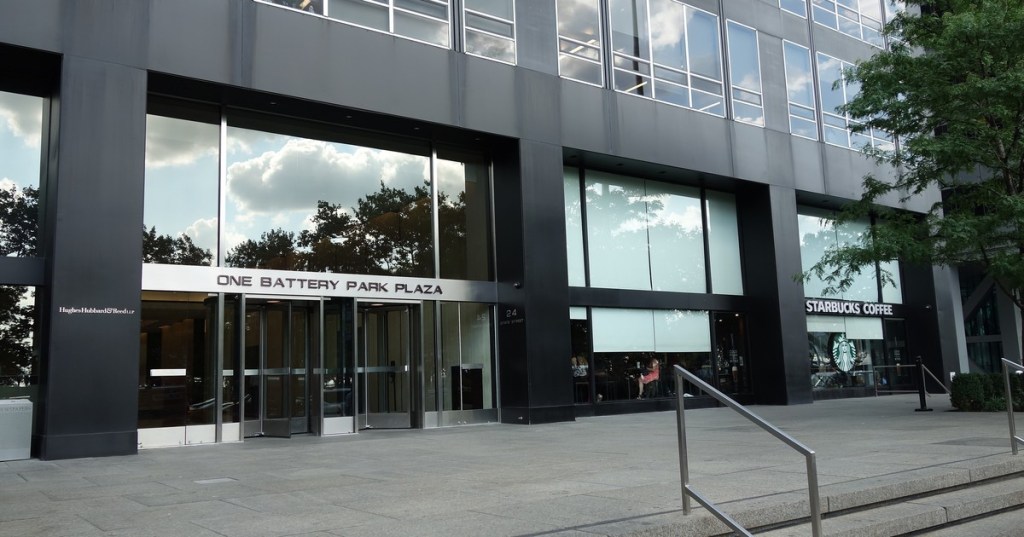
Most of the family’s month was spent on leasing. On October 9, Commercial Observer reported that the law firm Seward & Kissel had renewed for 11 years at One Battery Park Plaza, the 1971 tower Rudin owns with Allianz, which has held a stake since 2016. The firm, a tenant since 2011, occupies roughly 170,000 square feet on floors 19 through 24. (Published figures differ slightly on the exact size.)
“Their renewal extends a remarkable year of leasing at the building and across the portfolio, adding to the momentum of the Downtown market,” Michael Rudin said in the announcement. ConnectCRE reported the building is 99 percent leased.
Two weeks later, CommercialSearch reported that the technology firm Mphasis had signed a 10-year extension and expansion at 41 Madison Avenue, adding 14,151 square feet for a total of 27,709 across floors 35 and 36. These are not trophy deals. They are the steady renewals that keep a family firm going.
Offices into apartments
Ms. Rudin Earls’s residential side is where the firm is changing most. The Real Deal’s family survey notes Rudin’s conversion of 55 Broad Street into 571 apartments with Metro Loft and the Silverstein family, and reports that 355 Lexington Avenue is being considered for similar treatment. Office-to-residential conversion now gets equal praise from Democratic city officials and Republican deregulators, a rare thing in this city, and the Rudins arrived early.
The rest of the fourth (and fifth) generation
The Rudins are not alone in managing a handoff. In July, Commercial Observer profiled the Picket family’s Gotham Organization, founded in 1912 by Nathan Picket, where Matthew and Nicole Picket are principals and Ben Picket is director of strategic operations. “It’s been 114 years. That we’ve made it this far — five generations — what are the odds?” David Picket, the chief executive, told the paper.
In the same month, The Real Deal reported that Jake and Adam Croman, the next generation of a family long active in rent-stabilized housing, are buying again, including at 118 Mulberry Street. And the TRD survey notes that GFP Real Estate’s development arm, GFP Development, is headed by Brian Steinwurtzel, a reminder that the Gural family’s company has its own bench.
What these families have in common is a long view. Rudin has been in business for 101 years and Gotham for 114. Their leasing calendars and ground leases run decades ahead, and so do their succession plans, even if those are rarely written down for the press.
The Rudins’ approach seems to be to divide the work, keep the old relationships and take a small stake in the biggest project in town. It is not flashy, and it has outlasted many firms that were.
Featured image: The State Street entrance of One Battery Park Plaza, the Lower Manhattan tower Rudin owns with Allianz. Photo by Tdorante10 via Wikimedia Commons, CC BY-SA 4.0.


Leave a Reply