There are revenge novels, and then there is “The Devil Wears Prada,” which may be the only one whose author ended up writing for the magazine it skewered.
“It’s funny; now you see Meryl Streep and Anna Wintour on the cover of Vogue together,” Lauren Weisberger, Cornell Class of 1999, told Cornellians, the university’s alumni publication, in June. The Vogue cover in question promoted “The Devil Wears Prada 2,” which arrived in theaters on April 29 and has since become one of the year’s biggest films.
The numbers
The sequel, made for a reported $100 million, opened to $76.7 million in North America, nearly three times the original’s $27.5 million opening in 2006. By the industry trackers’ count, it has taken in about $220.6 million domestically and about $693.5 million worldwide, making it the sixth-highest-grossing release of 2026 at Box Office Mojo’s tally. The original film grossed about $326 million worldwide.
Those numbers belong to the studio. But the world they monetize belongs to Weisberger, who wrote the novel in her mid-20s after working as an assistant to Wintour at Vogue, and who has spent two decades as the best-known former assistant in American publishing. She has a cameo in the sequel, as a tourist in Central Park.
She is also, by her own account, at peace with whatever the reviews say. “For the record, I think the new movie is terrific,” she told Hello! magazine in May. “But I created this world, and if [the sequel] ended up being a horrible disaster, it’s not my fault.”
The book she couldn’t write now
The most interesting thing Weisberger has said this year is about the 2003 novel itself. “I don’t know if I would have been able to write and publish that book had I known what was going to come of it, all the good and all the bad,” she told Cornellians.
The bad was real. The New York Times review of the novel called it a “mean-spirited Gotcha! of a book.” By Weisberger’s account, Condé Nast effectively decreed that the book not be mentioned in its pages for a decade. And for years she fielded the same question, about how much of Miranda Priestly was Anna Wintour.
Then, earlier this year, came a turn that would have seemed implausible in 2003: Weisberger’s first byline in Vogue. In it, she wrote of the younger self who wrote the novel: “Still, the version of me who wrote that book had something I cannot easily access now: unfiltered honesty.”
It is a graceful line, and a revealing one. The original book was a satire written from the bottom of a hierarchy. The essay is a reflection written from somewhere near the top of another one. The distance between the two is the distance most successful writers travel; Weisberger simply did it in public.
She remains disarmingly frank about her expertise. “I have no actual working knowledge of the fashion world, whatsoever, truly,” she told Cornellians. She has said she now lives mostly aboard a trawler yacht, often in the Bahamas, a long way from the magazine offices of her early career.
Ithaca, before Vogue
At Cornell, Weisberger majored in English and minored in Near Eastern studies. Her career path after Ithaca was the classic one for a certain kind of ambitious English graduate: a move to Manhattan, an entry-level job in magazines, and the discovery that the work of glamour is mostly logistics. What distinguished her was that she wrote it down, and that she did it with enough comic precision that the book has outlived the gossip that made it famous.
The franchise has continued to expand. A stage musical, with music by Elton John, premiered in 2022 and has since played London’s West End. The novel has spawned sequels in print. And the films have given the vocabulary of office life a few durable phrases, including “cerulean,” which no one used in a meeting before 2006.
What comes next
Weisberger’s next novel is due in the summer of 2027. She told Hello! that it “has got an aspect of celebrity in it, in terms of how it could potentially ruin your life.” Given the source, it is reasonable to assume she has done the research.
For Cornell, which has produced its share of novelists and its share of media executives, Weisberger occupies an unusual place: an alumna whose best-known work is about the cost of ambition in a glamorous industry, written by someone who paid some of that cost and eventually collected the dividends. Twenty-three years later, the devil and the author appear to have reached a settlement. The terms, as with most good settlements, remain private.
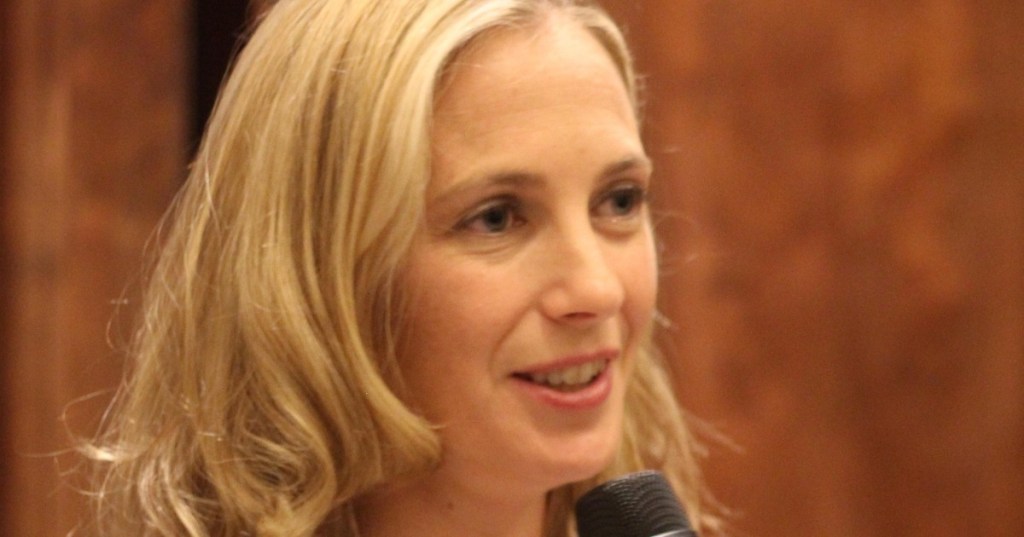
Featured image: Lauren Weisberger. Photo by ActuaLitté via Wikimedia Commons, CC BY-SA 2.0.


Leave a Reply