Every borough president in New York gets a pot of capital money to hand out to the schools, parks, hospitals and nonprofits of the borough. Every year, the Mayor’s Office of Management and Budget decides how big the pot is and how to divide it. And for more than 30 years almost nobody outside a few budget offices has looked closely at how that math is done.
Manhattan Borough President Brad Hoylman-Sigal has now asked someone to look. The answer, in a report released this month by the city’s Independent Budget Office, has given him a grievance he intends to press.
The formula
Section 211 of the City Charter, written during the 1989 Charter revision, says 5 percent of certain capital appropriations shall be divided among the boroughs “by a formula based on an equal weighting of factors relating to population and geographic area.” In practice, the IBO found, OMB gives equal weight to residential population and land area.
That is where Manhattan’s trouble starts. It is the most densely populated borough and the smallest by land. Under the current formula, it received 13.4 to 13.5 percent of the total borough allocation from fiscal 2022 through 2027, according to the IBO, or between $20.8 million and $53.5 million a year. Staten Island, with a fraction of Manhattan’s population but plenty of land, received 12.5 percent. Queens, the largest borough by area, got 31.6 percent.
“Even though Manhattan has 35% of New York City’s daytime population, 76% of social services jobs, 80% of cultural jobs, and 70% of higher educational institutions, our borough receives only 13% of funding from the City of New York, not much more than the Borough of Staten Island,” Mr. Hoylman-Sigal said in a statement on Oct. 15. “The byzantine and unfair formula to allocate capital funding should be revisited.”
He took the argument to NY1’s “Inside City Hall” on Oct. 20, where he discussed the report with Errol Louis.
The alternatives
At the borough president’s request, the IBO ran the numbers two other ways. If the allocation were based on residential population alone, Manhattan’s share would rise to about 19.2 percent. Over fiscal 2022 through 2027, it would have received $92.4 million more. Staten Island would have received $107.4 million less, and Queens $67.8 million less.
If the formula used commuter-adjusted population, which counts people who work in a borough but live elsewhere, Manhattan’s share would jump to between 32.7 and 34.8 percent. For fiscal 2022 through 2024 alone, the only years with available census data, Manhattan would have received $133.9 million more. The IBO notes that even this measure undercounts Manhattan’s daytime population, because it leaves out tourists, students and people visiting for appointments.
None of these scenarios changes the total amount of money. They only change who gets it. That is the political problem in a sentence. Any formula that helps Manhattan takes from someone else, and the IBO, quoting a National Academies report, says so politely: “reallocation creates new ‘winners’ and ‘losers.’”
The black box
The more interesting finding may not be about Manhattan at all. The IBO found that OMB does not publish how it calculates the pot. The Charter excludes some categories, such as lump sums for school construction and rapid transit. OMB has excluded far more: by the IBO’s count, it set aside amounts ranging from $8.1 billion to $19.8 billion a year from the base. The exclusions cover environmental protection, education, correction, police, highways, bridges and, beginning in fiscal 2027 only, the New York City Housing Authority. OMB also told the IBO it excludes all state and federal capital money, even though the Charter refers to “state and federal funds over which the city has substantial discretion.”
Mr. Hoylman-Sigal’s office says OMB excluded between 61 and 75 percent of the city’s capital funds and argues that this has likely shrunk the pot by hundreds of millions of dollars. The methodology, his office says, “is opaque, shows no obvious lineage from the charter language, and, in fact, appears to differ year to year.”
The IBO is more measured, but it lands in a similar place. Without OMB’s cooperation, it says, it could not have quantified what was excluded. It recommends publishing more about how the allocations are calculated, in the interest of “greater transparency and accountability.”
What it would take
Changing the formula itself would require a Charter amendment, the IBO notes. That means a Charter revision commission or a ballot measure, and a fight with four other borough presidents who are perfectly happy with their shares. The exclusions are another matter. They appear to be OMB’s interpretation rather than Charter text, and a mayor could in theory adopt a broader reading without asking voters.
Mr. Hoylman-Sigal has already signaled where any new money would go. In June he announced that his discretionary capital funds would go entirely to Manhattan arts and cultural institutions, according to the IBO report.
Staten Island’s borough president and Queens’ borough president were not quoted in the materials released with the report. They will have their chance. For the moment, Manhattan’s borough president has done what borough presidents do best: he has found a number, and he is making a case with it.
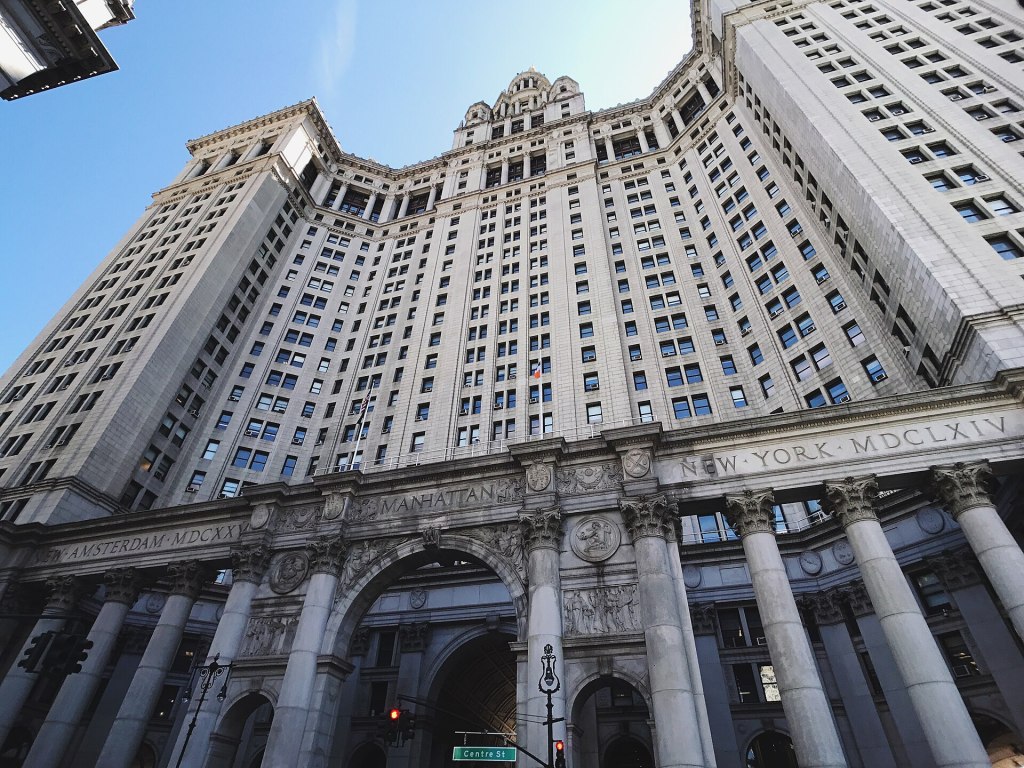
Featured image: The David N. Dinkins Manhattan Municipal Building. Photo by Ningyuan Hu via Wikimedia Commons, CC BY-SA 4.0.


Leave a Reply