On paper, Lazard’s third quarter was a triumph. The 178-year-old firm reported on October 22 that its financial advisory business generated $470 million of revenue, up 10 percent from a year earlier and, in the words of chairman and chief executive Peter R. Orszag, a “record third quarter.” Mergermarket’s nine-month rankings had already placed Lazard sixth in the world by deal value, at $378.2 billion, up 55.9 percent, just ahead of UBS and Rothschild.
Then one reads to the bottom of the income statement. Lazard’s release showed net income attributable to the company of $29 million for the quarter, down 59 percent from $71 million a year earlier. On the firm’s preferred adjusted basis, net income was $40 million, down 35 percent from $62 million.
Those two facts are not contradictory. They are the same fact, seen from two ends of the building at 30 Rockefeller Plaza.
The cost of growth
The gap is explained almost entirely by compensation. Lazard’s adjusted compensation ratio, the share of revenue paid to employees, rose to 69.9 percent in the quarter from 65.5 percent a year earlier. Adjusted compensation and benefits expense was $562 million, against $475 million in the third quarter of 2025. The firm’s stated target, under the strategic plan it calls Lazard 2030, is a ratio of 60 percent or below, “with timing dependent on market conditions.”
The arithmetic of that target is the arithmetic of Orszag’s tenure. Since taking the chief executive’s job in 2023, the former White House budget director has pursued a strategy of adding senior bankers, accepting a period of elevated costs in the expectation that revenue from those hires will follow. Record advisory revenue is the harvest beginning. A compensation ratio of nearly 70 percent is the bill still being paid.
Nine-month figures add nuance. Financial advisory revenue for the first nine months was $1.27 billion on an adjusted basis, down 1 percent from the same period of 2025, which means the third quarter’s strength followed a softer first half. Lazard also disclosed that the quarter included “an amount pulled forward into the period for transactions that closed just after September 30th,” which it said was in line with its two-year average. Analysts will want to see the fourth quarter carry the momentum without that help.
The asset-management side
The other half of the firm told a steadier story. Asset management net revenue was about $357 million, up 9 percent; management fees on an adjusted basis rose 18 percent to $321 million. Assets under management ended the quarter at $284 billion, up 7 percent from a year earlier but roughly flat from June, with $2.3 billion of net outflows in the quarter offset by market gains. Orszag pointed to “record year-to-date gross inflows,” and year-to-date net flows are positive at $5.1 billion.
Enter Lazard CL
The forward-looking part of the release is the one Lazard most wants investors to read. “With our new private capital advisory business, Lazard CL, launching in early November, we are building a more productive, diversified firm positioned for long-term profitable growth,” Orszag said.
Private capital advisory is the business of helping private-equity firms raise funds, sell stakes in funds on the secondary market and structure continuation vehicles, the arrangements that let a sponsor keep a prized company longer while giving its original investors a chance to cash out. With exits still slower than limited partners would like, it is one of the more reliable fee pools in finance, and every major independent is building or buying into it. Lazard’s release already lists private capital advisory assignments for Blue Sea Capital, Exponent Private Equity and M-One Capital on continuation funds, and for the closing of several funds, including Kingswood Capital Management’s Fund IV.
Tracy Farr, the chief financial officer, framed the quarter as evidence the repositioning is working. “Our third quarter results show increasing traction from efforts to reposition our businesses, with firm-wide adjusted net revenue up 11 percent year-over-year,” she said, adding that the firm would continue to “embed AI across the firm” with the goal of “improving our margin over time.”
The marquee files
The mandates themselves are the strongest evidence for Orszag’s thesis. During and since the quarter, Lazard says it advised Emera on its announced combination with Canadian Utilities, valued at roughly C$72 billion, and Corteva Agriscience on the $50 billion spinoff of Vylor. On the restructuring side, it lists debtor roles involving Braskem and Republic National Distributing Company, and creditor roles in situations including Brightline and QVC.
That is the client list of a firm that matters. The question shareholders keep asking is whether it is also the client list of a firm that earns enough on its revenue. Lazard’s own answer is patience: the bankers are hired, the mandates are coming, and the margin will follow.
Wall Street has heard that speech before, from many firms, with varying results. What distinguishes Orszag’s version is that he has put a number on it, 60 percent, and attached his own strategy’s name to the year he expects to deliver. That is either confidence or a deadline. On Rockefeller Plaza, they would prefer you think of it as the former.
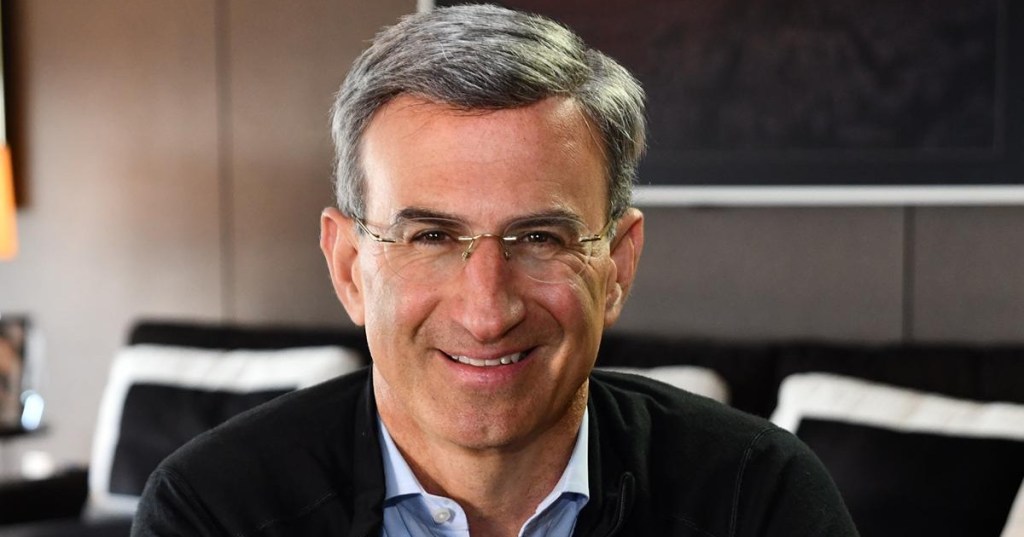
Featured image: Peter Orszag, chief executive of Lazard, in 2023. Photo by Hayley Karis via Wikimedia Commons, CC BY-SA 4.0.


Leave a Reply