The Pennsylvania General Assembly does not usually look efficient. But in the last week before the midterm elections, it sent dozens of bills to Gov. Josh Shapiro. On Thursday, Oct. 22, he signed 58 of them.
The governor’s office announced the batch in a two-sentence release listing bill numbers, from HB 27 to SB 1485, and nothing else. The descriptions came from the press. City & State Pennsylvania picked seven of the more significant. The Pennsylvania Capital-Star did its own roundup. Together they show a legislature that, in an election year, settled a long list of practical questions.
AI in advertising
The best-known new law is Senate Bill 806, the Artificial Intelligence Deceptive Advertising Act, sponsored by Democratic Sen. Nick Pisciottano of Allegheny County. According to City & State, it bars advertisers from using synthetic, AI-generated content in a way that could create a false impression of the goods or services offered. Any synthetic content must carry a “clear and conspicuous disclosure” that the ad was generated or modified using AI.
Mr. Pisciottano told CBS Pittsburgh that the law takes effect in 60 days, applies to ads shown in Pennsylvania even if made elsewhere, and does not cover political ads. He said enforcement falls to the state attorney general. “We heard from some consumer groups that represent older folks who are just not as technologically literate who were getting scammed because of some of this fake AI advertising,” he said. “Pennsylvania moved fast on this.”
Renters
House Bill 558, sponsored by Democratic Rep. MaryLouise Isaacson of Philadelphia, limits rental application fees to amounts “reasonably related to the actual administrative expenses incurred” and bars landlords from using them as a general revenue source. “For too long, landlords have been preying on renters across the commonwealth with excessive fees that limit opportunities to find adequate housing,” Ms. Isaacson said in a statement quoted by City & State.
According to the Capital-Star, the governor also signed a second Democratic housing bill, making parking fees transparent for renters. Not included were bills overriding local bans on unrelated roommates and on accessory dwelling units, which had been promoted as ways to ease the housing shortage.
Swatting
House Bill 1935 directs the Pennsylvania Commission on Sentencing to develop a sentencing enhancement for “swatting,” the hoax 911 calls meant to draw an armed police response, aimed here at schools. It also lets courts order restitution covering the cost of equipment and supplies and the pay of employees and first responders pulled into the response.
Raffles by Venmo
Senate Bill 416, from Republican Sen. Devlin Robinson of Allegheny County, lets fire companies, churches, youth leagues and other nonprofits accept credit cards, debit cards and electronic payments for raffles and other small games of chance. Until now, City & State noted, the law allowed only cash or checks. The Capital-Star said the bill took on new urgency after the state Supreme Court ruled in June that skill-game machines are illegal, cutting off revenue many clubs and fire companies relied on.
Students in long-term care
Senate Bill 116, from Republican Sen. Dave Argall of Schuylkill County, lets high school students earn graduation credit by working or volunteering in licensed congregate care facilities, including nursing facilities, personal care homes and assisted living residences. “This legislation will give students an opportunity to explore careers in long-term care while helping address this growing need,” Mr. Argall said.
Dogs, cats and cosmetics
The “Beagle Bill,” introduced by Republican Sen. Doug Mastriano, limits state funding for experiments on dogs and cats, bars the sale of animal-tested cosmetics in Pennsylvania, increases transparency about organizations that test on animals, and requires labs to make dogs and cats available for adoption.
Children online
Also signed was a measure known as Alicia’s Law, led by Republican Rep. Jason Ortitay and Democratic Rep. Jessica Benham. It creates a state grant program for investigating and prosecuting people who target children online. “With elementary-aged children on social media, these crimes aren’t diminishing. They’re growing,” Mr. Ortitay said after final passage. “This legislation puts Pennsylvania on the offensive.”
A compact, and a warrant requirement
The Capital-Star reported two more notable signings. With the governor’s signature, Pennsylvania becomes the 30th state to join the interstate compact for physician assistants, which the state had named in its application under the federal Rural Health Transformation Program. A bill sponsored by Republican Sen. Daniel Laughlin of Erie ends the Game Commission’s power to enter private property and investigate without a warrant or probable cause. The state Supreme Court had ruled the practice unconstitutional in July, and the bill passed both chambers unanimously.
What is still coming
One of the most-watched bills of the fall was not in the batch. Senate Bill 1014, which would require students to stay off cellphones during the school day starting no later than the 2027–28 school year, had passed and was headed to the governor, who has endorsed the idea. While the legislature remains in session, the Capital-Star noted, the governor has 10 days to act on a bill, after which it becomes law without his signature.
The election is Nov. 3. For the incumbents on the ballot, the list is something to run on.
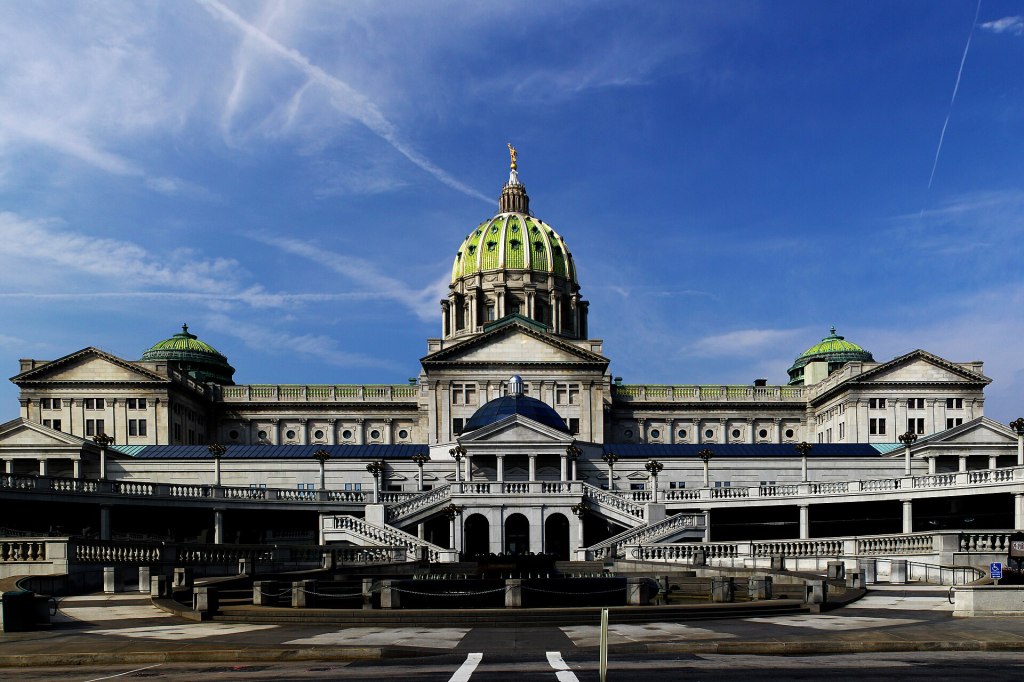
Featured image: The east side of the Pennsylvania State Capitol in Harrisburg. Photo by Kumar Appaiah via Wikimedia Commons, CC BY-SA 2.0.


Leave a Reply