Private equity has been circling American sports for years, buying minority stakes in basketball teams, football clubs abroad and a growing share of the media and real-estate businesses that surround the games. In August, it arrived at the most storied address in the business.
On August 11, Yankee Global Enterprises announced that Apollo Sports Capital, a unit of Apollo Global Management, would provide $2.6 billion of credit and equity capital to the company that owns the New York Yankees. The proceeds, according to the release, are to support growth initiatives and refinance existing debt. Al Tylis of Apollo Sports Capital will join the YGE board in a newly created seat.
The Steinbrenner family retains full control. Hal Steinbrenner remains the managing general partner and controlling owner, the release said, and nothing in the announcement suggests that the family’s grip on the franchise their father bought in 1973 has loosened in any practical sense.
What the parties said
“We welcome Apollo to the Yankees family,” Steinbrenner said. “We are continually seeking ways to strengthen our positioning, and this partnership allows us to explore pursuing strategic opportunities.”
Tylis called the Yankees “one of the most iconic franchises in sports,” and Robert Givone, also of Apollo Sports Capital, said: “This is precisely the kind of bespoke capital solution Apollo Sports Capital was built to deliver.”
The advisory roster was what one would expect for a transaction of this profile. Goldman Sachs served as strategic adviser to YGE, and the law firms Gibson Dunn, Paul, Weiss and Katten also had roles, according to the release.
The structure matters
The phrase “credit and equity” is the part of the announcement that tells you how modern sports finance works. Major League Baseball limits private-equity ownership; The Athletic has reported that the league caps any single private fund’s stake in a club at 15 percent. Apollo’s package, combining a loan with a minority equity position, gives the Yankees a large amount of capital without testing that limit, and gives Apollo a senior claim on one of the steadiest cash flows in sport.
Those cash flows are the attraction. The Yankees’ parent has interests beyond the team, including in the YES Network, and franchise valuations have been rising faster than almost any other asset class with a long public track record. Forbes’s estimates have put the Yankees’ value above $8 billion, and the club has refinanced its debt before; The Athletic reported a roughly $1 billion refinancing in 2016. For a credit investor, a loan secured against a franchise like this one looks less like a sports bet than an infrastructure loan with a better crowd.
Apollo, which reported about $1.05 trillion of assets under management at the end of June, launched Apollo Sports Capital in 2025 and took a majority stake in Atlético de Madrid, the Spanish football club, the same year. The firm under Marc Rowan has built its identity around originating and holding long-dated, investment-grade-style credit for its Athene retirement business. Sports franchises, with their contracted media revenue, are a natural fit for that machine.
Bronx considerations
For Yankees fans, the instinctive question about any outside investor is whether it will change how the team spends on players. The honest answer is that the release does not say, and neither the club nor Apollo has suggested that baseball operations are affected. The family’s continued control is the most reliable signal: decisions about payroll remain where they have been for half a century.
For the Bronx and for the club’s business side, the more interesting phrase is “strategic opportunities.” Steinbrenner did not elaborate, and neither party has announced a specific project. Until one is, any reading of the phrase is speculation, and this publication will treat it that way.
The larger trend
The Yankees transaction joins a run of private-capital investments in teams and leagues since the major American leagues loosened their rules on institutional ownership. The National Football League began allowing approved private-equity funds to take limited stakes in 2024; the National Basketball Association and the National Hockey League had opened earlier. Each league imposes caps and approval processes, and each has framed the change as a way to give existing owners liquidity as franchise values outrun the wealth of plausible individual buyers.
There is a reasonable debate about where this ends. Supporters argue that institutional capital stabilizes franchises and funds stadiums and media ventures without public money. Skeptics worry that leverage and investor return targets could, over time, push teams toward higher ticket prices and more aggressive monetization of fans. Both arguments are about incentives rather than villains, and the Yankees, with a controlling family and a minority investor, are an early test of how the incentives balance.
What is not in doubt is the symbolism. When the most valuable franchise in baseball takes a private-equity check, the asset class has arrived in the American mainstream. The Steinbrenners, characteristically, made sure they kept the keys.
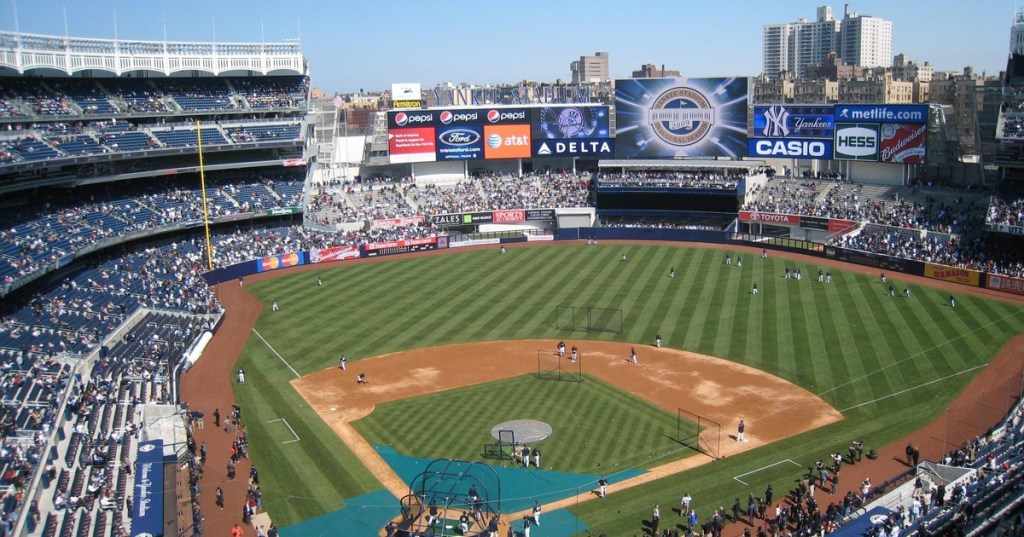
Featured image: Yankee Stadium in the Bronx. Photo by LawrenceFung via Wikimedia Commons, CC BY 2.0.


Leave a Reply