The new musical at the Culture Club on West 27th Street greets its audience with a recorded voice and a salutation: “Welcome, you perverts.” It is, as openings go, efficient. You know at once where you are, roughly what you are in for, and that the producers have priced the cocktails accordingly.
Memoirs of Amorous Gentlemen, which opened Oct. 15 at a space rechristened The Night Egg, is the first English-language American musical adapted from a manga, according to New York Theatre Guide. It is based on Moyoco Anno’s series about a young woman in turn-of-the-century Paris who works in a boutique brothel catering to specialized tastes, and who is hired by a Japanese client to keep a notebook of what she sees. It has a book by Leah Nanako Winkler, direction and choreography by Rob Ashford, sets by Scott Pask, costumes by Catherine Zuber, and a score by Duncan Sheik.
That last credit carries a weight the producers could not have anticipated. As TheaterMania’s Zachary Stewart notes, Sheik died last month, a week before previews were scheduled to begin. The composer of Spring Awakening, which remains one of the most influential musicals of its generation, will not see his final show settle into its run. Every review has had to reckon with that, and most have done so gracefully.
The timing is poignant in another way, too. New York Theatre Guide notes that Memoirs will overlap later this fall with a revival of Spring Awakening, the Tony-winning musical that made Sheik’s name. New York will, briefly, have his first great score and his last one running at the same time, a bookend the city rarely offers any composer. Tickets and information are at the production’s official site.
The critics
The reviews are, in a word, mixed, and mixed in a consistent way. Nearly everyone loves the star, admires the room, and has reservations about the writing.
Stewart, at TheaterMania, called Sophia Anne Caruso’s performance as Colette “rip-your-heart-out,” writing that Caruso “takes her place as one of the theater’s most captivating leading ladies.” He found the show more “nuanced and sophisticated” in its treatment of sex workers than its source material might suggest, praised Pask’s in-the-round staging and Zuber’s costumes, and was blunt about the lyrics, which he judged “not this musical’s strong suit.” His conclusion threads the needle: it “isn’t the next great American musical, but it does at least represent a maturing sensibility around sex workers and the men who hire them,” and makes “a somewhat bittersweet bookend to Sheik’s musical theater career.”
At New York Stage Review, David Finkle gave the show three stars and opened with a line we wish we had written: “In the mood for some soft porn, are ya? Here it is.” Finkle praised Ashford as “always impressive” and called Zuber’s costumes “surely among the best of her career,” but found that Sheik’s “bold and strong score” did not leave “many lasting impressions” once the songs had ended. He also, inevitably, thought of Cabaret. “It was difficult not to think of Cabaret,” he wrote.
Gillian Russo, at New York Theatre Guide, found the show at its best when it stopped performing. “Memoirs of Amorous Gentlemen wants you to watch,” she began, but she preferred “the stripped-down moments,” singling out Caruso’s spare ballad to her faithless lover and the “grounded performance” of Nkeki Obi-Melekwe as the courtesan Nana. She called Pask’s environment “sumptuous,” noting that “red velvet covers every inch of the room, even above your head.”
The room
The venue is half the story. The Culture Club, Russo notes, was the former home of Sleep No More, the immersive production that taught a generation of New Yorkers to pay for the privilege of wandering around a dark warehouse in a mask. Memoirs is less wandering and more watching: the audience sits cabaret-style on all sides of a circular stage, with beds in the corners for photographs and a bar serving themed cocktails. Russo cautions that some seats will see key moments from behind, and a few poles obstruct the view.
It is, in short, a date-night show, which Russo says outright, and also a show for the city’s large and growing audience for immersive and semi-immersive theater, the crowd that made hits of Sleep No More and the recent Cabaret. Ninety minutes, no intermission, adult themes, and tickets from $54, according to New York Theatre Guide. The production runs through Jan. 3, 2027.
The verdict, such as it is
There is something faintly comic about a musical whose central conceit is that writing things down can change your life, receiving a stack of reviews that all write down the same thing. But the consensus is useful. If you want to see a star at full voltage, go: Caruso, a regular on New York stages since The Nether a decade ago, as Stewart notes, is by every account giving a performance worth the trip. If you want a tight book and quotable lyrics, temper your expectations. If you want to hear Duncan Sheik’s last score in the room it was made for, this is the only place, and the only time.
And if you want to know whether the show earns its opening line, the answer is that it depends on you. “Welcome, you perverts” is, after all, a greeting, not an accusation. Russo put it best: the show “proves that sometimes, the best things are left to the imagination.”
The City Politic has reached out to the production of Memoirs of Amorous Gentlemen, Leah Nanako Winkler, Rob Ashford and representatives for Sophia Anne Caruso for comment, and will update this story with any response.
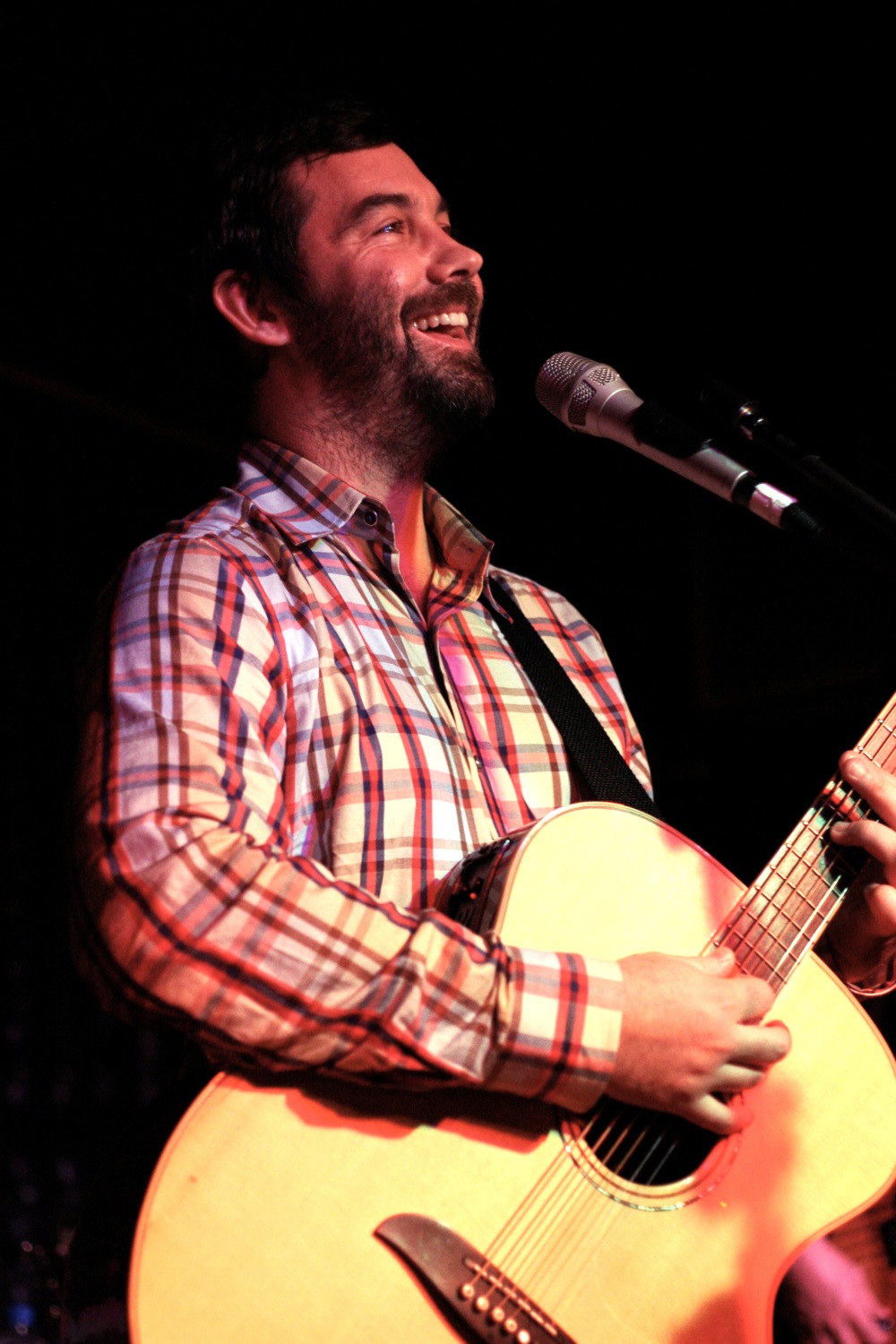
Photo: Duncan Sheik performing in 2006, by P.B. Rage via Wikimedia Commons, CC BY-SA 2.0.


Leave a Reply