Ten years ago, the New York Film Festival opened with Ava DuVernay’s 13th, a documentary about how a loophole in the amendment that abolished slavery became the legal scaffolding for mass incarceration. It was released a month before the 2016 election and has since become one of those films people cite without having rewatched, a fixture of syllabi and summer reading lists. This month, the festival brought Ms. DuVernay back to close its 64th edition with the sequel, more or less, and the reception says a good deal about where the city’s cultural conversation is in the fall of 2026.
The film is called 14th. It had its world premiere at Alice Tully Hall on Friday, Oct. 9, as the closing-night selection of a festival that ran Sept. 25 through Oct. 12, presented by Film at Lincoln Center in partnership with Rolex. It will open in theaters Nov. 27 and arrive on Netflix Dec. 4, according to The Guardian.
The case
The subject is the 14th Amendment, ratified after the Civil War, and the film’s argument, as Film at Lincoln Center’s announcement put it, is that its “foundational principles of birthright citizenship, due process, equal protection under the law, and the prohibition for heads of state to engage in acts of insurrection all have been challenged to a dangerous degree in recent years.” The roster of talking heads is pure DuVernay, which is to say ecumenical by design: Representatives Alexandria Ocasio-Cortez and Anna Paulina Luna, former Senator Jeff Flake, Senator Alex Padilla, Stacey Abrams, the scholar Sherrilyn Ifill, the commentator Hasan Piker and others.
The film’s spine is Ms. Ifill, the former president of the NAACP Legal Defense Fund, who founded the 14th Amendment Center for Law and Democracy at Howard University. The Guardian’s Adrian Horton called her “a warm yet precise narrator” who lays out the case that the amendment is “the scaffolding upon which hang our hopes for a true multi-racial, multi-faith democracy.” Ms. Ifill joined Ms. DuVernay, Mr. Flake, the editor and producer Spencer Averick and the producers Tammy and Paul Garnes at the festival’s press conference, moderated by the programmer Florence Almozini.
“NYFF has always been a place where films invite conversation rather than simply applause,” Ms. DuVernay said when the selection was announced in July. “We hope it leaves people debating, questioning, and, above all, imagining what is still possible.” Dennis Lim, the festival’s artistic director, called the film “a movie for the moment that sees through the fog of the present.”
She got her wish about the debate, if not quite the one she had in mind.
The raves
Much of the trade press came out of Alice Tully Hall stirred. The Guardian gave the film a full-throated endorsement, calling it “just as lucid and galvanizing as its predecessor,” and “a rare feat, at once informative, infuriating and undeniable.” Variety‘s headline said DuVernay “Turns an Amendment into Living History.” The Hollywood Reporter went with “Infuriating, Inspiring.” Deadline‘s had her defending a “Vital Constitutional Amendment.”
The pan, and the AI
And then there was RogerEbert.com, where the critic Jourdain Searles wrote that the film “means well, but doesn’t rise to the occasion,” and zeroed in on a choice that is going to follow it to Netflix. “In a move that is already making headlines,” she wrote, “DuVernay uses generative AI to bring still images of Black people from the Reconstruction era to life.” Her objection was not merely aesthetic. The technique, she argued, “serves no real narrative purpose, nor does it show respect for the unique lives captured in those images.” She reported that Ms. DuVernay, at the festival press conference, expressed excitement about the AI-generated images.
What makes the argument interesting is that The Guardian’s Ms. Horton, without naming the tool, singled out the same device as one of the film’s most potent: “adding dimension and movement to archival photographs” of Black life in Reconstruction and of the violent backlash that followed. One critic’s most effective sequence is another’s most tasteless. It is, in miniature, the argument every museum, archive and newsroom in this city is having about what machines should be allowed to do to the historical record, now staged at the most prestigious screening room on the Upper West Side.
Ms. Searles had other complaints, too, among them that the film does not “fully interrogate the role of the Supreme Court” and spares the Democratic Party its share of the blame. Ms. Horton had quibbles of her own, about “jittery timeline hopping” and some tangents. But it is the AI question that people will be talking about when it reaches theaters in November.
The festival around it
The closing night capped a festival with a conspicuously New York shape. It opened with James Gray’s Paper Tiger, a 1986-set crime thriller in Queens and Brooklyn starring Adam Driver, Miles Teller and Scarlett Johansson, and its centerpiece was the world premiere of Tony Gilroy’s Behemoth!, with Pedro Pascal. A native son’s outer-borough noir at the start, a constitutional reckoning at the end: as bookends go, the programmers knew what they were doing.
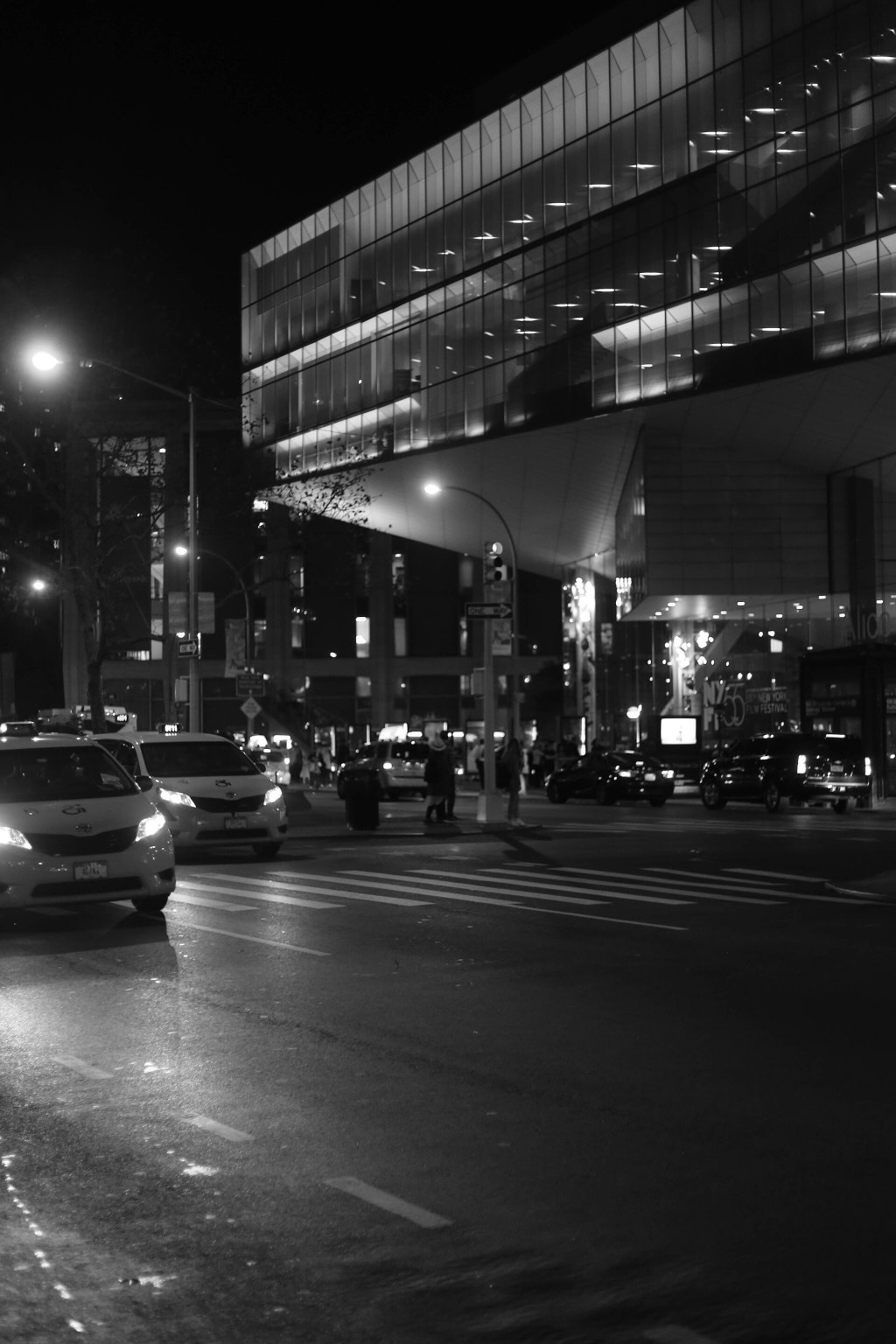
There is something fitting, too, about the venue. Lincoln Center was itself built on the bones of San Juan Hill, a largely Black and Puerto Rican neighborhood cleared under urban renewal in the 1950s, a history the campus has spent recent seasons publicly reckoning with through its Legacies of San Juan Hill programming. A film about who gets to count as a full citizen, premiering on that ground, closes a circle whether or not anyone meant it to.
Why it matters here
New York is where films like this are certified. A closing-night slot at Lincoln Center confers a kind of cultural seriousness that no streaming algorithm can, which is precisely why the festival matters and precisely why the AI argument will now travel with this film wherever it goes. Ms. DuVernay asked for debate. The city, as is its habit, has obliged.
The City Politic has reached out to Ava DuVernay’s company, ARRAY, Netflix, Film at Lincoln Center, and the 14th Amendment Center for Law and Democracy for comment, and will update this story with any response.
Photo: Alice Tully Hall, Lincoln Center, by Paul Sableman via Wikimedia Commons, CC BY 2.0.


.jpg)
Leave a Reply