New York has many ways of announcing that it takes itself seriously, but few are as reliable as a black-tie dinner in honor of the classics. On Thursday, Oct. 29, the American Academy in Rome will hold its annual New York Gala at the New York Public Library, and the honorees it has chosen, as announced in an Oct. 12 feature on the Academy’s site, make for a dinner seating chart that a dean of humanities would weep over: a conservation philanthropist, the translator who gave Homer a new English voice, and the artist who taught museums to look at themselves.
The Academy will award its Centennial Medal to Suzanne Deal Booth, to the classicist Emily Wilson, a 2006 Fellow, and to the artist Fred Wilson, a 2020 Resident, “in recognition of their significant contributions to the arts and humanities,” in the Academy’s words. The evening, it says, will gather “the Academy community in support of the essential role of the arts and humanities in our societies today.”
A very old idea, in a very grand room
For the uninitiated, the Academy is the institution behind the Rome Prize, which every year sends American artists, architects, composers, writers and scholars to live and work on the Janiculum Hill, overlooking the Eternal City. It has a New York office on West 22nd Street and an alumni roster that reads like a syllabus. Its New York gala is how the institution reminds Manhattan’s patrons that the Grand Tour still exists, it just comes with a fellowship stipend now.
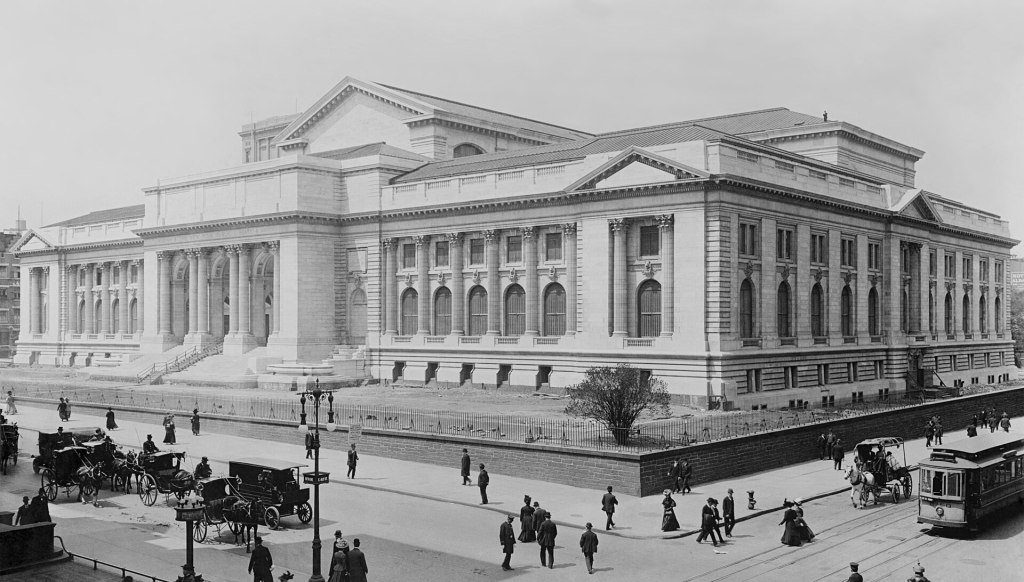
The Academy’s announcement says only “the New York Public Library,” but if that means, as such dinners usually do, the Beaux-Arts temple on Fifth Avenue, it is a nice touch. Carrère and Hastings designed that building as a monument to the idea that Americans could inherit the classical tradition rather than merely visit it, which is roughly the Academy’s mission statement in marble.
The honorees
Suzanne Deal Booth, the Academy notes, trained in conservation at New York University and did postgraduate work at the Pompidou Foundation in Paris. Her organization, the Friends of Heritage Preservation, founded in 1998, has backed the preservation of Donald Judd’s concrete works in Marfa, an oral history partnership with the Birmingham Civil Rights Institute, and a stone-carving training program for Syrian refugees in Jordan. Her family established the Suzanne Deal Booth Rome Prize for Historic Preservation and Conservation at the Academy in 2003. This year’s fellow under that prize, per the Academy, is Ariel O’Connor, an objects conservator at the Smithsonian’s National Museum of Asian Art, studying ancient inlay technology. It is not every honoree who can point to the person at the next table whose year in Rome she paid for.
Emily Wilson needs less introduction, at least to anyone who has browsed a bookstore’s classics shelf since 2017. Her translation of the Odyssey, the Academy notes, was the first into English by a female scholar, and it was named one of The New York Times’s 100 Notable Books of 2018. Her Iliad followed in 2023 and landed on best-of-the-year lists at The Atlantic, The New York Times and The Guardian. She received a MacArthur fellowship in 2019 and a Guggenheim in 2020, and she chairs the classical studies department at the University of Pennsylvania, where she has taught since 2002. Wilson’s opening line, “Tell me about a complicated man,” did more to make Homer an argument at dinner parties than any translation in a generation, which is precisely the sort of thing this gala exists to celebrate.
Fred Wilson, no relation, is a New York artist best known for Mining the Museum, his 1992 intervention at the Maryland Historical Society, in which he rearranged the institution’s own collection into juxtapositions that exposed what it had chosen to leave out. The Academy notes that he represented the United States at the 2003 Venice Biennale with Speak of Me As I Am, a meditation on Othello and the African diaspora in Renaissance Venice, that he has worked in glass with Venetian masters since 2001, that he received a MacArthur in 1999, and that he won the American Academy of Arts and Letters’ Arts and Letters Award in 2024. He is represented by Pace Gallery.
Two Wilsons, one argument
It is tempting to treat the double-Wilson honor roll as a pun, and the Academy may well have enjoyed it. But the pairing is substantively elegant. Emily Wilson’s achievement is to make an ancient canon newly legible by choosing, word by word, what its English should sound like. Fred Wilson’s achievement is to make a museum’s canon newly legible by choosing, object by object, what its arrangement should say. Both are acts of translation, one literary and one curatorial, and both are acts of quiet criticism. Deal Booth, whose life’s work is keeping the physical past from crumbling, provides the material foundation that both arguments depend on. You cannot reinterpret what has not survived.
The crowded calendar
The Academy has picked a busy night. Oct. 29 is shaping up as one of the more congested evenings on the fall benefit calendar, with American Ballet Theatre’s Fall Gala at Lincoln Center among the competing invitations. The two guest lists are not identical, but they are not strangers either, and one imagines a few patrons spending part of the evening in the back of a car, recalculating.
Those who choose the library will at least have the advantage of the setting. There are few rooms in the city better suited to an evening honoring people who make old things speak. Tickets and sponsorship information are available on the Academy’s website.
The City Politic has reached out to the American Academy in Rome, Suzanne Deal Booth, Emily Wilson and Fred Wilson (via Pace Gallery) for comment, and will update this story with any response.
Photo: The New York Public Library, circa 1908, by the Detroit Publishing Company via Wikimedia Commons, public domain.


Leave a Reply